Film during Nazi Era in Easy German
Easy German · CEFR A1–A2 80% Slow Speed 29:40 Sep 24, 2026

Film during Nazi Era in Easy German

0:00 29:40

About This Episode

Examine the dark transformation of German cinema between 1933 and 1945 under the Nazi regime. Propaganda Minister Joseph Goebbels seized total control over the film industry, turning moving pictures into an instrument of state influence.

Discover how the regime balanced heavy propaganda like 'Triumph of the Will' with lavish entertainment musicals to distract the population, and learn why hundreds of brilliant filmmakers fled the country.
Key Topics & Highlights

  • Over 1,000 feature films were produced in Germany during the Nazi era under strict state censorship.
  • Propaganda Minister Goebbels tightly controlled all scripts, casting, and film funding.
  • Most productions were seemingly harmless comedies and musicals designed to pacify and distract the public.
  • Famous filmmakers and stars like Fritz Lang and Marlene Dietrich left Germany in protest.

Chapters & Timestamps

Click any chapter timestamp to jump directly to that section in the audio player.

Preview German Vocabulary

Click any preview word to hear pronunciation. Unlock all 20 core vocabulary words with episode context quotes inside the Substack Premium Study Companion.

More Daily Facts in Easy German Episodes

Browse All 61 Episodes →
The Taj Mahal in Easy German
23:03
CEFR A1–A2

The Taj Mahal in Easy German

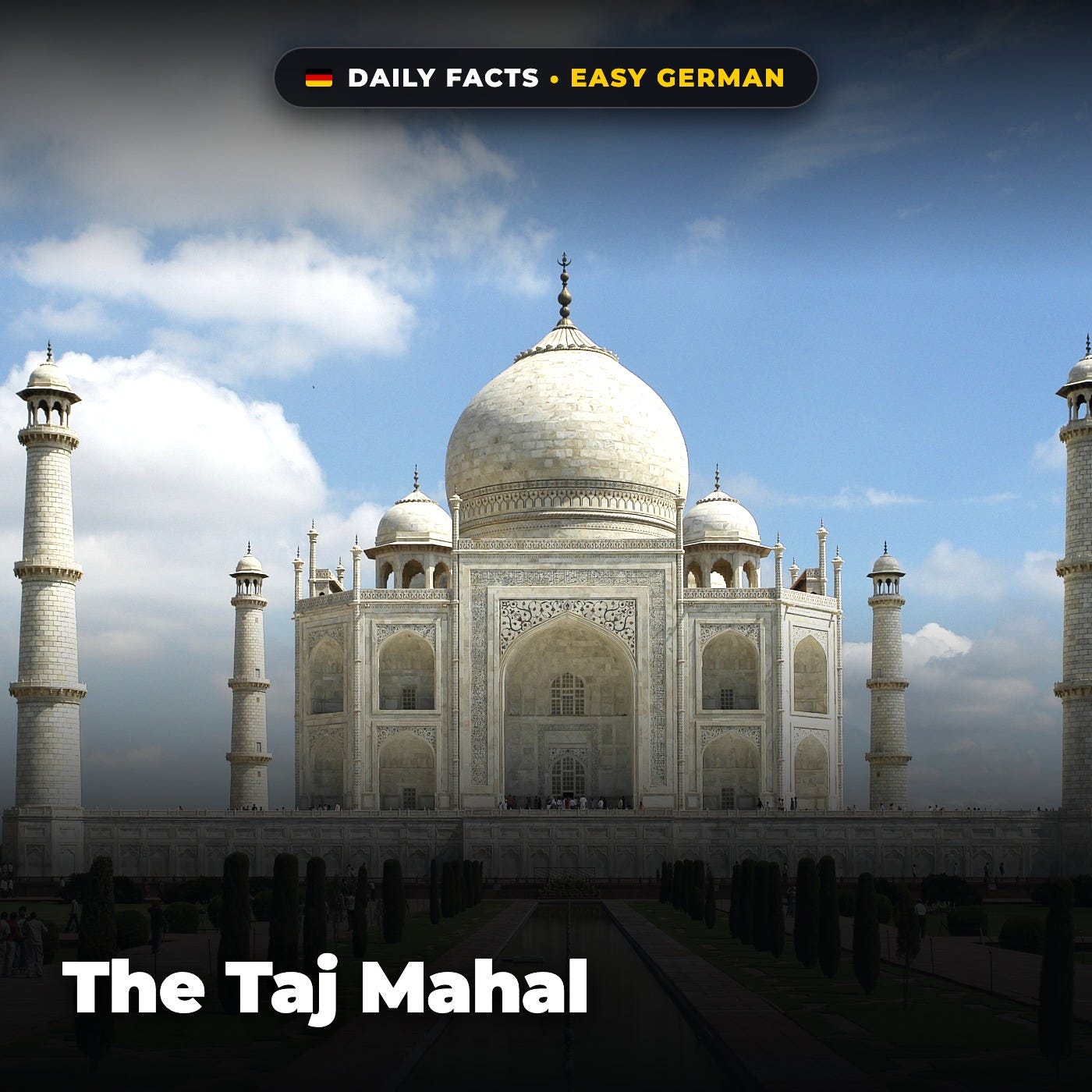
The Taj Mahal is an ivory-white marble mausoleum on the right bank of the river Yamuna in Agra, Uttar Pradesh, India. It was commissioned in 1631 by the fifth Mughal emperor, Shah Jahan, to house the tomb of his late wife, Mumtaz Mahal; it also houses the tomb of Shah Jahan himself. The tomb is the centrepiece of a 17-hectare (42-acre) complex, which includes a mosque and a guest house, and is set in formal gardens bounded on three sides by a crenellated wall.

The 1936 Summer Olympics in Easy German
9:38
CEFR A1–A2

The 1936 Summer Olympics in Easy German

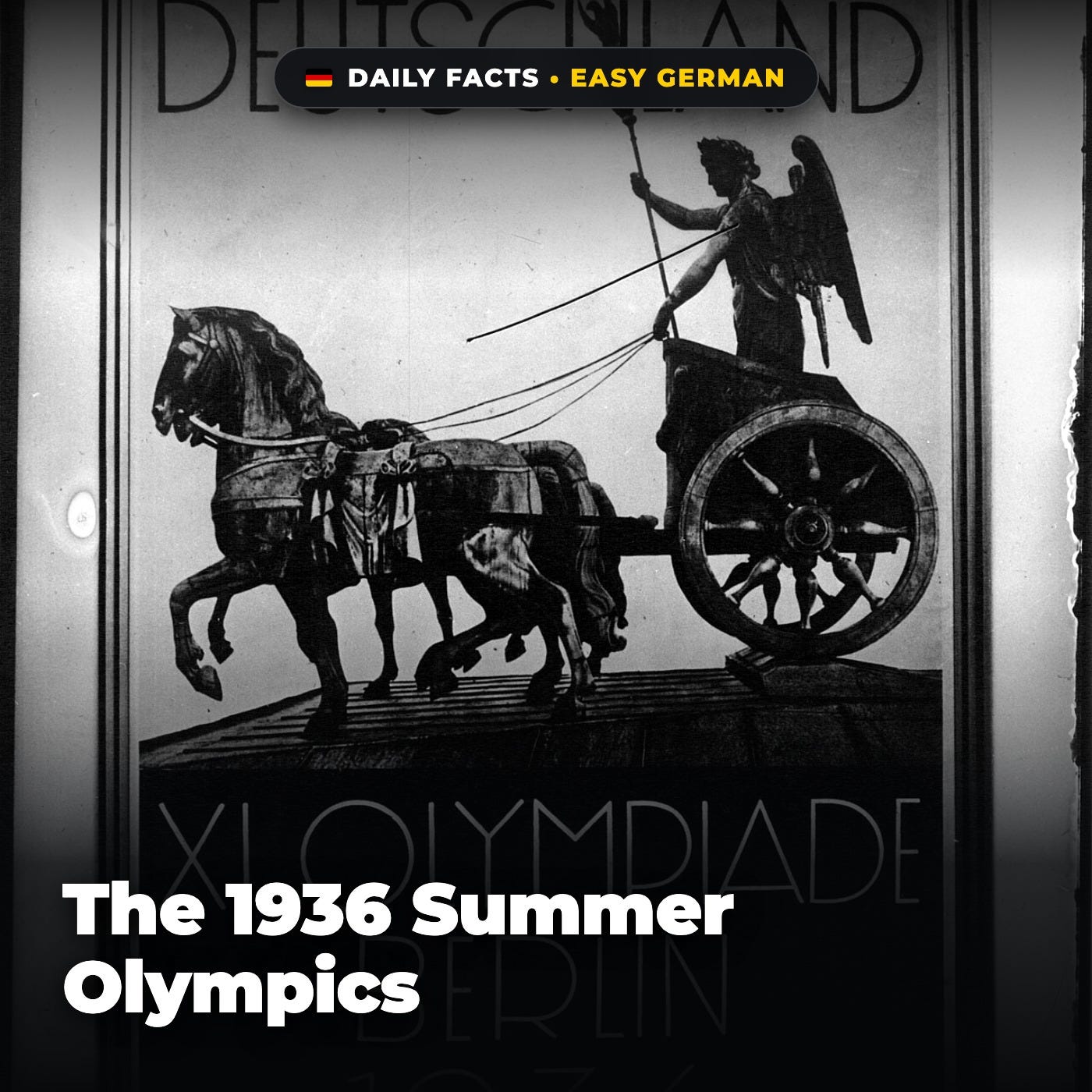
The 1936 Summer Olympics, officially the Games of the XI Olympiad and branded as Berlin 1936, were an international multi-sport event held from 1 to 16 August 1936 in Berlin, Germany. Berlin won the right to host the Games over Barcelona at the 29th IOC Session in 1931. The 1936 Games were the second and last occasion on which the International Olympic Committee (IOC) chose a host by a ballot in which the bidding cities themselves could vote; later rules barred cities that voted from being selected.

The History of Coffee in Easy German
26:22
CEFR A1–A2

The History of Coffee in Easy German

Trace the aromatic global journey of coffee, from wild shrub to the world's favorite morning beverage! Discover the legendary Ethiopian story of Kaldi and his dancing goats discovering caffeine. Follow coffee's spread across Yemeni monasteries and bustling Ottoman coffeehouses into 17th-century Europe, where coffeehouses became lively centers for news, commerce, and scientific revolution.