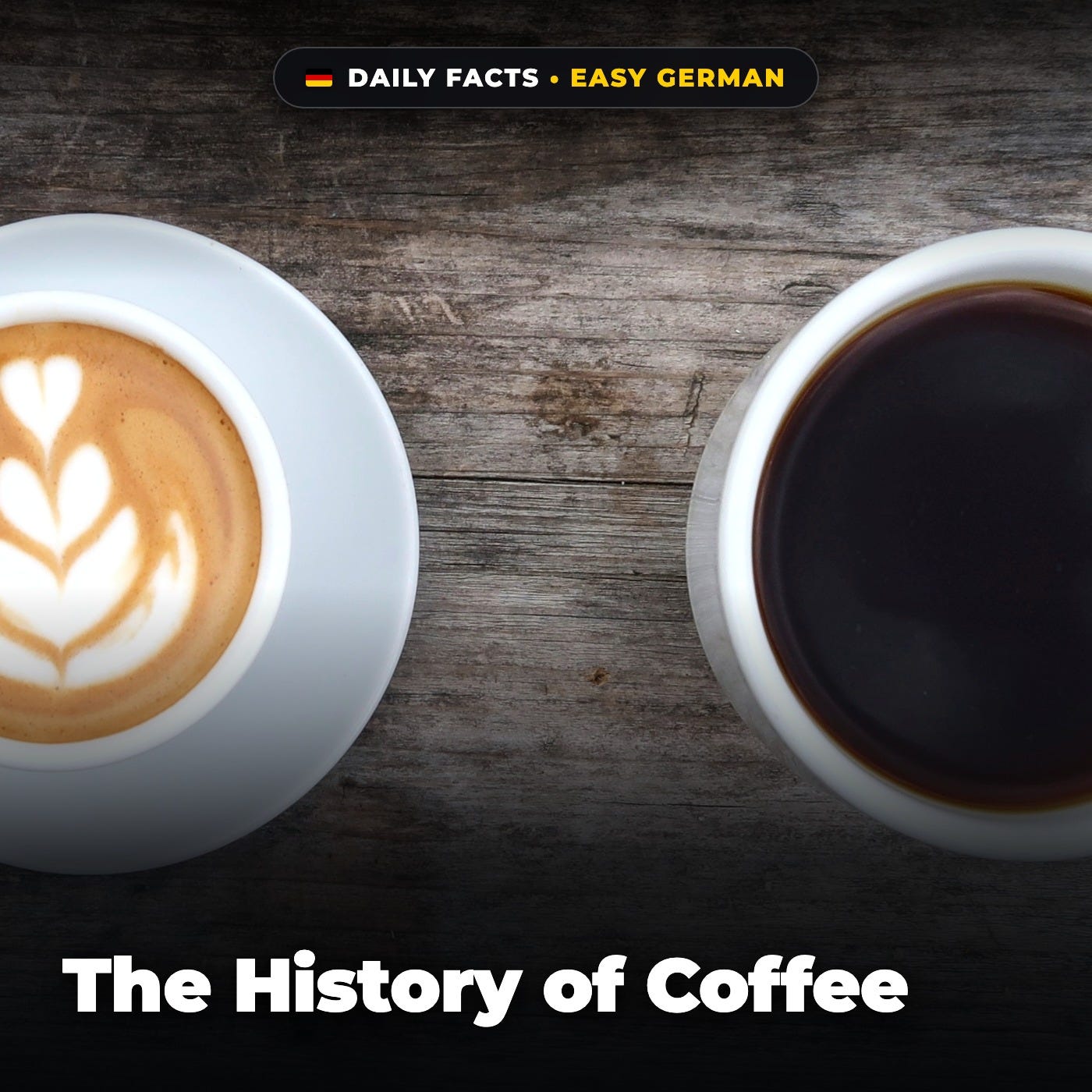
The History of Coffee in Easy German
Easy German · CEFR A1–A2 80% Slow Speed 26:22 Oct 7, 2026

The History of Coffee in Easy German

0:00 26:22

About This Episode

Trace the aromatic global journey of coffee, from wild shrub to the world's favorite morning beverage! Discover the legendary Ethiopian story of Kaldi and his dancing goats discovering caffeine.

Follow coffee's spread across Yemeni monasteries and bustling Ottoman coffeehouses into 17th-century Europe, where coffeehouses became lively centers for news, commerce, and scientific revolution.
Key Topics & Highlights

  • Legend tells of an Ethiopian goat herder named Kaldi who noticed his goats energized after eating red berries.
  • Yemeni monks in the 15th century roasted and brewed coffee beans to stay awake during nightly prayers.
  • The first public coffeehouses opened in Istanbul in the 16th century as centers for social conversation.
  • European coffeehouses in London, Paris, and Vienna fostered political debates and stock exchanges.

Chapters & Timestamps

Click any chapter timestamp to jump directly to that section in the audio player.

Preview German Vocabulary

Click any preview word to hear pronunciation. Unlock all 20 core vocabulary words with episode context quotes inside the Substack Premium Study Companion.

More Daily Facts in Easy German Episodes

Browse All 61 Episodes →
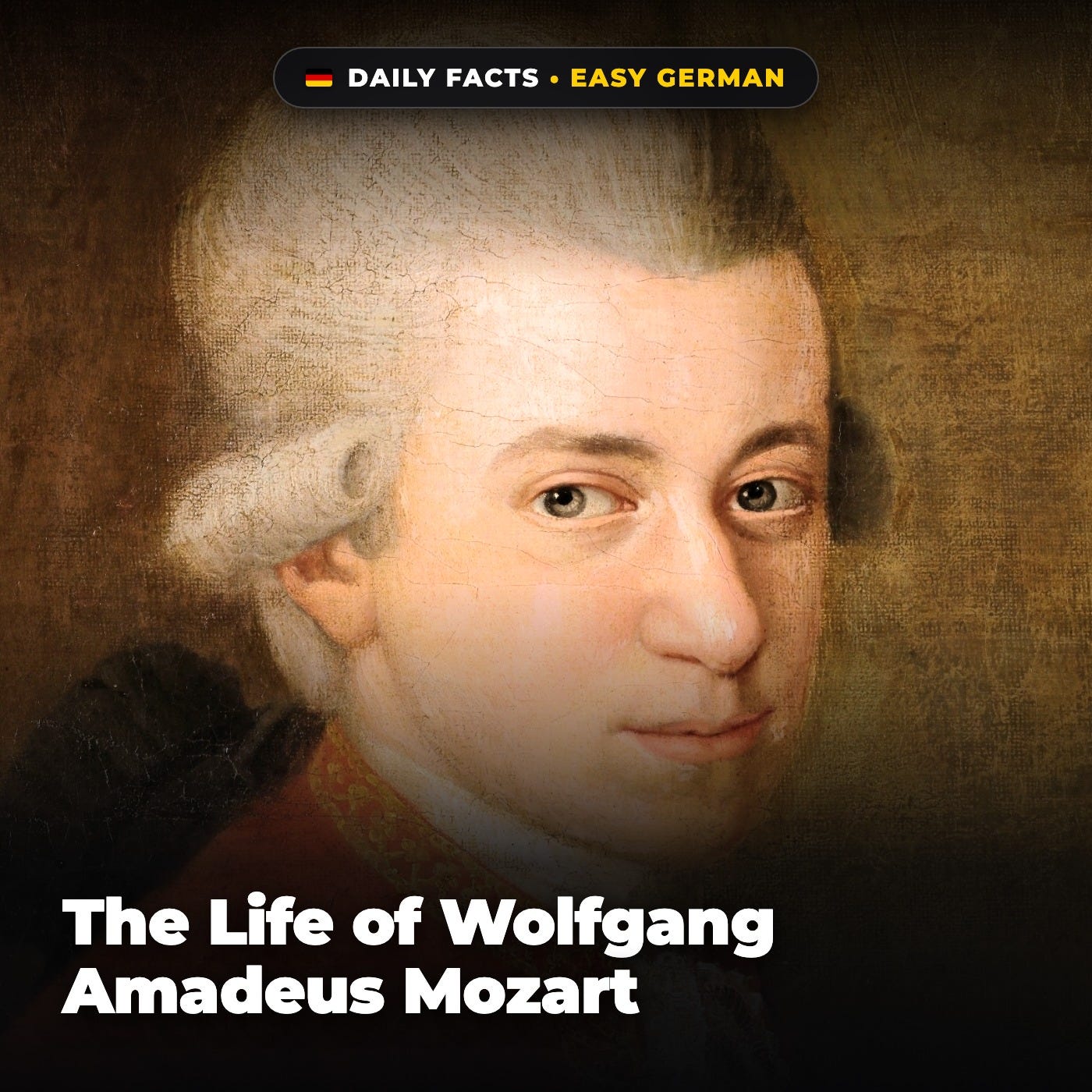
The Life of Wolfgang Amadeus Mozart in Easy German
20:28
CEFR A1–A2

The Life of Wolfgang Amadeus Mozart in Easy German

Wolfgang Amadeus Mozart was a Classical composer and musician. He completed more than 800 works in his life—including outstanding examples of most of the genres of his time: symphonies, concertos, chamber music, opera and choral music. He is regarded as one of the greatest composers in the history of Western music.

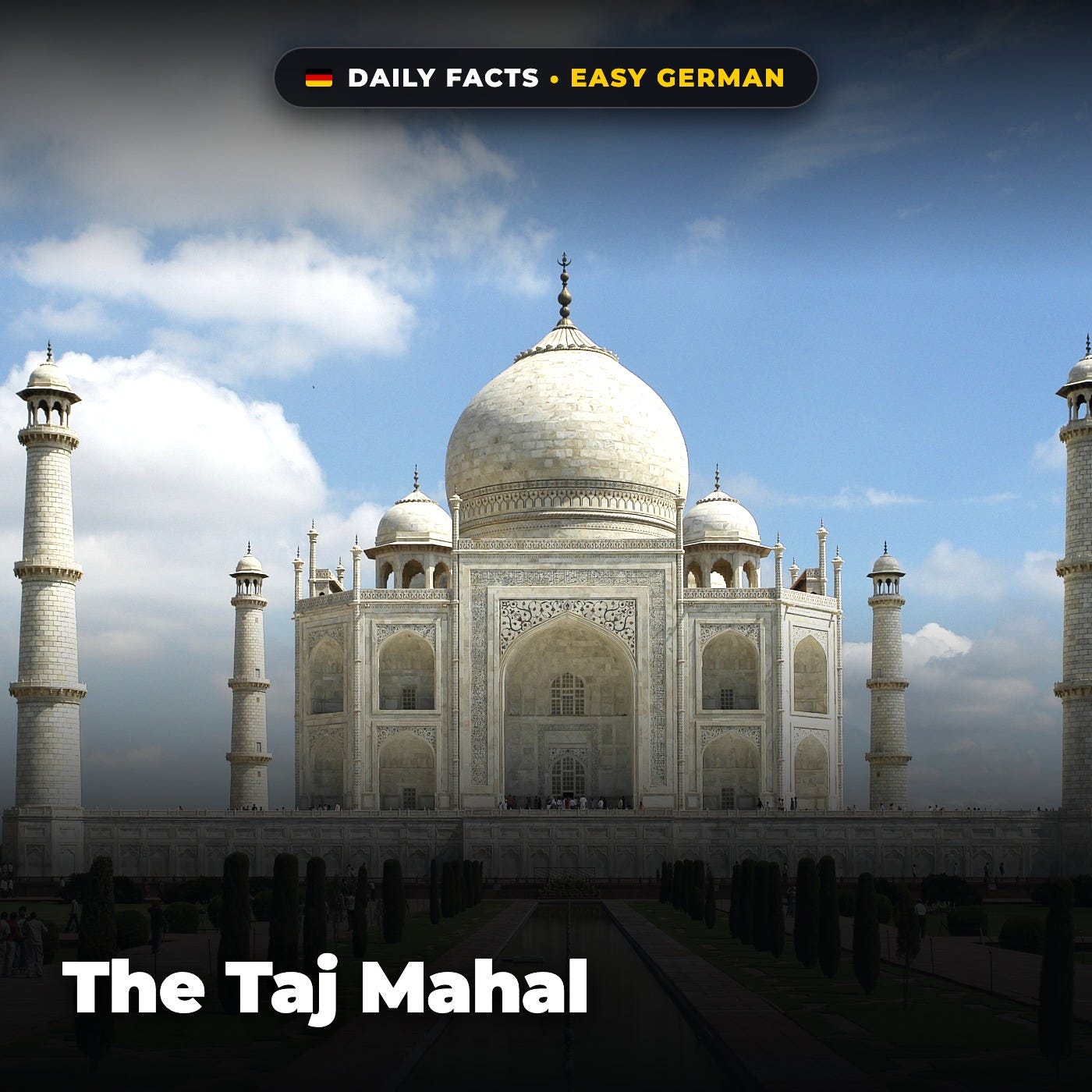
The Taj Mahal in Easy German
23:03
CEFR A1–A2

The Taj Mahal in Easy German

The Taj Mahal is an ivory-white marble mausoleum on the right bank of the river Yamuna in Agra, Uttar Pradesh, India. It was commissioned in 1631 by the fifth Mughal emperor, Shah Jahan, to house the tomb of his late wife, Mumtaz Mahal; it also houses the tomb of Shah Jahan himself. The tomb is the centrepiece of a 17-hectare (42-acre) complex, which includes a mosque and a guest house, and is set in formal gardens bounded on three sides by a crenellated wall.

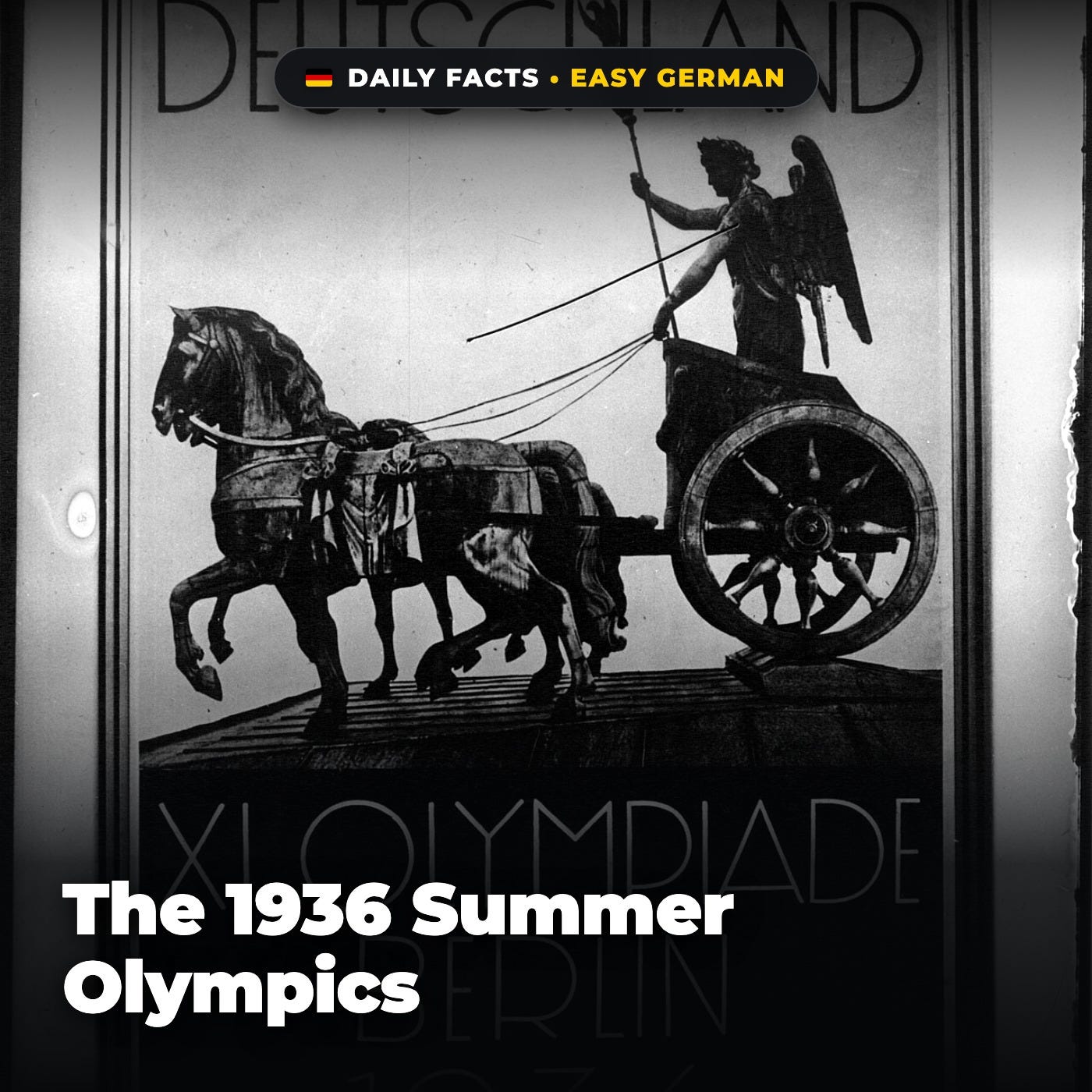
The 1936 Summer Olympics in Easy German
9:38
CEFR A1–A2

The 1936 Summer Olympics in Easy German

The 1936 Summer Olympics, officially the Games of the XI Olympiad and branded as Berlin 1936, were an international multi-sport event held from 1 to 16 August 1936 in Berlin, Germany. Berlin won the right to host the Games over Barcelona at the 29th IOC Session in 1931. The 1936 Games were the second and last occasion on which the International Olympic Committee (IOC) chose a host by a ballot in which the bidding cities themselves could vote; later rules barred cities that voted from being selected.