CEFR A1–A2 Beginner 80% Slow Natural Speed 59 Free Episodes

Daily Facts in Easy French

Train your ear for natural French with engaging daily stories about history, nature, and science — spoken clearly at 80% speed using core CEFR A1–A2 vocabulary.

Also available on: Spotify Apple Podcasts Starter Playlist
The Kangaroo of Australia in Easy French
Latest Episode Nov 21, 2026 · 9:00

The Kangaroo of Australia in Easy French

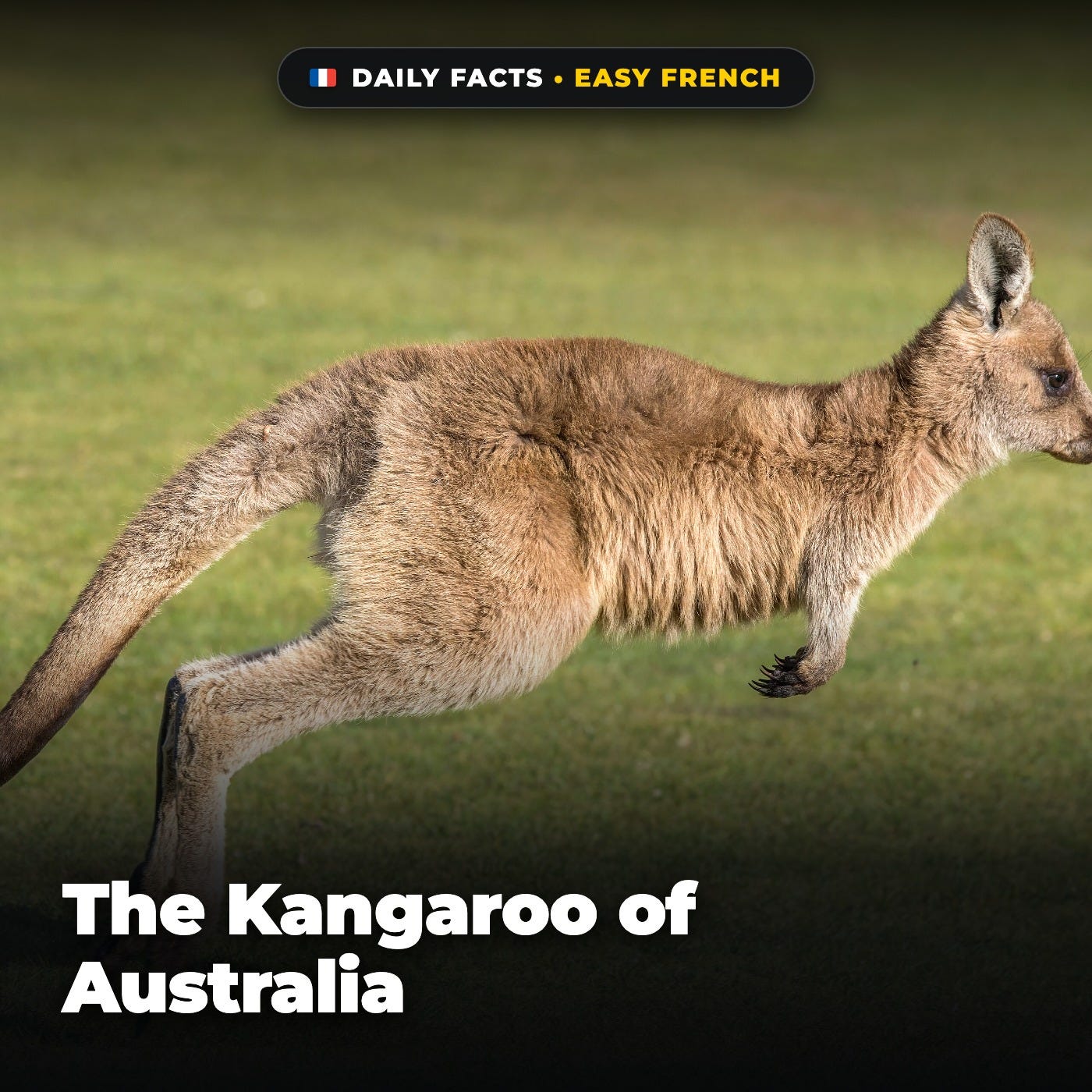
Kangaroos are marsupials from the subfamily Macropodinae. In common use, the term is used to describe the largest species from this family, the red kangaroo, as well as the antilopine kangaroo, eastern grey kangaroo, and western grey kangaroo.

0:00 9:00

All Daily Facts in Easy French Episodes

Press play on any episode to listen directly in your browser — or open an episode for chapter markers, highlights, and vocabulary.

59 episodes
The Kangaroo of Australia in Easy French
9:00
Episode #59

The Kangaroo of Australia in Easy French

Kangaroos are marsupials from the subfamily Macropodinae. In common use, the term is used to describe the largest species from this family, the red kangaroo, as well as the antilopine kangaroo, eastern grey kangaroo, and western grey kangaroo. Kangaroos are indigenous to Australia and New Guinea. The Australian government estimated that 42.8 million kangaroos lived within the commercial harvest areas of Australia in 2019, down from 53.2 million in 2013.

l'animal (animal)le bébé (baby)le kangourou (kangaroo)
The Amazon Rainforest in Easy French
14:13
Episode #58

The Amazon Rainforest in Easy French

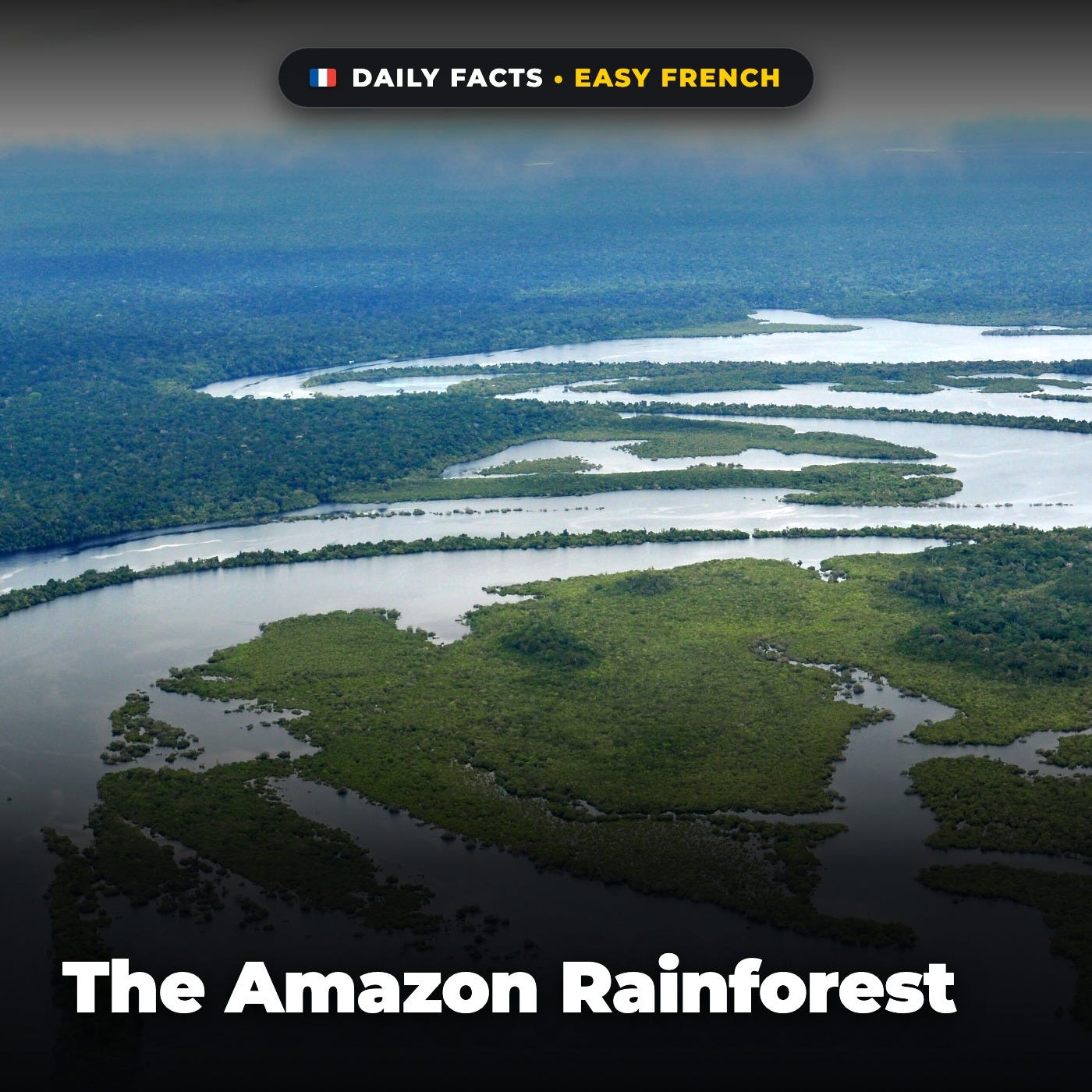
The Amazon rainforest, also called the Amazon jungle, Amazonia, or simply the Amazon, is a moist broadleaf tropical rainforest in the Amazon biome that covers most of the Amazon basin of South America. This basin encompasses 7 million km2 (2.7 million sq mi), of which 6 million km2 (2.3 million sq mi) are covered by the rainforest. This region includes territory belonging to nine nations and 3,344 indigenous territories.
la forêt (forest)l'arbre (tree)la terre (earth)
The Life of the Sloth in Easy French
8:57
Episode #57

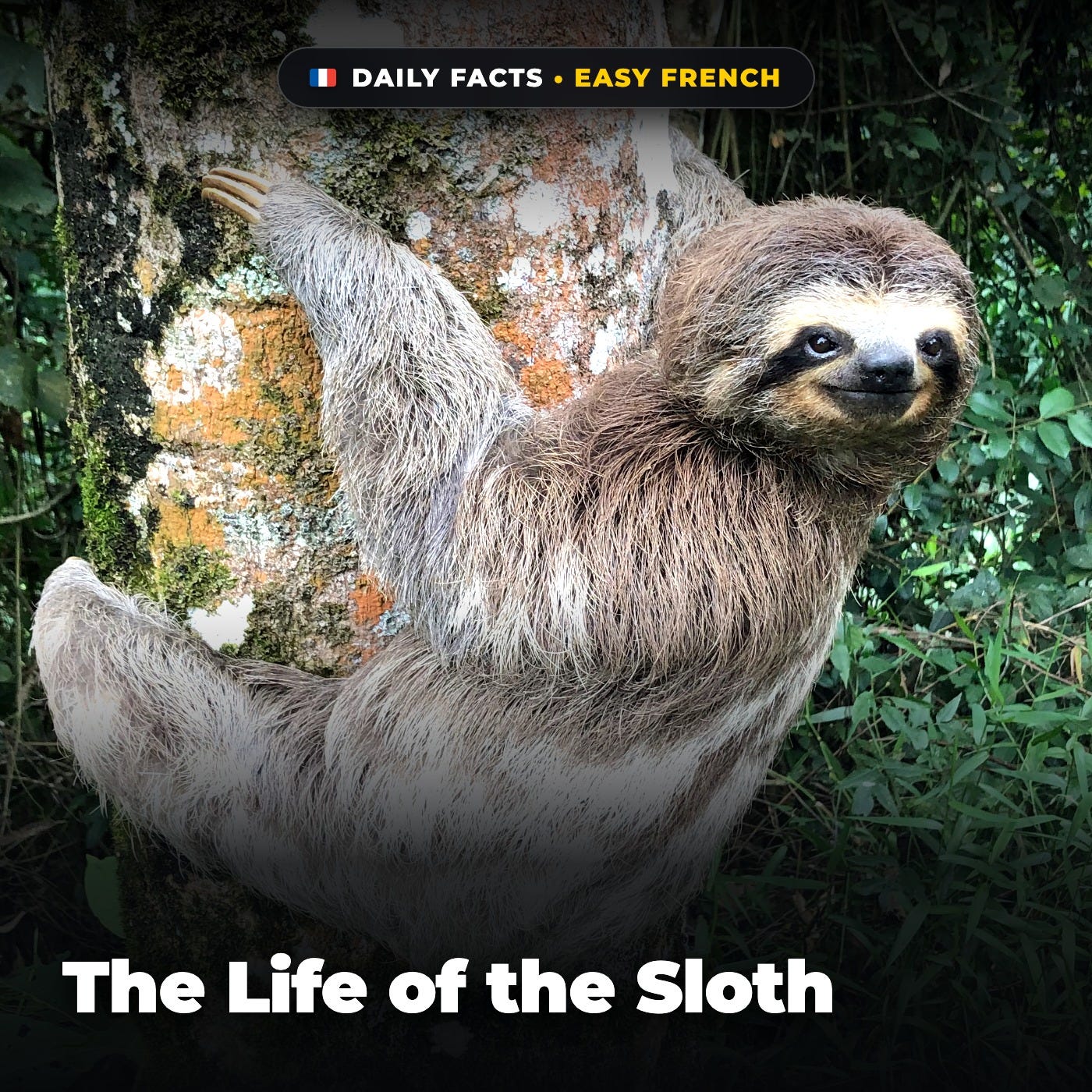
The Life of the Sloth in Easy French

Sloths are a Neotropical group of xenarthran mammals constituting the suborder Folivora, including the extant arboreal tree sloths and extinct terrestrial ground sloths. Noted for their slowness of movement, tree sloths spend most of their lives hanging upside down in the trees of the tropical rainforests of South America and Central America. Sloths are considered to be most closely related to anteaters, together making up the xenarthran order Pilosa.

l'animal (animal)le paresseux (sloth)le papillon (butterfly)
The Grand Canyon in Easy French
8:06
Episode #56

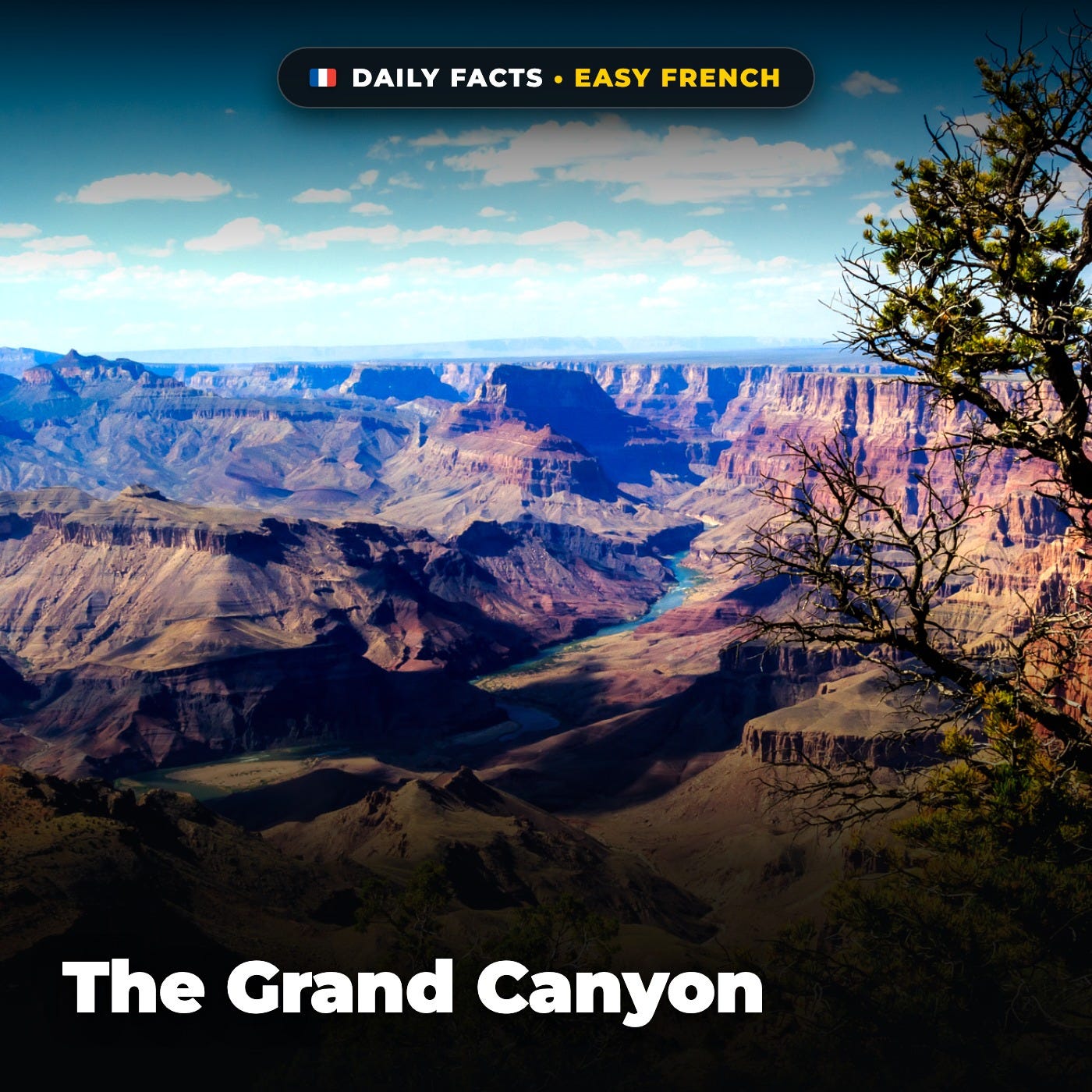
The Grand Canyon in Easy French

The Grand Canyon is a steep-sided canyon carved by the Colorado River in Arizona, United States. The Grand Canyon is 277 miles (446 km) long, up to 18 miles (29 km) wide and attains a depth of over a mile. In this episode, we break down the most important facts and stories about The Grand Canyon using clear, beginner-friendly A1

Practice everyday beginner vocabulary through real-world examples.la roche (rock)le fleuve (river)
The Secret Life of Meerkats in Easy French
7:18
Episode #55

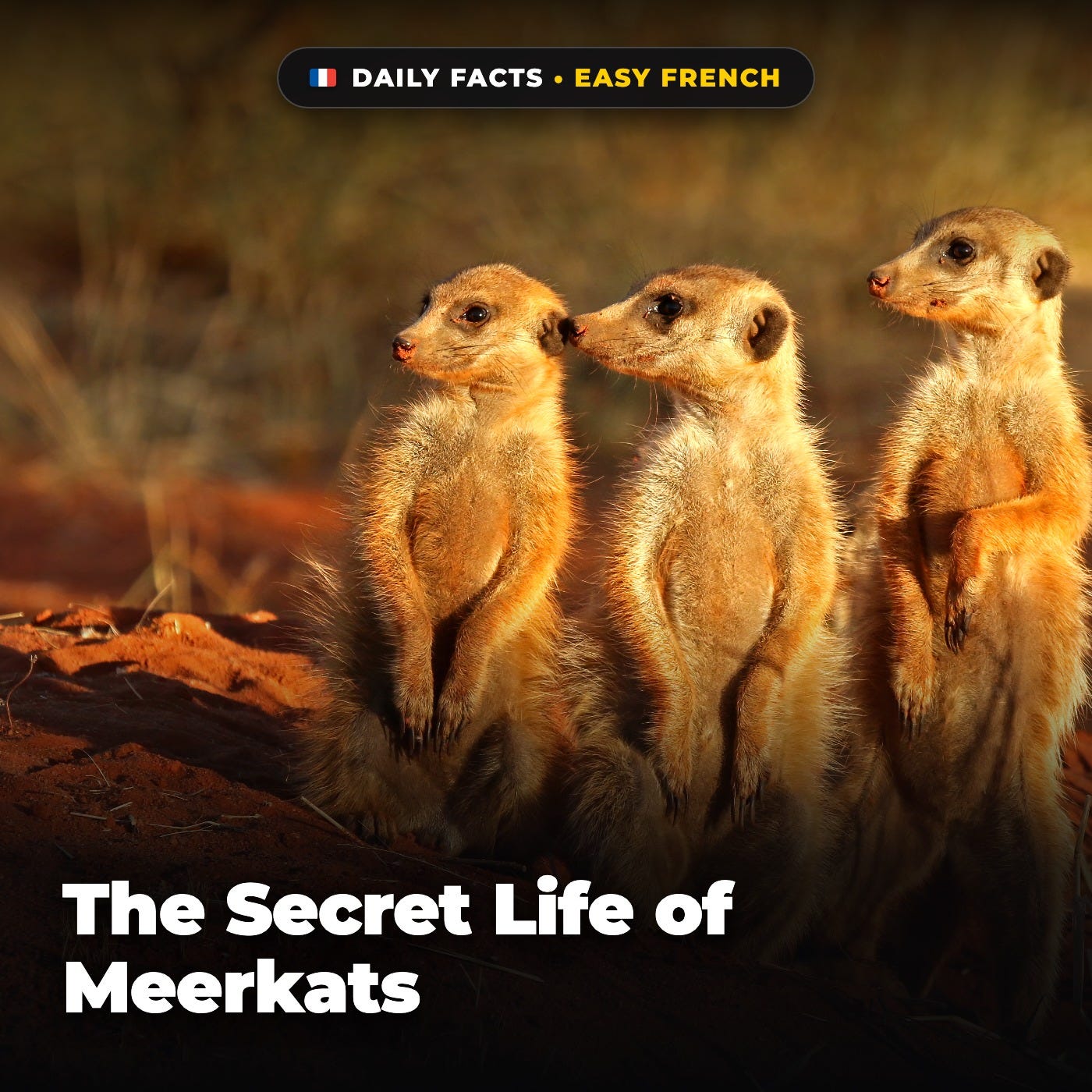
The Secret Life of Meerkats in Easy French

The meerkat or suricate is a small mongoose found in southern Africa. It is characterised by a broad head, large eyes, a pointed snout, long legs, a thin tapering tail, and a brindled coat pattern. The head-and-body length is around 24–35 cm (9.4–13.8 in), and the weight is typically between 0.62 and 0.97 kg. The coat is light grey to yellowish-brown with alternate, poorly defined light and dark bands on the back.

le suricate (meerkat)le bébé (baby)le scorpion (scorpion)
The Life of Wolfgang Amadeus Mozart in Easy French
12:21
Episode #54

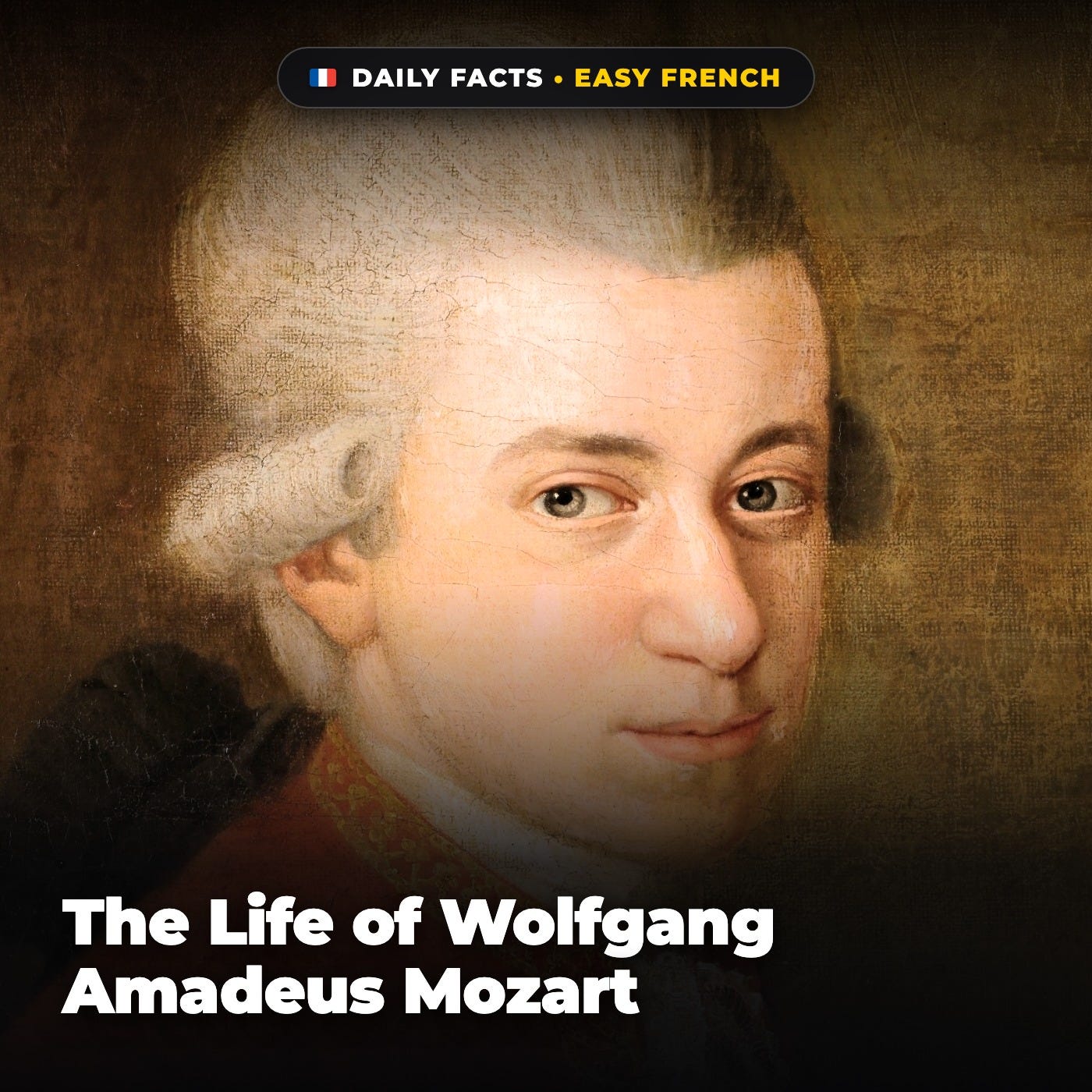
The Life of Wolfgang Amadeus Mozart in Easy French

Wolfgang Amadeus Mozart was a Classical composer and musician. He completed more than 800 works in his life—including outstanding examples of most of the genres of his time: symphonies, concertos, chamber music, opera and choral music. He is regarded as one of the greatest composers in the history of Western music.

la musique (music)l'homme (man)la ville (city)
The Snow Leopard in Easy French
15:37
Episode #53

The Snow Leopard in Easy French

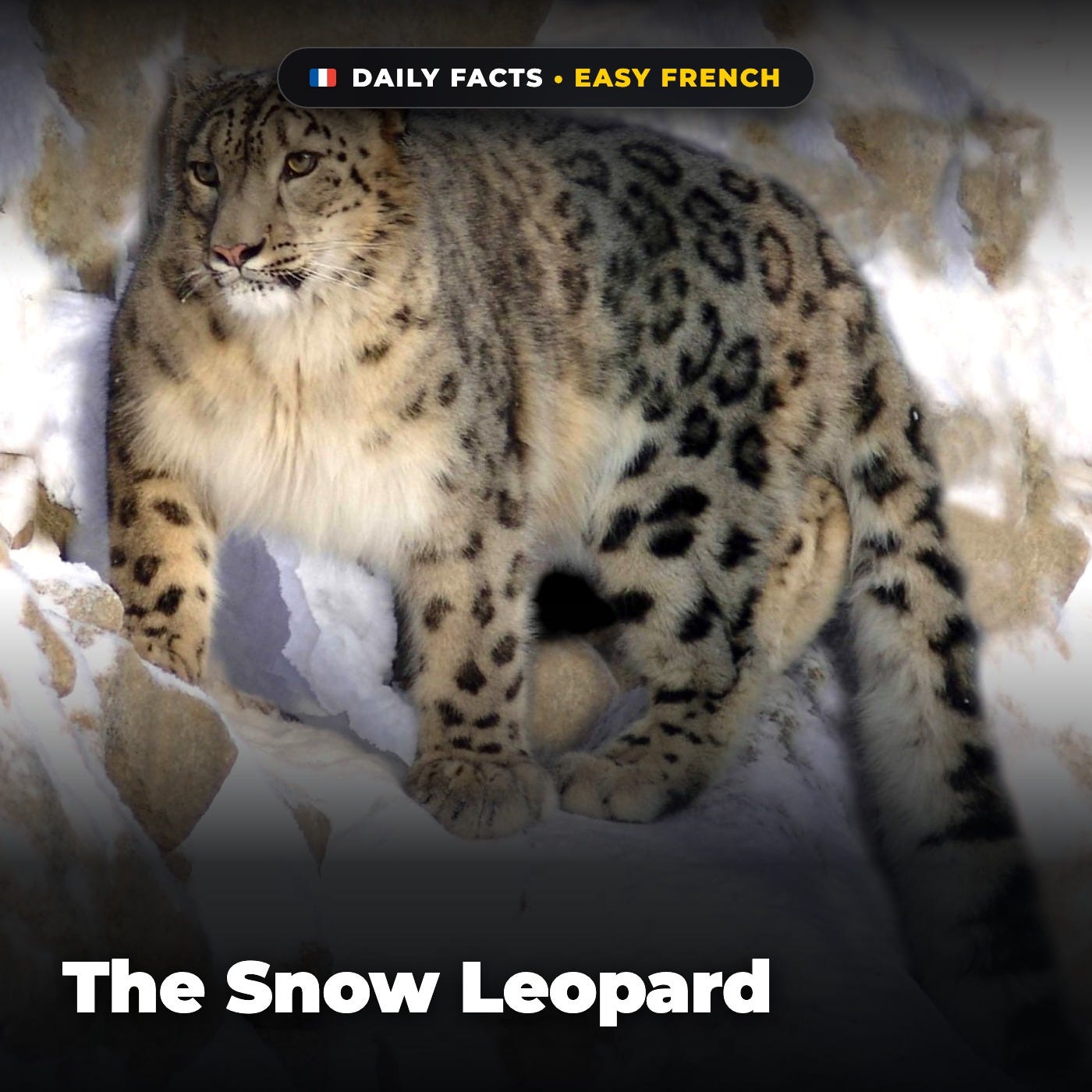
The snow leopard is a felid species in the genus Panthera. It has a thick whitish to grey fur with black spots on the head and neck, with larger rosettes on the back, flanks and bushy tail. Males are larger than the females, and both sexes have long canine teeth. Its small rounded ears, broad paws, and thick tails are adaptations for living in cold, mountainous environments.

le chat (cat)la neige (snow)la montagne (mountain)
The Colosseum of Rome in Easy French
9:04
Episode #52

The Colosseum of Rome in Easy French

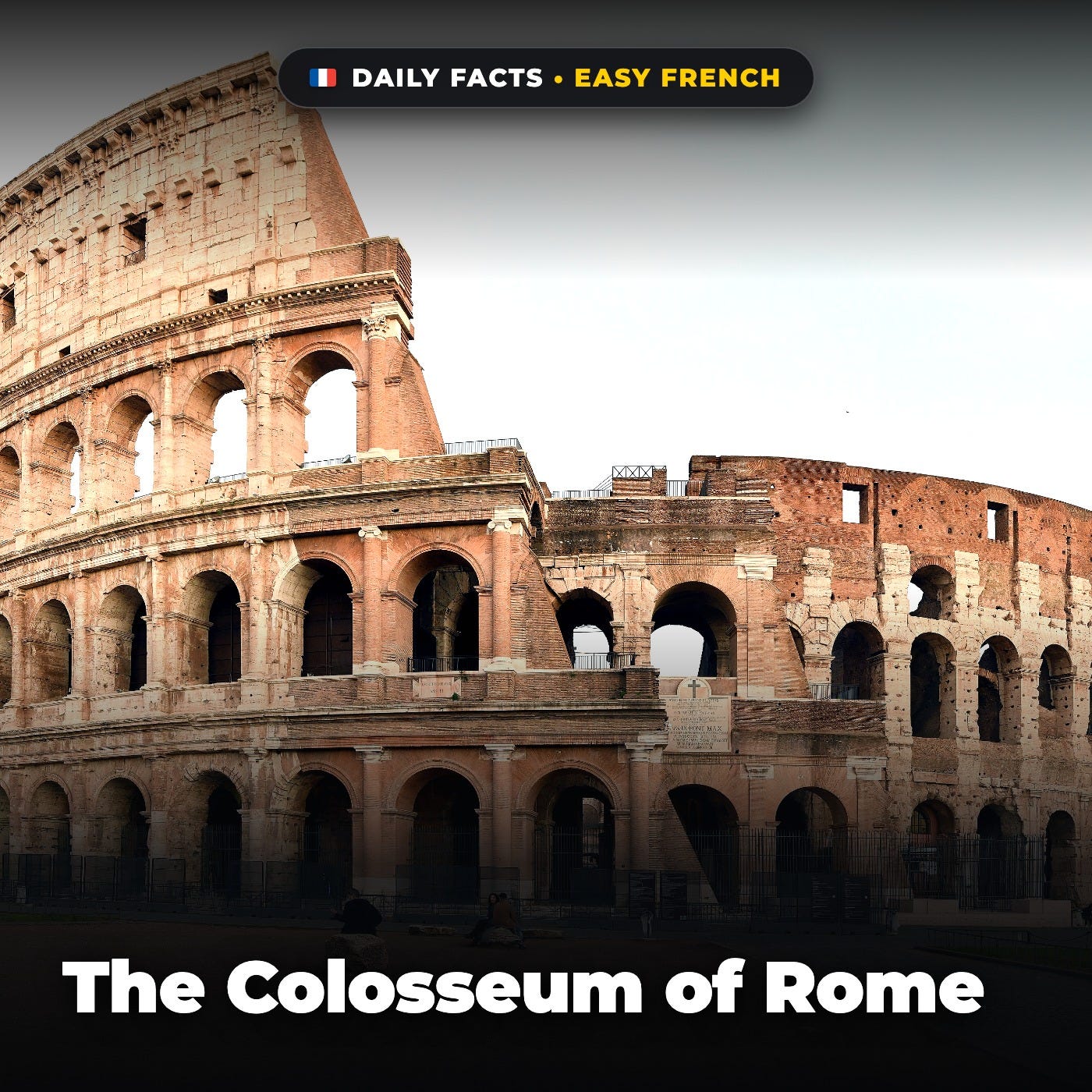
The Colosseum is an elliptical amphitheatre in the centre of the city of Rome, Italy, just east of the Roman Forum. It is the largest ancient amphitheatre ever built, and is the largest standing amphitheatre in the world. Construction began under the Emperor Vespasian in 72 and was completed in AD 80 under his successor and heir, Titus. Further modifications were made during the reign of Domitian.

l'empereur (emperor)le bâtiment (building)la statue (statue)
The World of Chameleons in Easy French
18:41
Episode #51

The World of Chameleons in Easy French

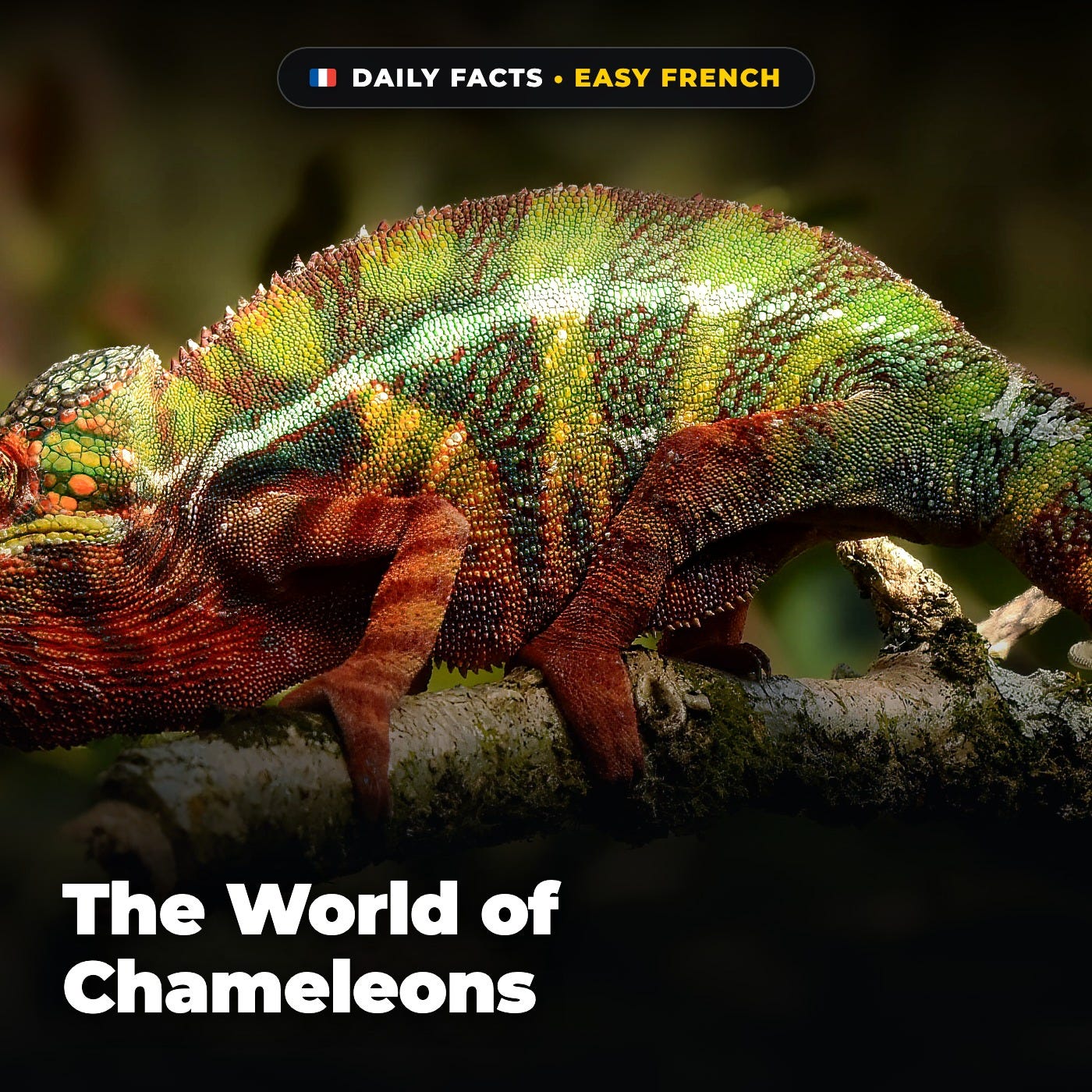
Chameleons are a distinctive and highly specialized clade of Old World lizards with 200 species described as of June 2015. The members of this family are best known for their distinct range of colours, being capable of colour-shifting camouflage. The large number of species in the family exhibit considerable variability in their capacity to change colour. For some, it is more of a shift of brightness ; for others, a plethora of colour-combinations can be seen.

le lézard (lizard)la lumière (light)la nature (nature)
The Taj Mahal in Easy French
8:37
Episode #50

The Taj Mahal in Easy French

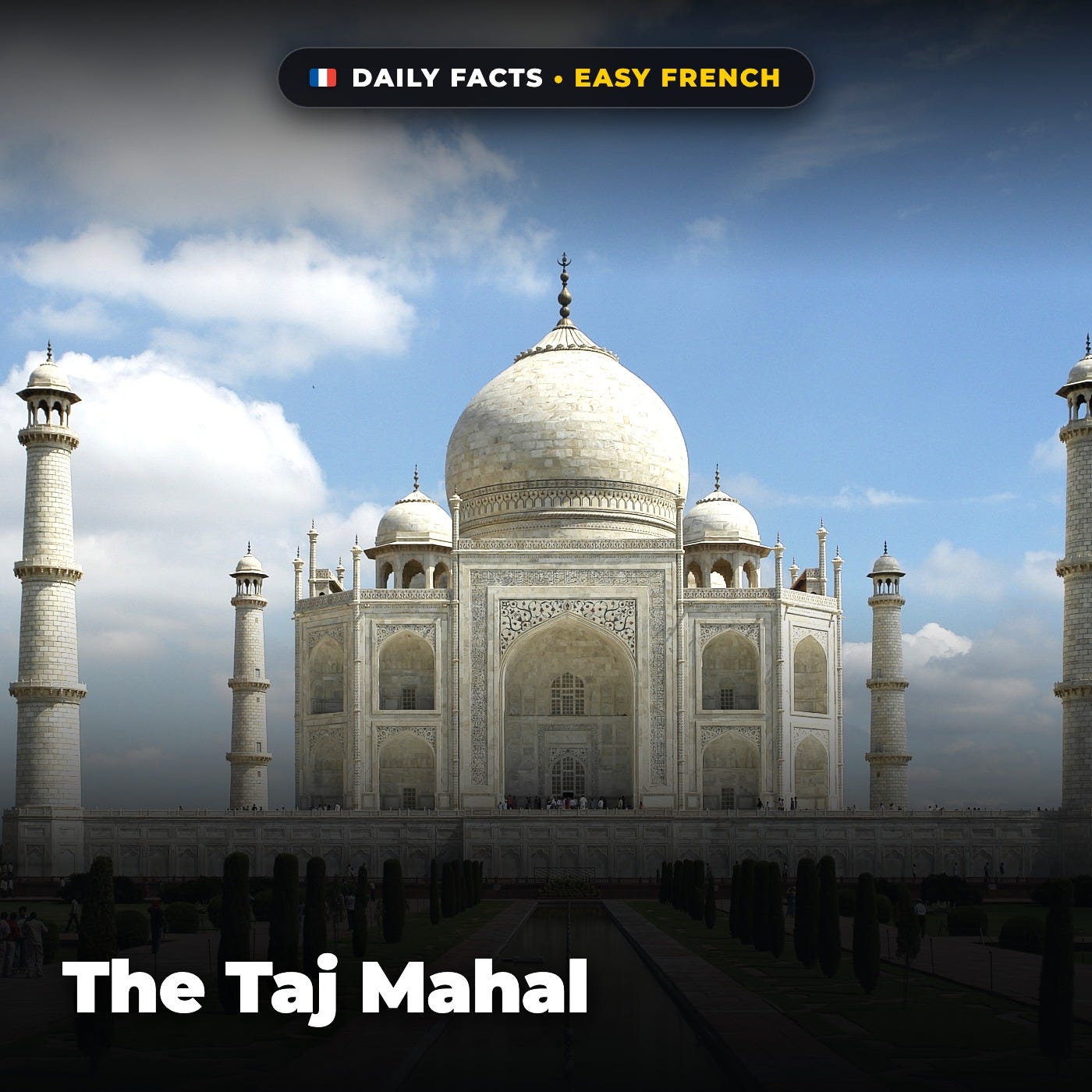
The Taj Mahal is an ivory-white marble mausoleum on the right bank of the river Yamuna in Agra, Uttar Pradesh, India. It was commissioned in 1631 by the fifth Mughal emperor, Shah Jahan, to house the tomb of his late wife, Mumtaz Mahal; it also houses the tomb of Shah Jahan himself. The tomb is the centrepiece of a 17-hectare (42-acre) complex, which includes a mosque and a guest house, and is set in formal gardens bounded on three sides by a crenellated wall.

le bâtiment (building)la pierre (stone)la pollution (pollution)
The Humpback Whale in Easy French
7:21
Episode #49

The Humpback Whale in Easy French

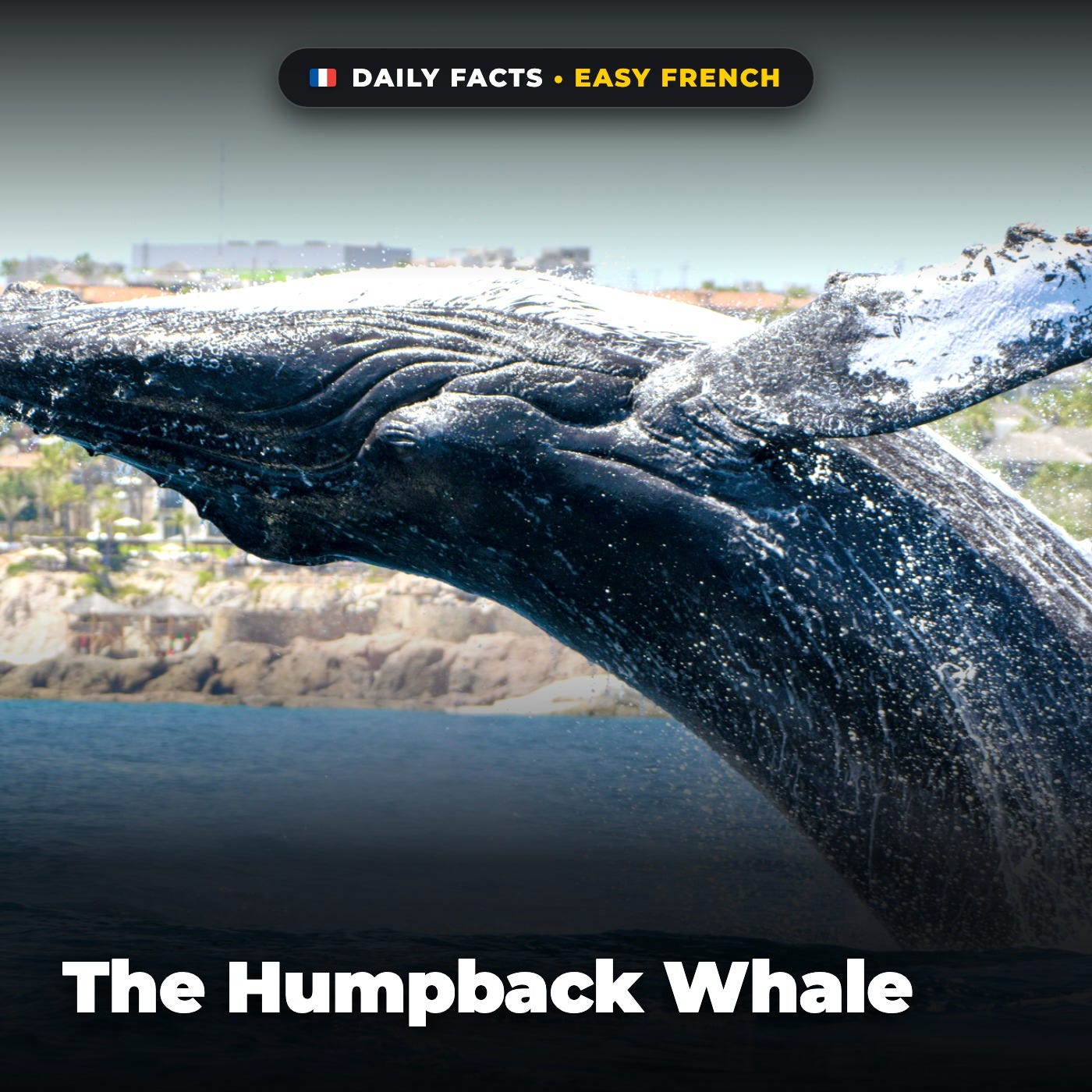
The humpback whale is a species of baleen whale. It is a rorqual and is the only species in the genus Megaptera. Adults range in length from 14–17 m (46–56 ft) and weigh up to 40 metric tons. The humpback has a distinctive body shape, with long pectoral fins and tubercles on its head.

la baleine (whale)le tubercule (tubercle)l'orque (orca)
The Life of Leonardo da Vinci in Easy French
10:27
Episode #48

The Life of Leonardo da Vinci in Easy French

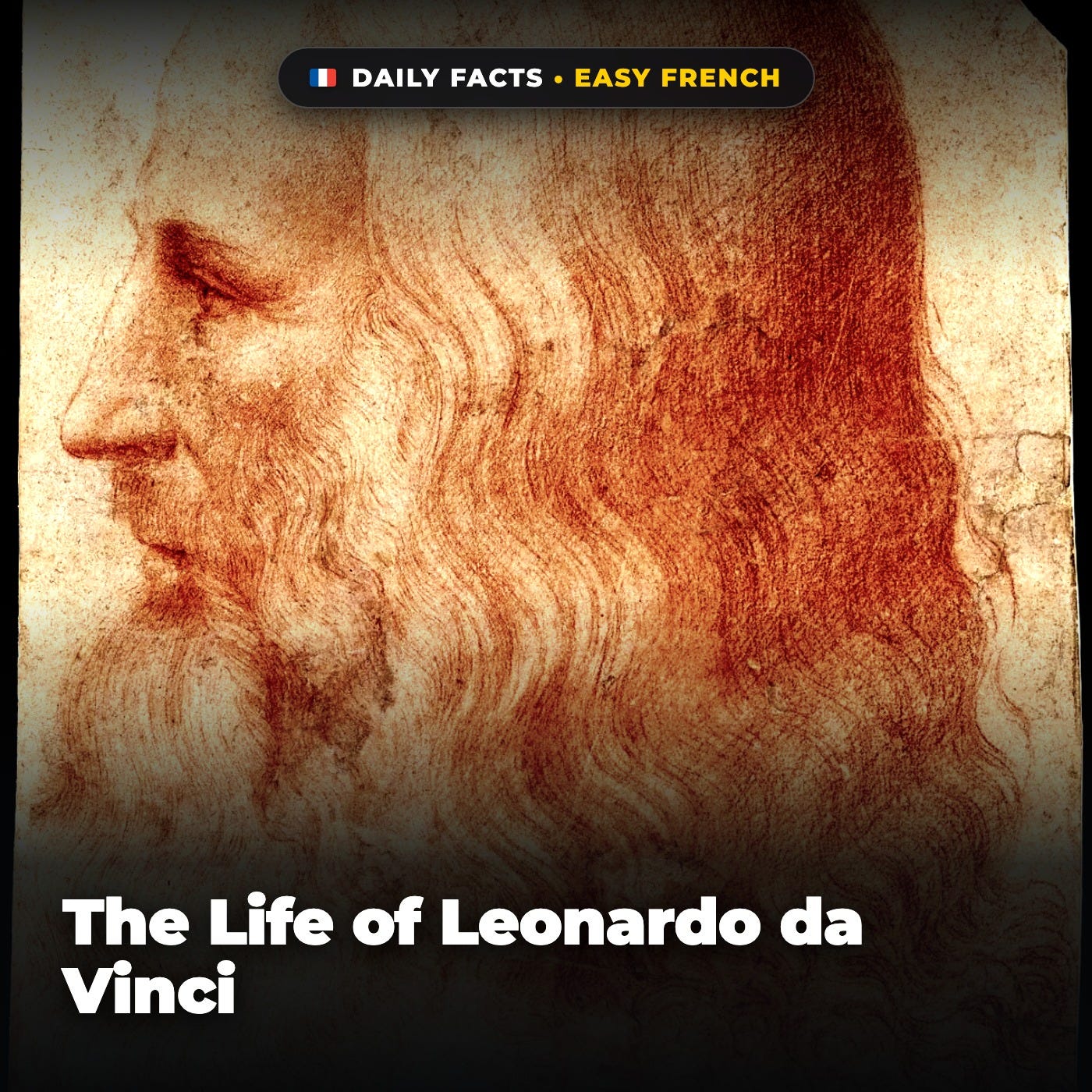
Leonardo di ser Piero da Vinci, better known as Leonardo da Vinci, was an Italian polymath of the High Renaissance who was active as a painter, draughtsman, engineer, scientist, theorist, sculptor, and architect. While his fame initially rested on his achievements as a painter, he has also become known for his notebooks, in which he made drawings and notes on a variety of subjects, including anatomy, astronomy, botany, cartography, painting, and palaeontology. Leonardo is widely regarded as a genius who epitomised the Renaissance humanist ideal, and his collective works contributed to the development of European art to an extent rivalled only by that of his younger contemporary Michelangelo.

le professeur (professor)le frottement (friction)l'invention (invention)
The Blue-Ringed Octopus in Easy French
9:25
Episode #47

The Blue-Ringed Octopus in Easy French

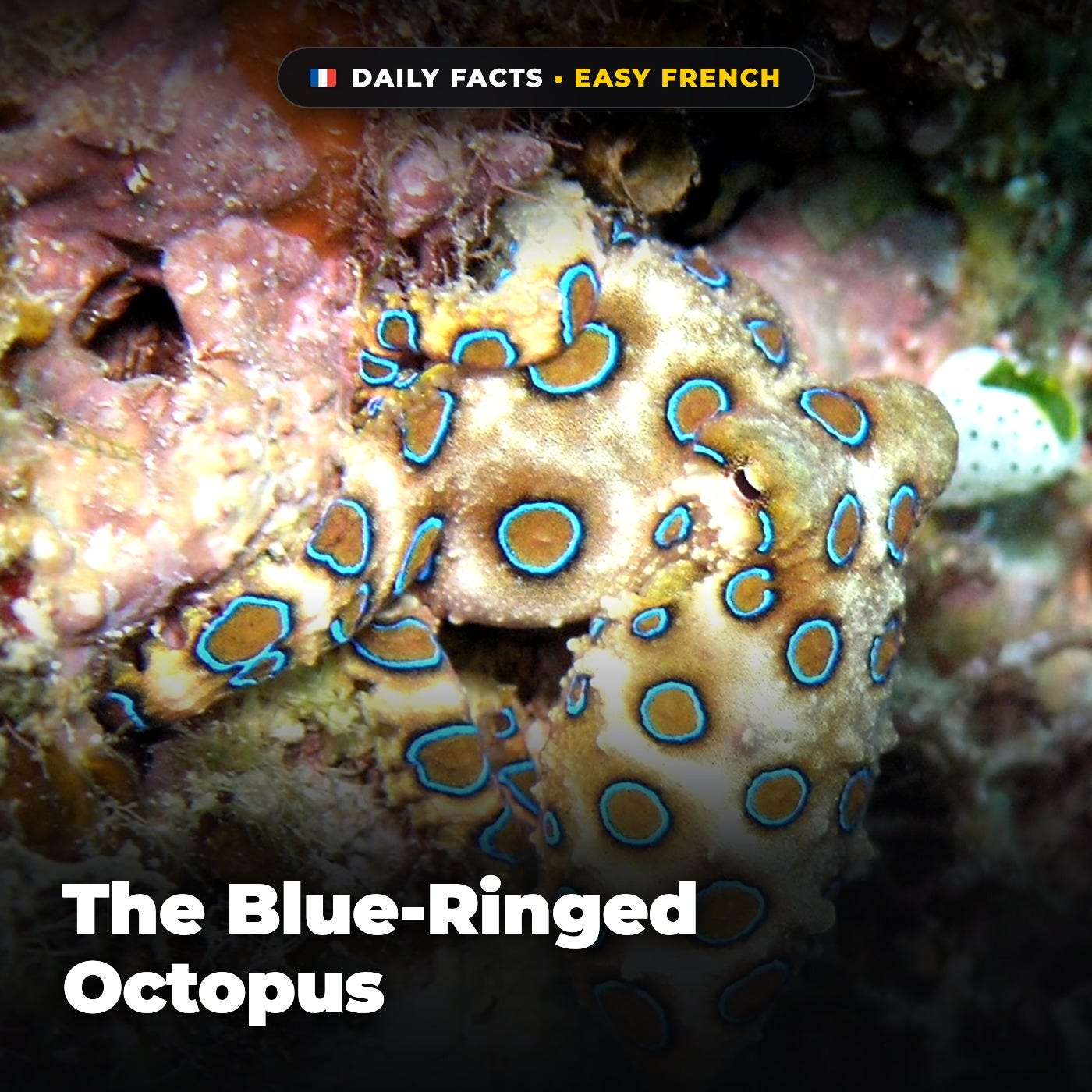
Blue-ringed octopuses, comprising the genus Hapalochlaena, are four extremely venomous species of octopus that can be found in shells between rocks and crevices in tide pools and also coral reefs in the Pacific and Indian Oceans, from Japan to Australia. They can be identified by their yellowish skin and characteristic blue and black rings that can change color dramatically when the animals are threatened. They eat small crustaceans, including crabs, hermit crabs, shrimp, and other small sea animals.

l'animal (animal)le poison (poison)la pieuvre (octopus)
The Great Wall of China in Easy French
10:52
Episode #46

The Great Wall of China in Easy French

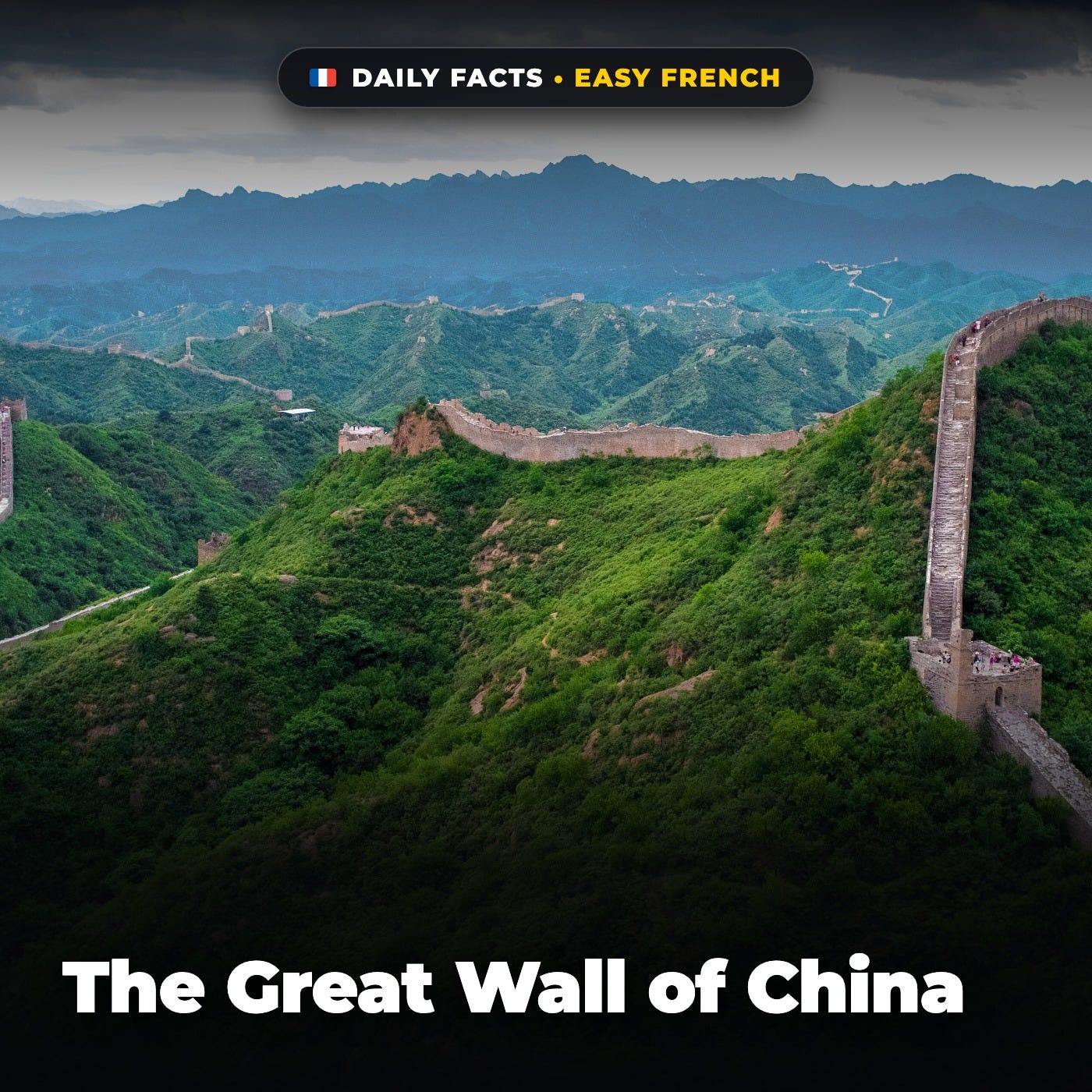
The Great Wall of China is a series of fortifications in China. They were built across the historical northern borders of ancient Chinese states and Imperial China as protection against various nomadic groups from the Eurasian Steppe. The first walls date to the 7th century BC; these were joined together in the Qin dynasty. Successive dynasties expanded the wall system; the best-known sections were built by the Ming dynasty (1368–1644).

l'espace (space)l'architecture (architecture)le téléphone (phone)
The Mysterious Platypus in Easy French
17:05
Episode #45

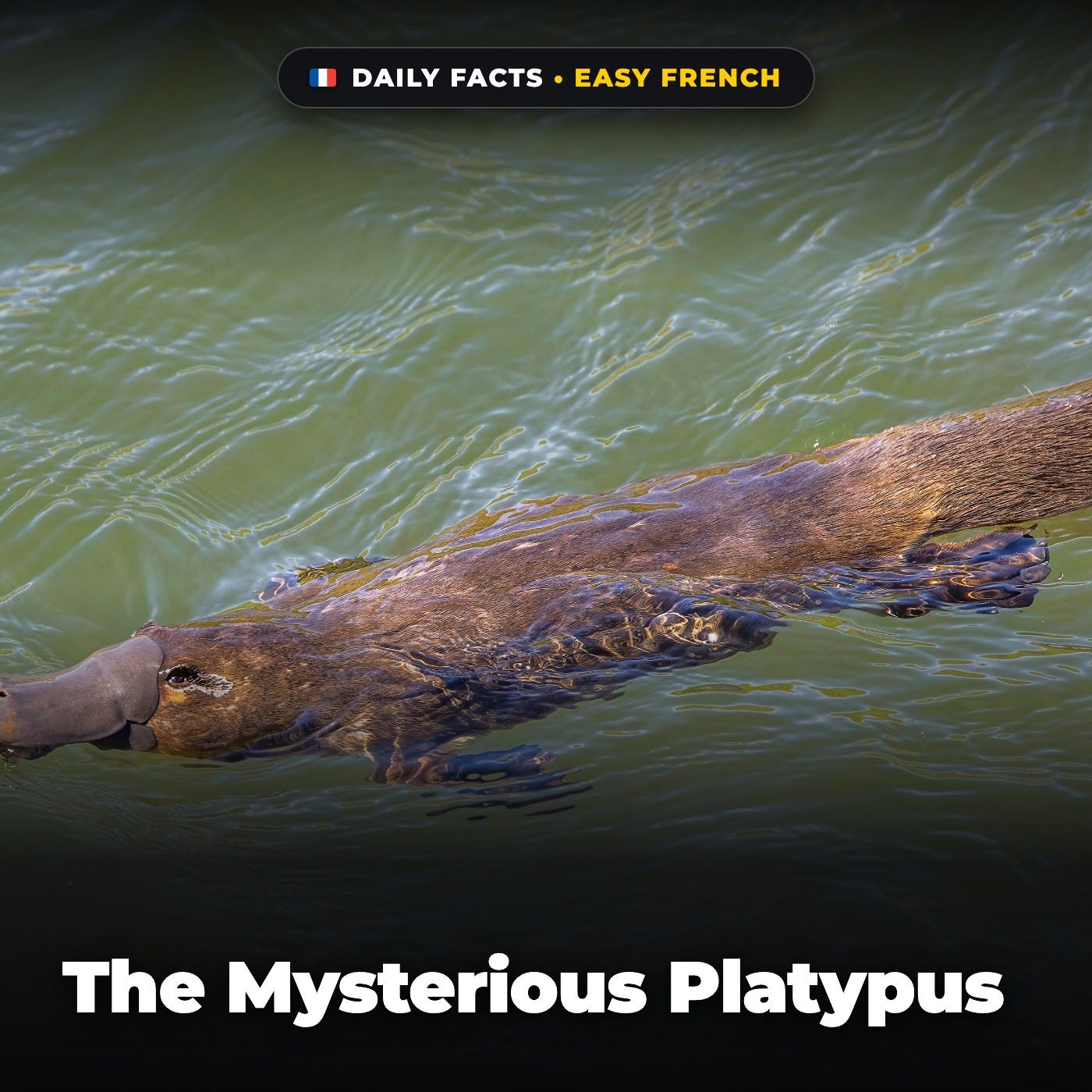
The Mysterious Platypus in Easy French

The platypus, sometimes referred to as the duck-billed platypus, is a semiaquatic, egg-laying mammal endemic to eastern Australia, including Tasmania. The platypus is the sole living representative of the family Ornithorhynchidae and genus Ornithorhynchus, though a number of related species appear in the fossil record. Together with the four species of echidna, it is one of the five extant species of monotremes, mammals that lay eggs instead of giving birth to live young. Like other monotremes, the platypus has a sense of electrolocation, which it uses to detect prey in water while its eyes, ears and nostrils are closed.

l'animal (animal)le groupe (group)l'ornithorynque (platypus)
The Destruction of Pompeii in Easy French
19:28
Episode #44

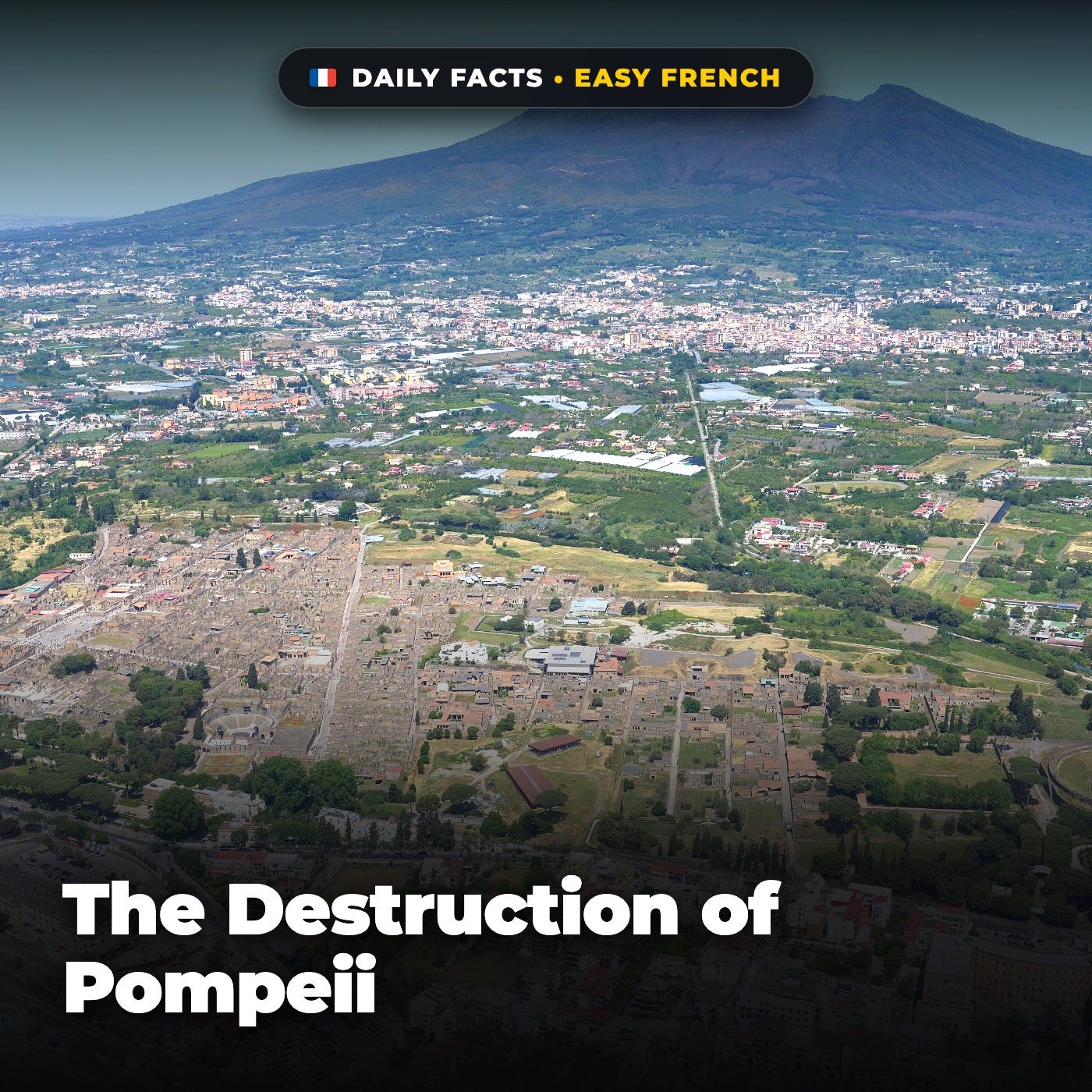
The Destruction of Pompeii in Easy French

In the year 79 AD, the bustling Roman city of Pompeii met a sudden and tragic end. Mount Vesuvius erupted violently, burying the entire region under a deep blanket of burning volcanic ash and stone. Because the city was covered so quickly, buildings, artworks, and everyday objects remained frozen in time for centuries. Today, the rediscovery of Pompeii provides an extraordinary window into daily life in the ancient Roman world.

le volcan (volcano)la cendre (ash)la ruine (ruin)
The Green Sea Turtle in Easy French
11:07
Episode #43

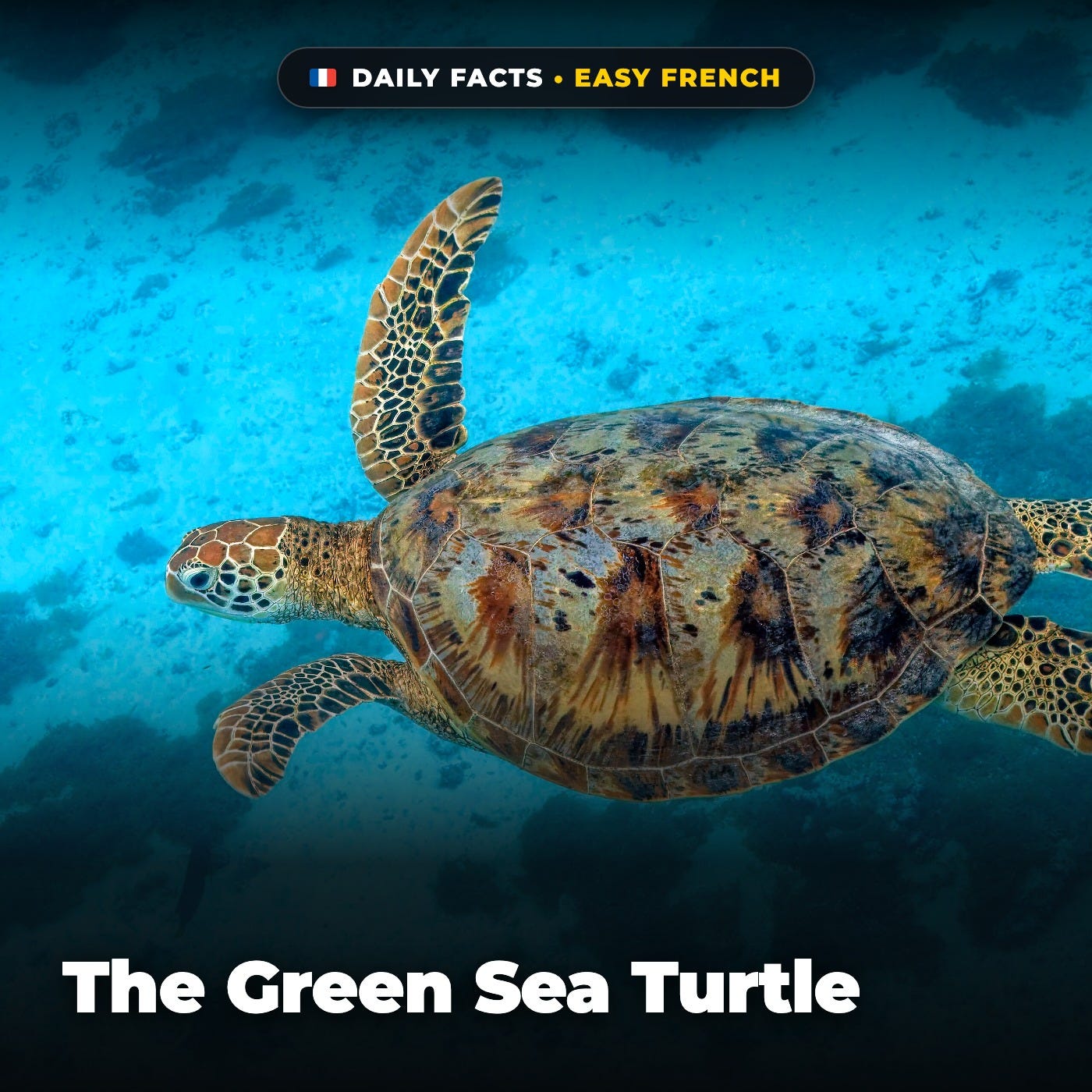
The Green Sea Turtle in Easy French

The green sea turtle, also known as the green turtle, black sea turtle, and Pacific green turtle, is a species of large sea turtle of the family Cheloniidae. It is the only species in the genus Chelonia. Its range extends throughout tropical and subtropical seas around the world, with two distinct populations in the Atlantic and Pacific Oceans, but it is also found in the Indian Ocean. The common name refers to the usually green fat found beneath its carapace, due to its diet strictly being seagrass, not to the color of its carapace, which is olive to black.

la tortue (turtle)l'animal (animal)le bébé (baby)
The Lost City of Machu Picchu in Easy French
20:13
Episode #42

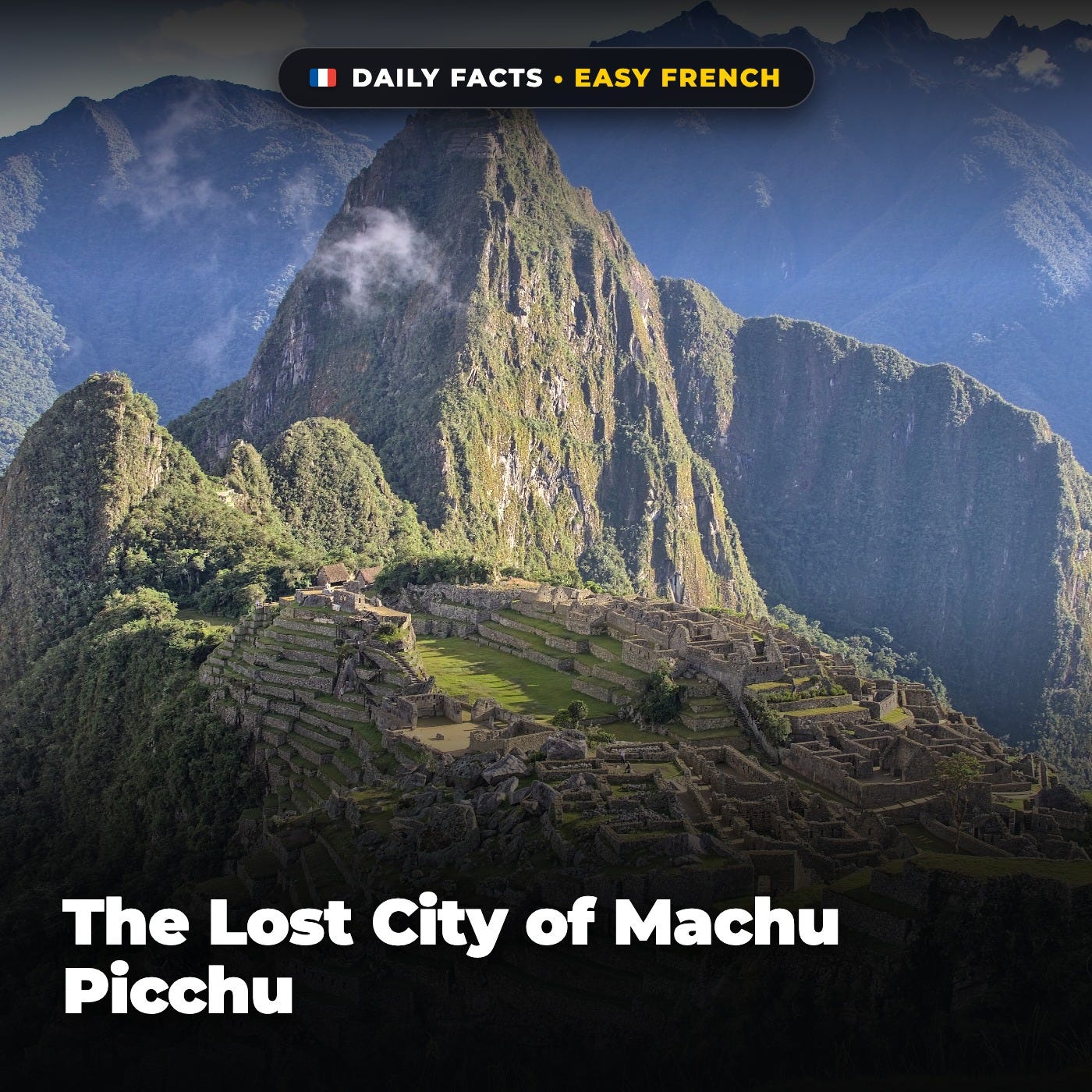
The Lost City of Machu Picchu in Easy French

High in the Andes mountains of Peru rests Machu Picchu, a breathtaking stone citadel built by the Inca Empire in the 15th century. Perched nearly 2,430 meters above sea level, this misty sanctuary remained hidden from Spanish conquistadors for centuries. Today, travelers from all over the world hike across scenic trails to marvel at its magnificent terraces and masterfully carved granite walls. Join us as we discover the incredible engineering secrets and history behind this legendary city in the clouds.

la montagne (mountain)la pierre (stone)la ruine (ruin)
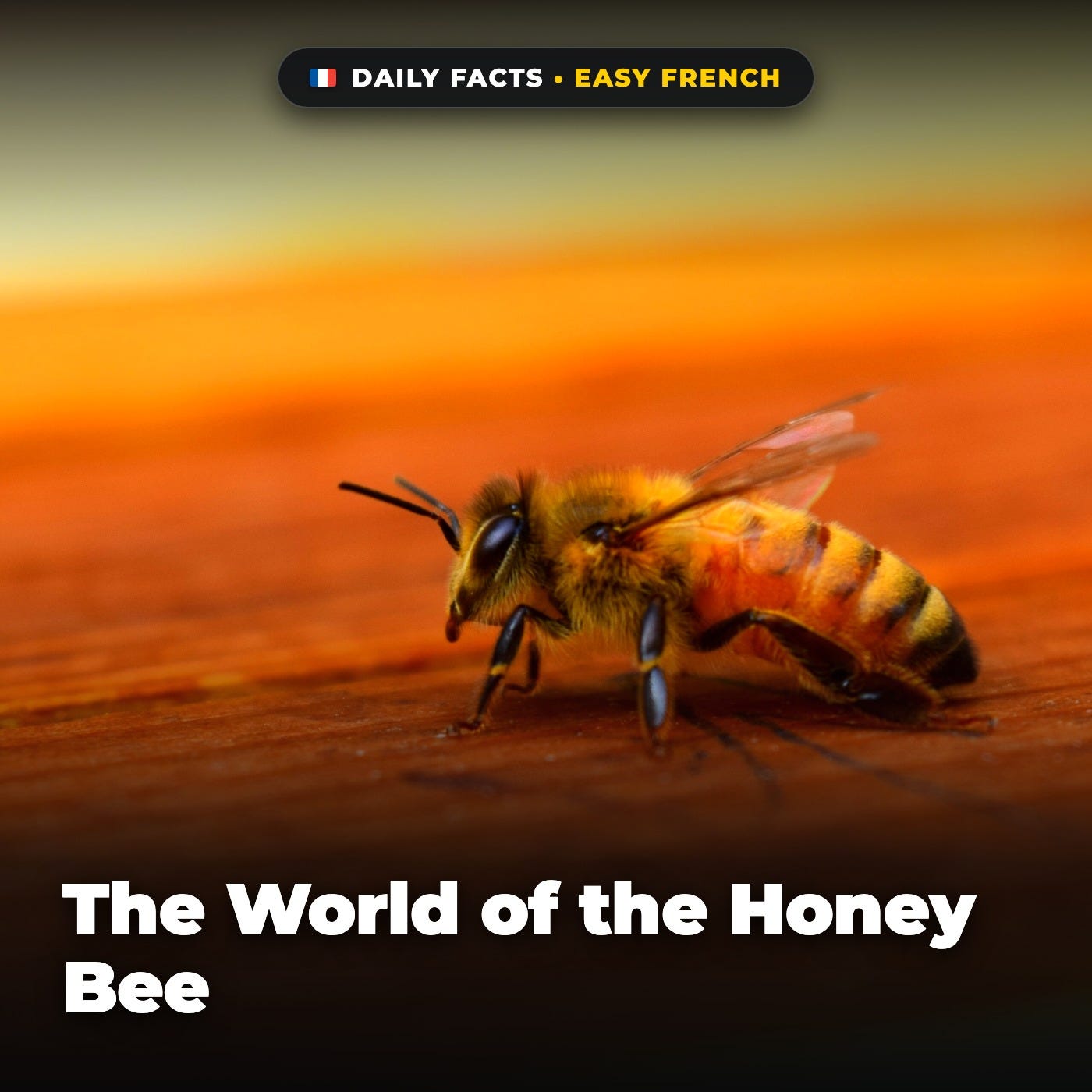
The World of the Honey Bee in Easy French
17:42
Episode #41

The World of the Honey Bee in Easy French

Honey bees are extraordinary social insects that play a critical role in ecosystems and agriculture worldwide. Flying tirelessly from flower to flower, these tiny pollinators help countless plants reproduce while collecting sweet floral nectar. Inside their carefully organized hives, thousands of worker bees build intricate hexagonal wax combs to store food and raise their young. By transforming nectar into golden honey, a single colony creates a sweet reserve that sustains the nest through cold winters.

l'abeille (bee)le miel (honey)la fleur (flower)
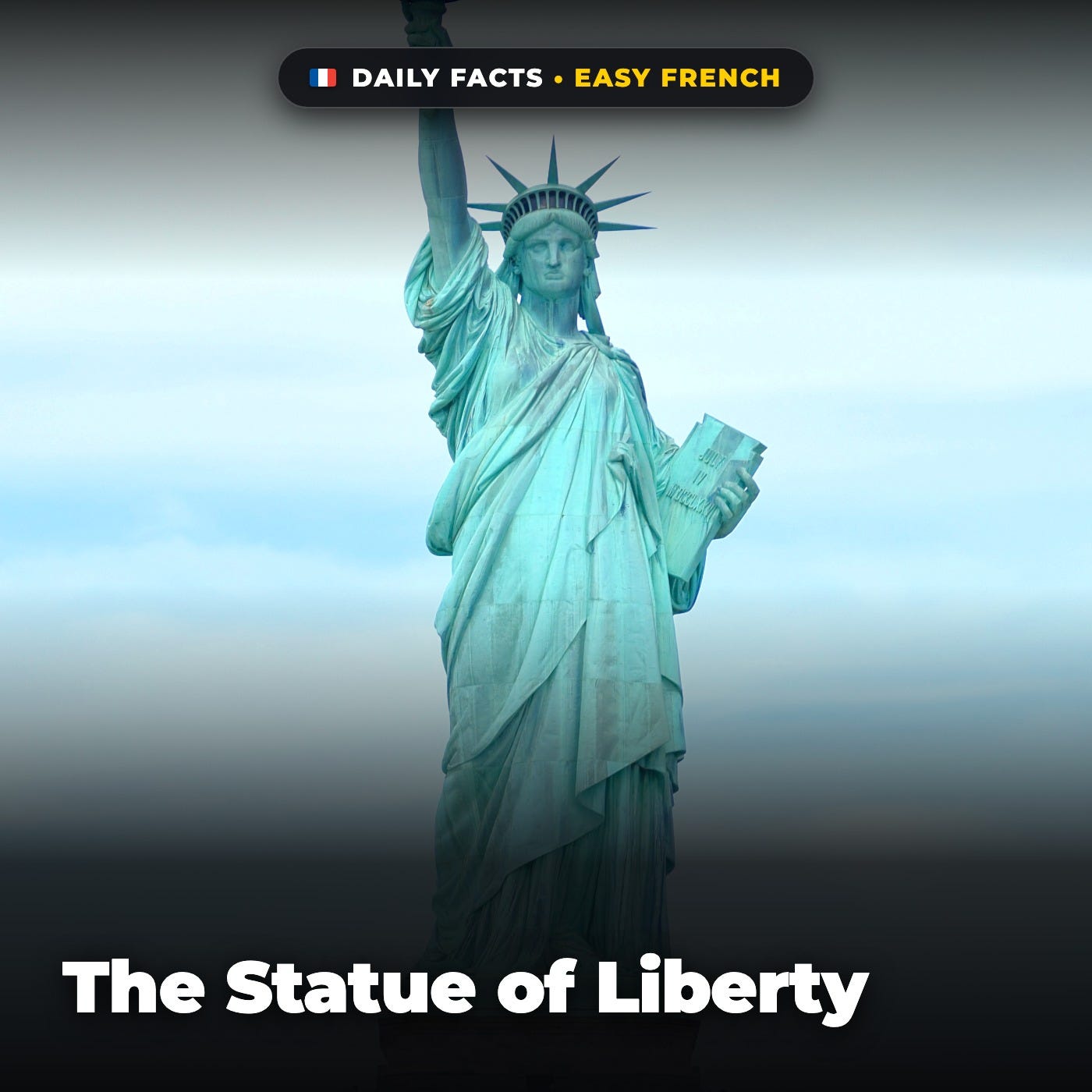
The Statue of Liberty in Easy French
10:38
Episode #40

The Statue of Liberty in Easy French

Standing proudly in New York Harbor, the Statue of Liberty is one of the most recognizable monuments in the world. This colossal copper figure represents Libertas, the Roman goddess of freedom, welcoming visitors and immigrants from across the sea. Created as a magnificent gift of friendship from the people of France, she holds a torch and a tablet inscribed with the date of American independence. Her enduring image continues to inspire millions as a universal symbol of hope, liberty, and democracy.

la liberté (freedom/liberty)la statue (statue)le cuivre (copper)
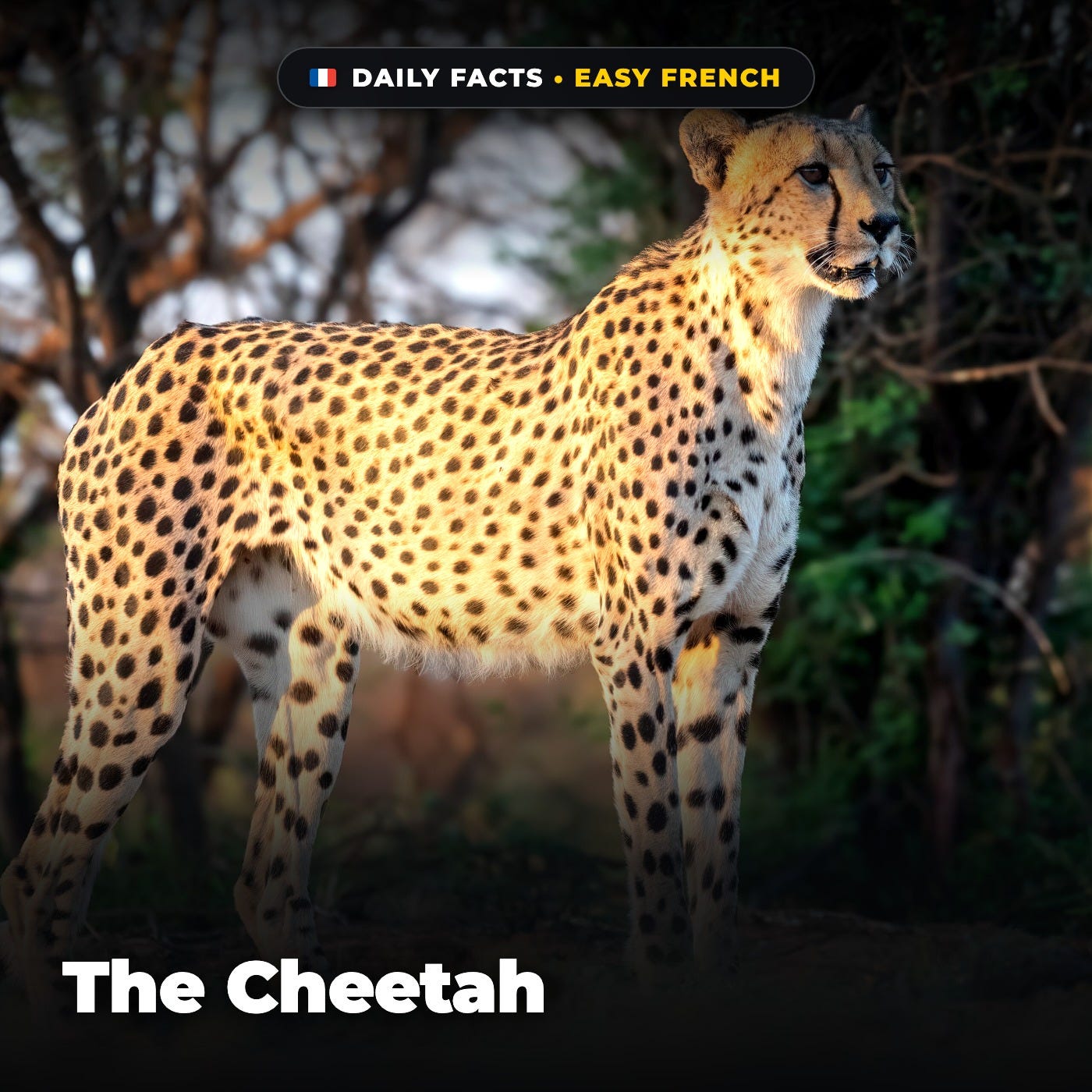
The Cheetah in Easy French
12:43
Episode #39

The Cheetah in Easy French

Meet the cheetah, the undisputed sprinting champion and the fastest land animal living on our planet today. Across wide African grasslands, this slender big cat relies on breathtaking acceleration rather than brute strength to catch prey. Distinctive black tear marks, solid spots, and a flexible spine make its lightweight body perfectly engineered for sudden high-speed chases. Discover how this majestic creature hunts, communicates, and fights to survive in the modern world.

le guépard (cheetah)la vitesse (speed)chasser (to hunt)
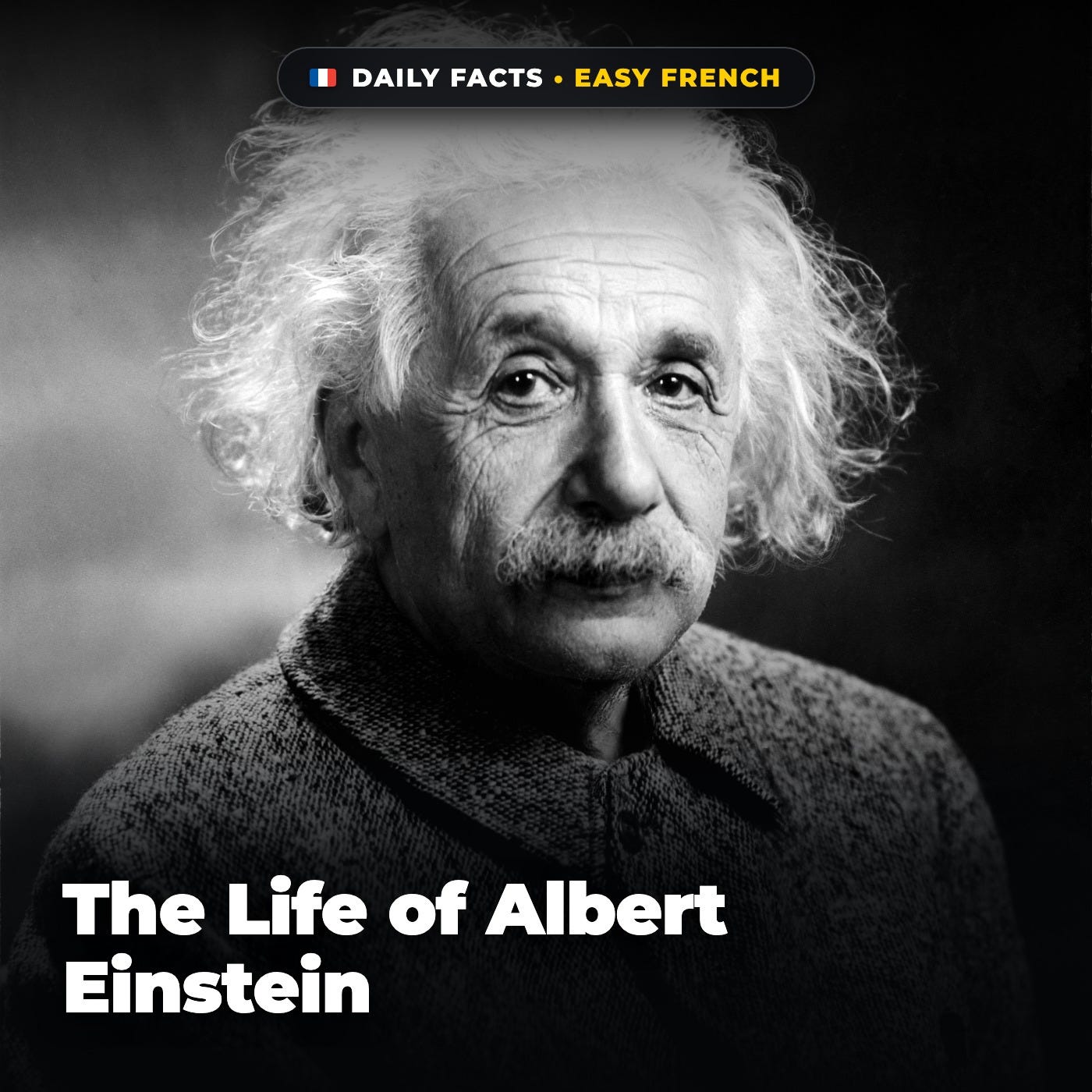
The Life of Albert Einstein in Easy French
8:55
Episode #38

The Life of Albert Einstein in Easy French

Albert Einstein was one of the most influential and celebrated scientists in human history. Born in Germany, his revolutionary ideas completely transformed how we understand space, light, and gravity. Beyond his brilliant physics equations and iconic formula, he was a passionate violinist and a committed advocate for global peace. Explore the inspiring story of a curious patent clerk whose imagination reshaped our entire universe.

la physique (physics)le génie (genius)le temps (time)
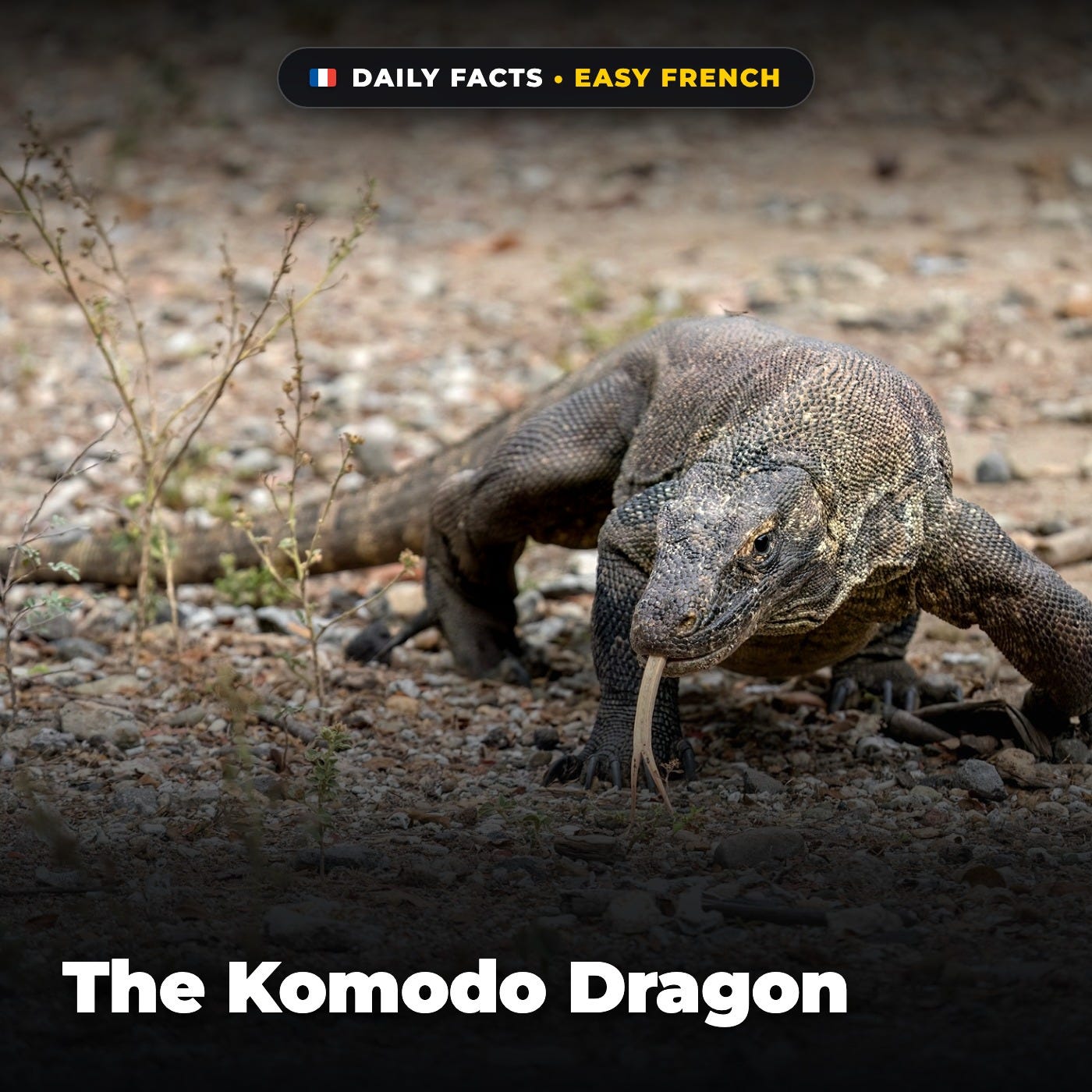
The Komodo Dragon in Easy French
21:29
Episode #37

The Komodo Dragon in Easy French

The Komodo dragon is the undisputed giant of the lizard world, roaming the rugged volcanic islands of eastern Indonesia. Reaching lengths of up to three meters, these prehistoric reptiles dominate their tropical habitats with immense physical power and stealth. Equipped with serrated teeth and specialized venom glands, they can conquer prey much larger than themselves. Today, they remain a world-famous wildlife icon that inspires both scientific wonder and essential conservation efforts across the globe.

le lézard (lizard)le venin (venom)l'île (island)
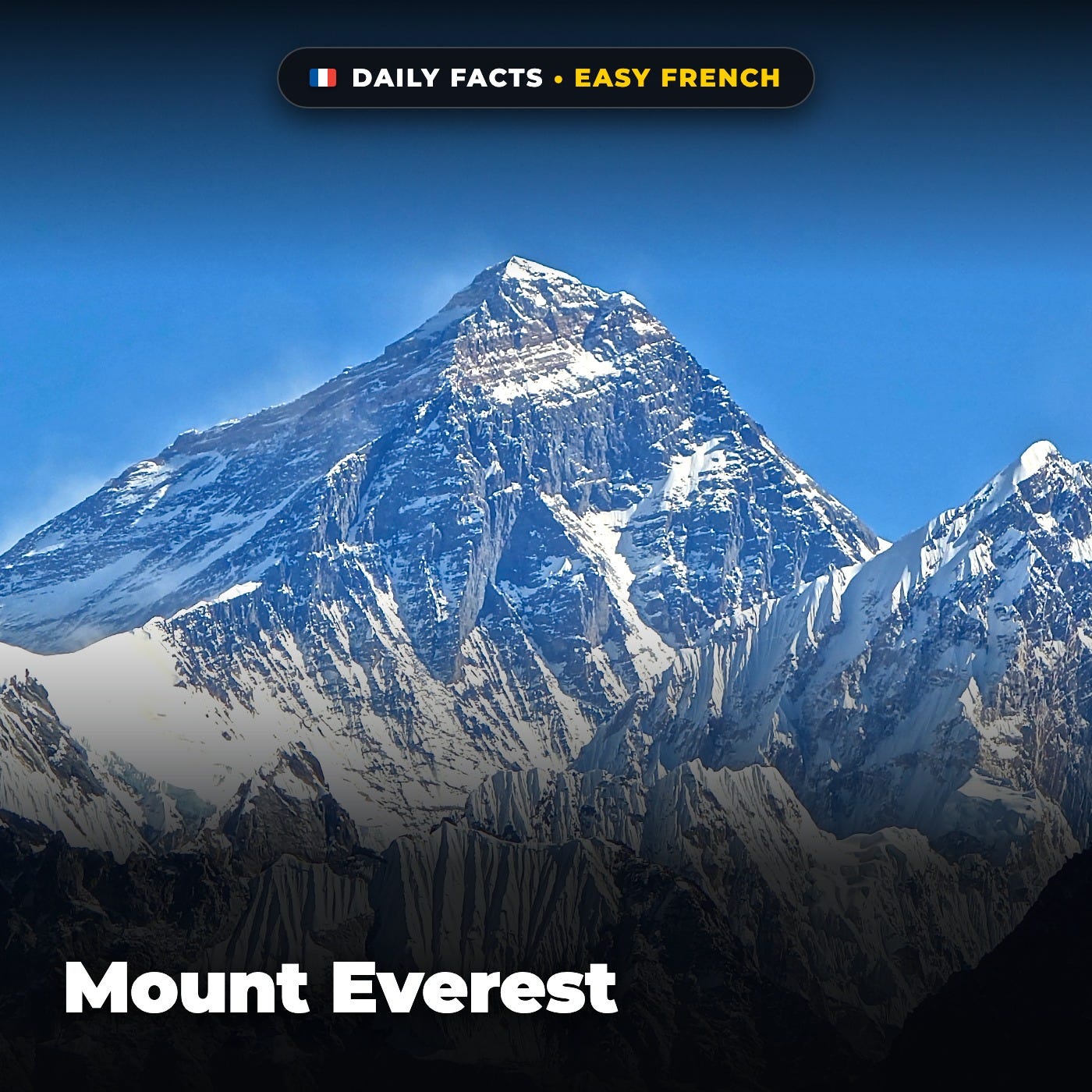
Mount Everest in Easy French
9:23
Episode #36

Mount Everest in Easy French

Mount Everest is the highest mountain on Earth, towering dramatically over the mighty Himalayas on the border of Nepal and China. Rising nearly nine kilometers into the sky, its snowy summit attracts brave climbers from all around the world. Known locally as Sagarmatha and Chomolangma, this legendary peak holds profound cultural and spiritual significance for native communities. Exploring its frozen slopes reveals incredible stories of human endurance, extreme weather, and awe-inspiring natural beauty.

la montagne (mountain)la neige (snow)grimper (to climb)
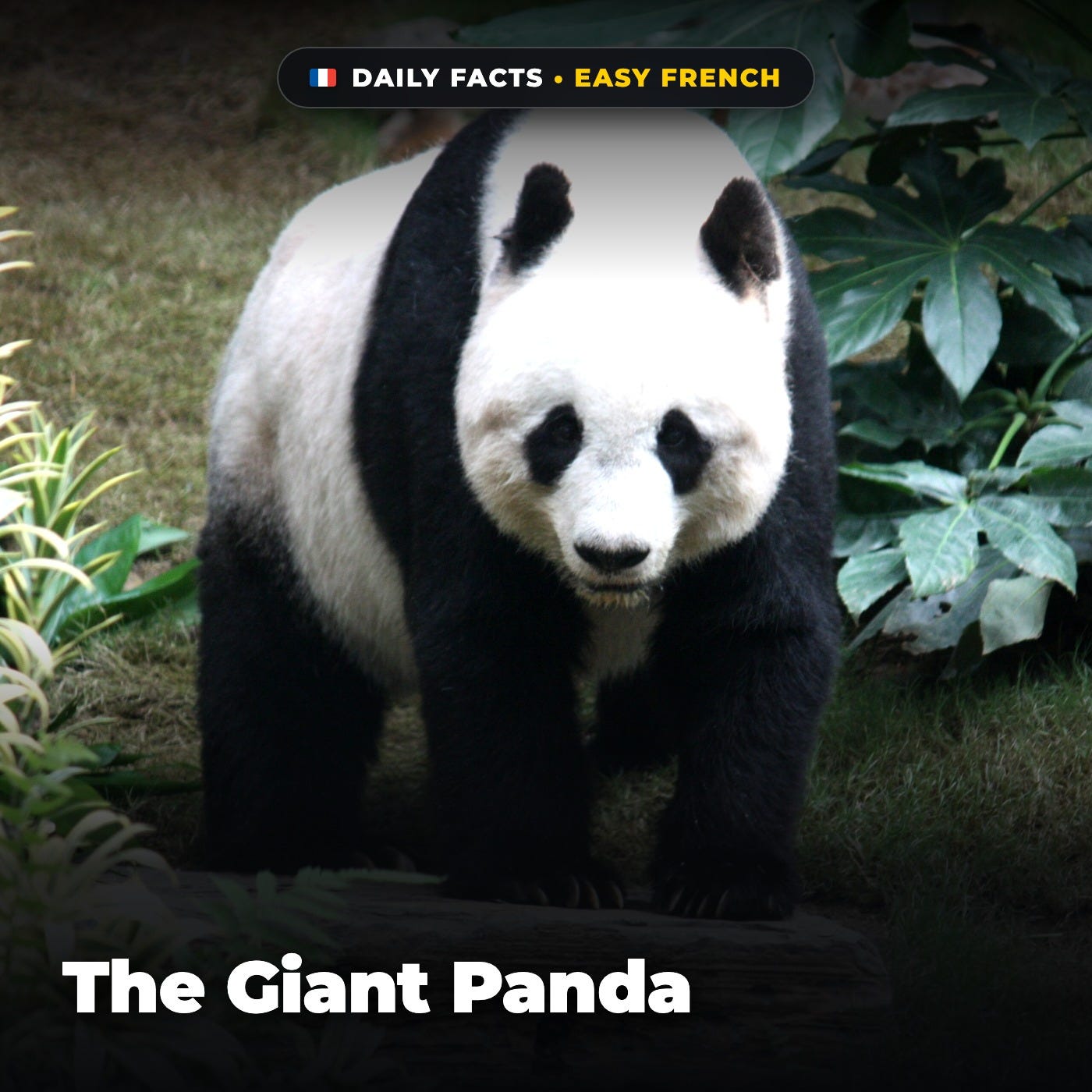
The Giant Panda in Easy French
11:42
Episode #35

The Giant Panda in Easy French

The giant panda is one of the most beloved and recognizable animals in the entire world. Native to the mist-covered mountain forests of central China, this iconic bear stands out with its bold black-and-white coat. Though classified biologically as a carnivore, the panda spends nearly its entire day peacefully munching on bamboo stalks. Thanks to dedicated conservation efforts across the globe, this gentle giant is slowly recovering in the wild.

l'ours (bear)le bambou (bamboo)la forêt (forest)
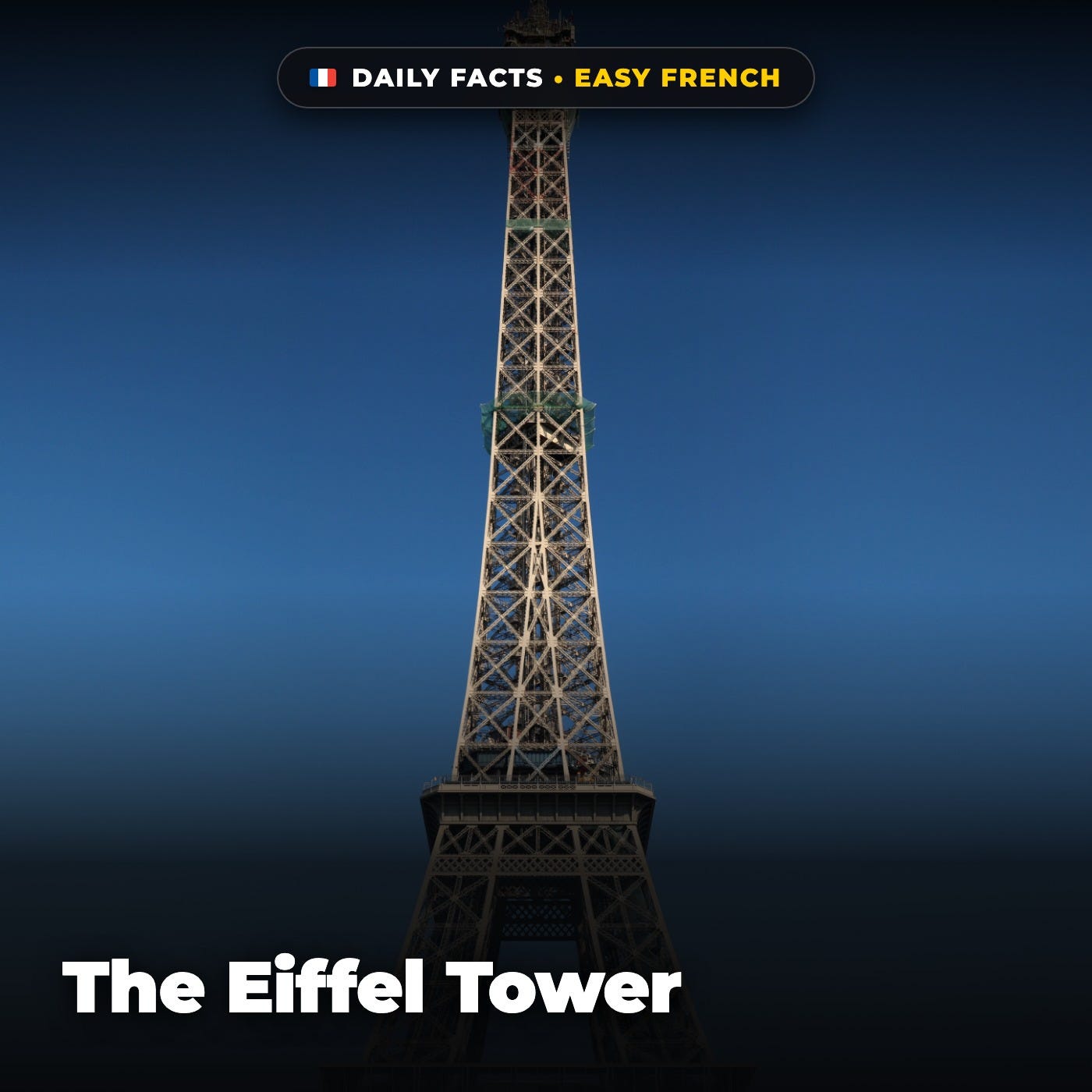
The Eiffel Tower in Easy French
12:56
Episode #34

The Eiffel Tower in Easy French

Rising high above the Paris skyline, the Eiffel Tower is one of the most recognizable landmarks in the entire world. Built between 1887 and 1889 by engineer Gustave Eiffel, this towering iron structure was originally created for the World's Fair. Although many artists initially disliked its bold metal design, the tower soon won the hearts of locals and travelers alike. Today, millions of people visit each year to enjoy breathtaking views and celebrate French culture.

la tour (tower)le fer (iron)monter (to go up)
The 1936 Summer Olympics in Easy French
6:12
Episode #33

The 1936 Summer Olympics in Easy French

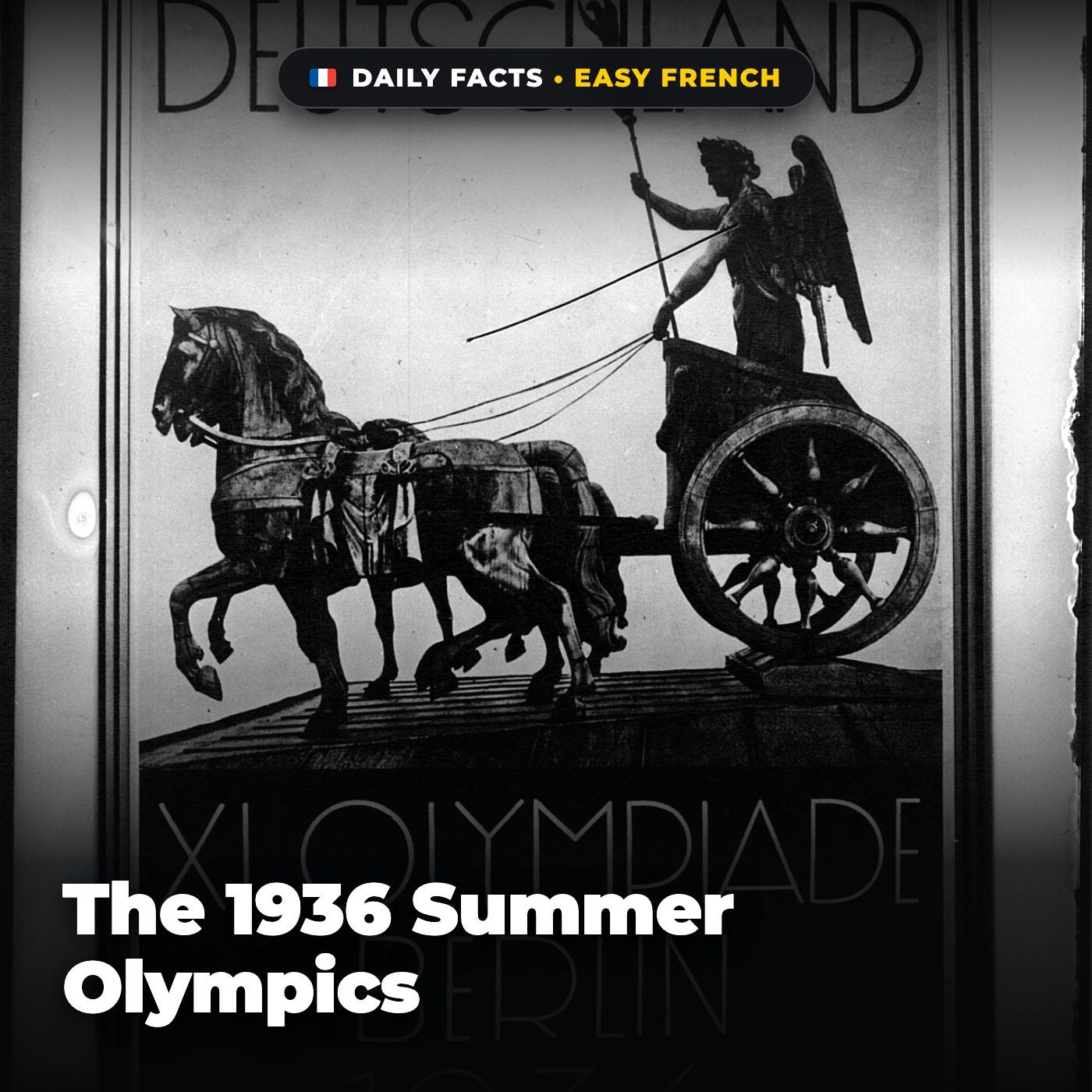
The 1936 Summer Olympics, officially the Games of the XI Olympiad and branded as Berlin 1936, were an international multi-sport event held from 1 to 16 August 1936 in Berlin, Germany. Berlin won the right to host the Games over Barcelona at the 29th IOC Session in 1931. The 1936 Games were the second and last occasion on which the International Olympic Committee (IOC) chose a host by a ballot in which the bidding cities themselves could vote; later rules barred cities that voted from being selected.

l'histoire (history / story)le monde (world)l'exemple (example)
The Moon in Easy French
11:10
Episode #32

The Moon in Easy French

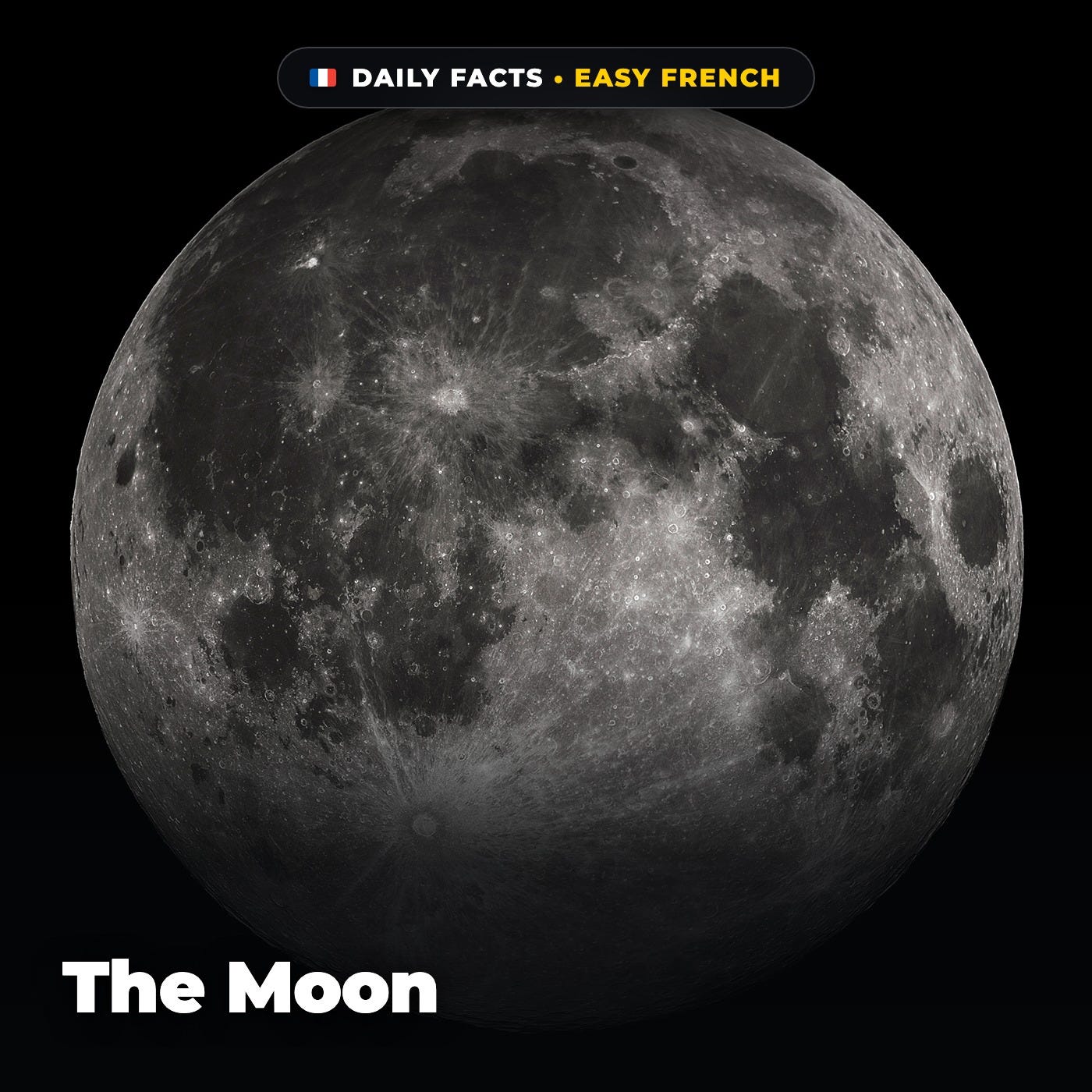
The Moon is the only natural satellite of Earth. It orbits Earth in an elliptical path, at a distance that varies over the year, averaging around 378,000 kilometers (235,000 mi). It completes an orbit in relation to Earth and the Sun (synodically) every 29.5 days. The Moon and Earth are bound by gravitational attraction, which is stronger on the sides facing each other.

l'histoire (history / story)le monde (world)l'exemple (example)
The Lion in Easy French
6:33
Episode #31

The Lion in Easy French

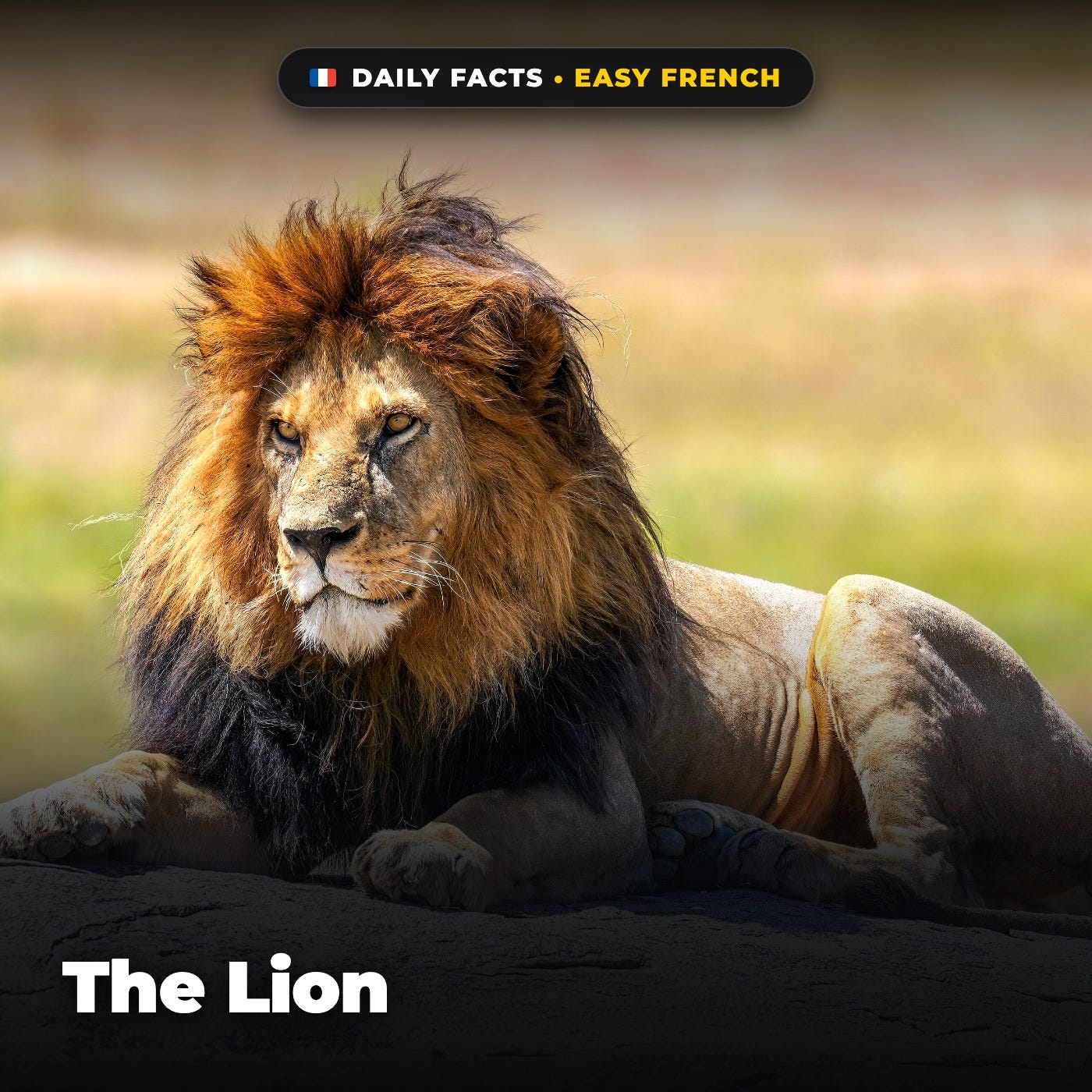
The lion is a large cat of the genus Panthera, currently ranging only in sub-Saharan Africa and India. It has a muscular, broad-chested body; a short, rounded head; round ears; and a dark, hairy tuft at the tip of its tail. It is sexually dimorphic; adult male lions are larger than females and have a prominent mane that extends from the head to the shoulders and chest.

l'histoire (history / story)le monde (world)l'exemple (example)
The Koala in Easy French
16:27
Episode #30

The Koala in Easy French

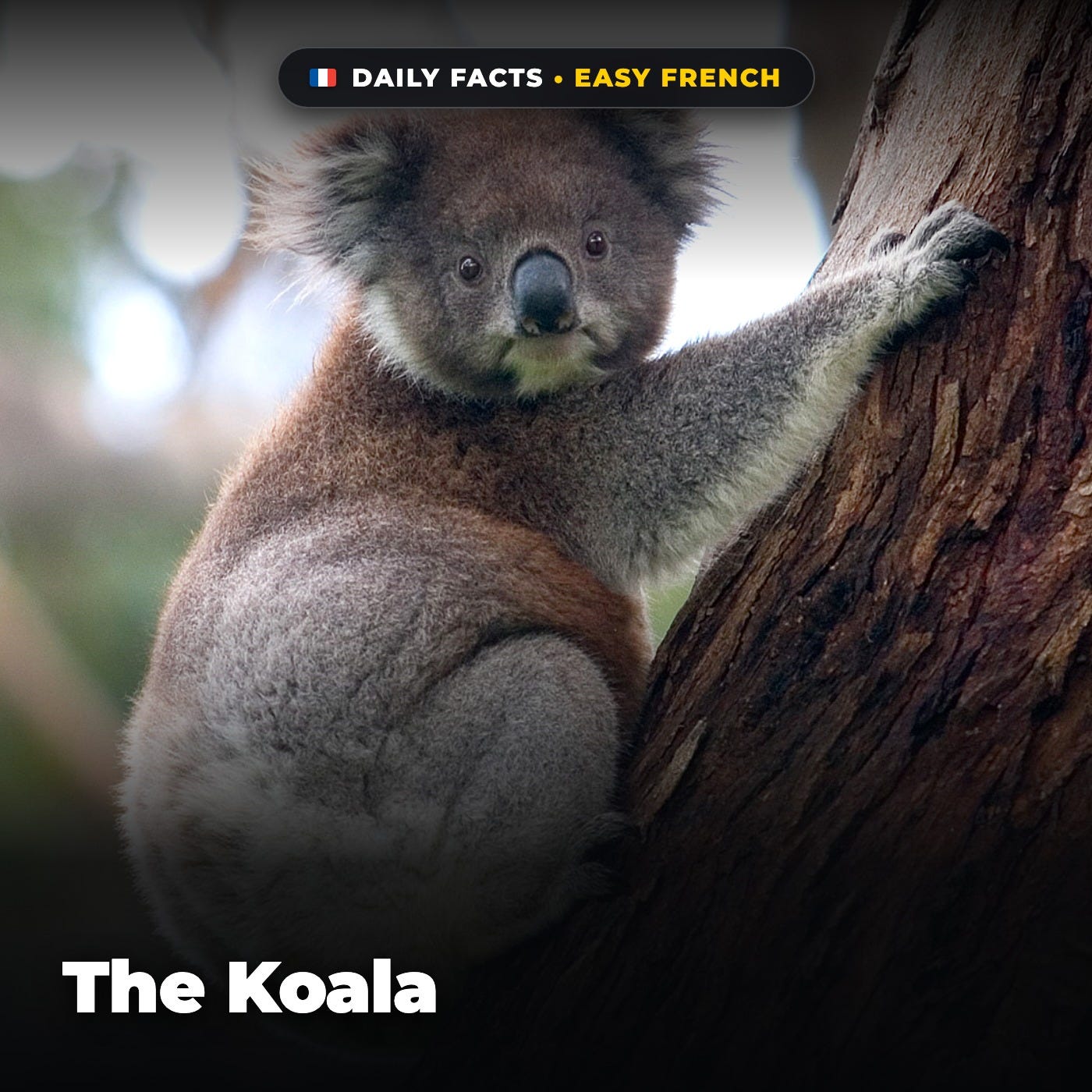
The koala, sometimes inaccurately called the koala bear, is an arboreal herbivorous marsupial native to Australia. It is the only extant representative of the family Phascolarctidae. Its closest living relatives are the wombats. The koala is found in coastal areas of the continent's eastern and southern regions, inhabiting Queensland, New South Wales, Victoria, and South Australia.

l'histoire (history / story)le monde (world)l'exemple (example)
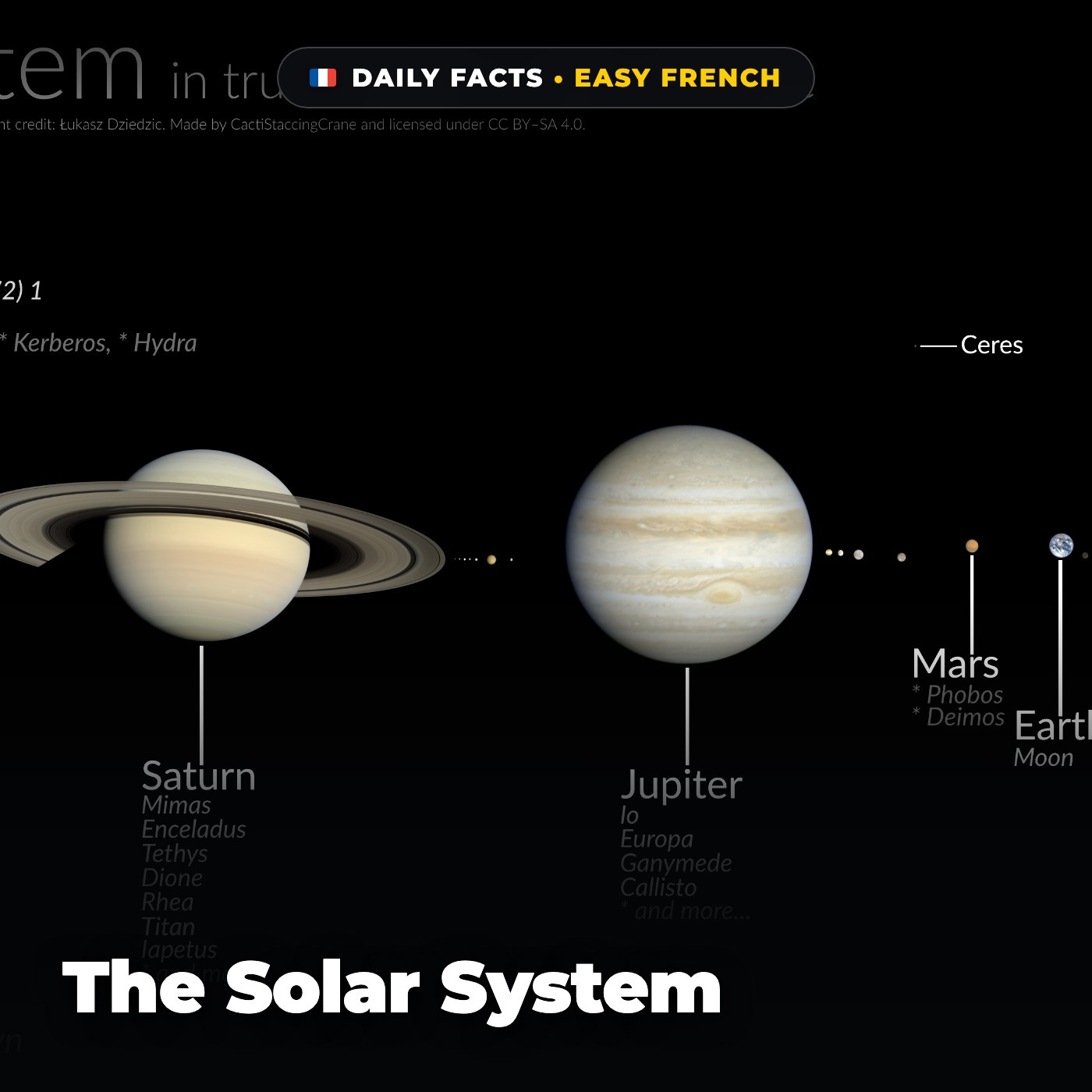
The Solar System in Easy French
10:21
Episode #29

The Solar System in Easy French

The Solar System is the gravitationally bound system of the Sun and the masses that orbit it, most prominently its eight planets, of which Earth is one. The Solar System is an isolated single-star planetary system within the Milky Way Galaxy. The system formed about 4.6 billion years ago when a dense region of a molecular cloud collapsed, creating the Sun and a protoplanetary disc from which the orbiting bodies assembled.

l'histoire (history / story)le monde (world)l'exemple (example)
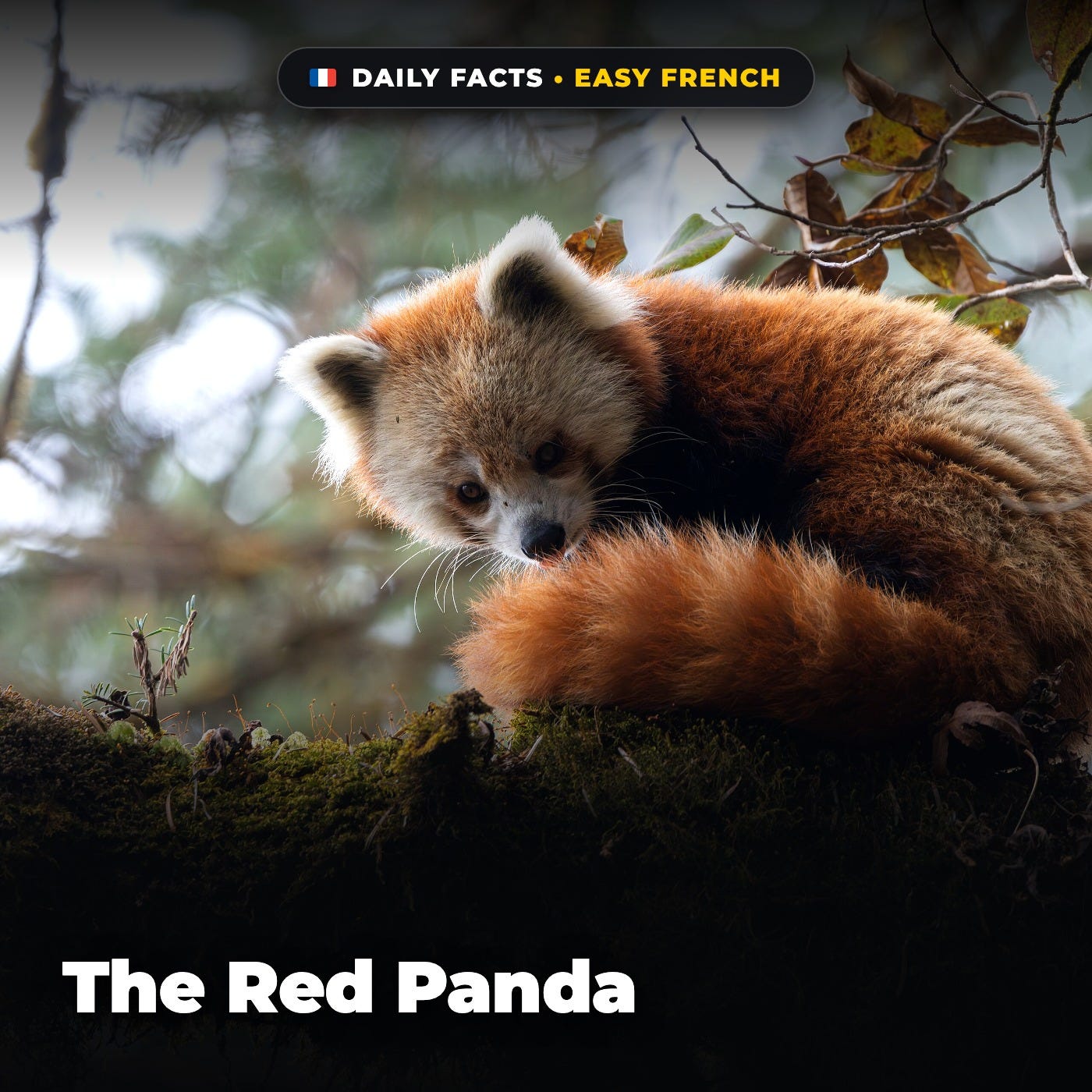
The Red Panda in Easy French
28:00
Episode #28

The Red Panda in Easy French

The red panda, also known as the lesser panda, is a small mammal native to the eastern Himalayas and southwestern China. It has dense reddish-brown fur with a black belly and legs, white-lined ears, a mostly white muzzle and a ringed tail. Its head-to-body length is 51–63.5 cm (20.1–25.0 in) with a 28–48.5 cm (11.0–19.1 in) tail, and it weighs between 3.2 and 15 kg. It is well adapted to climbing due to its flexible joints and curved semi-retractile claws.

l'histoire (history / story)le monde (world)l'exemple (example)
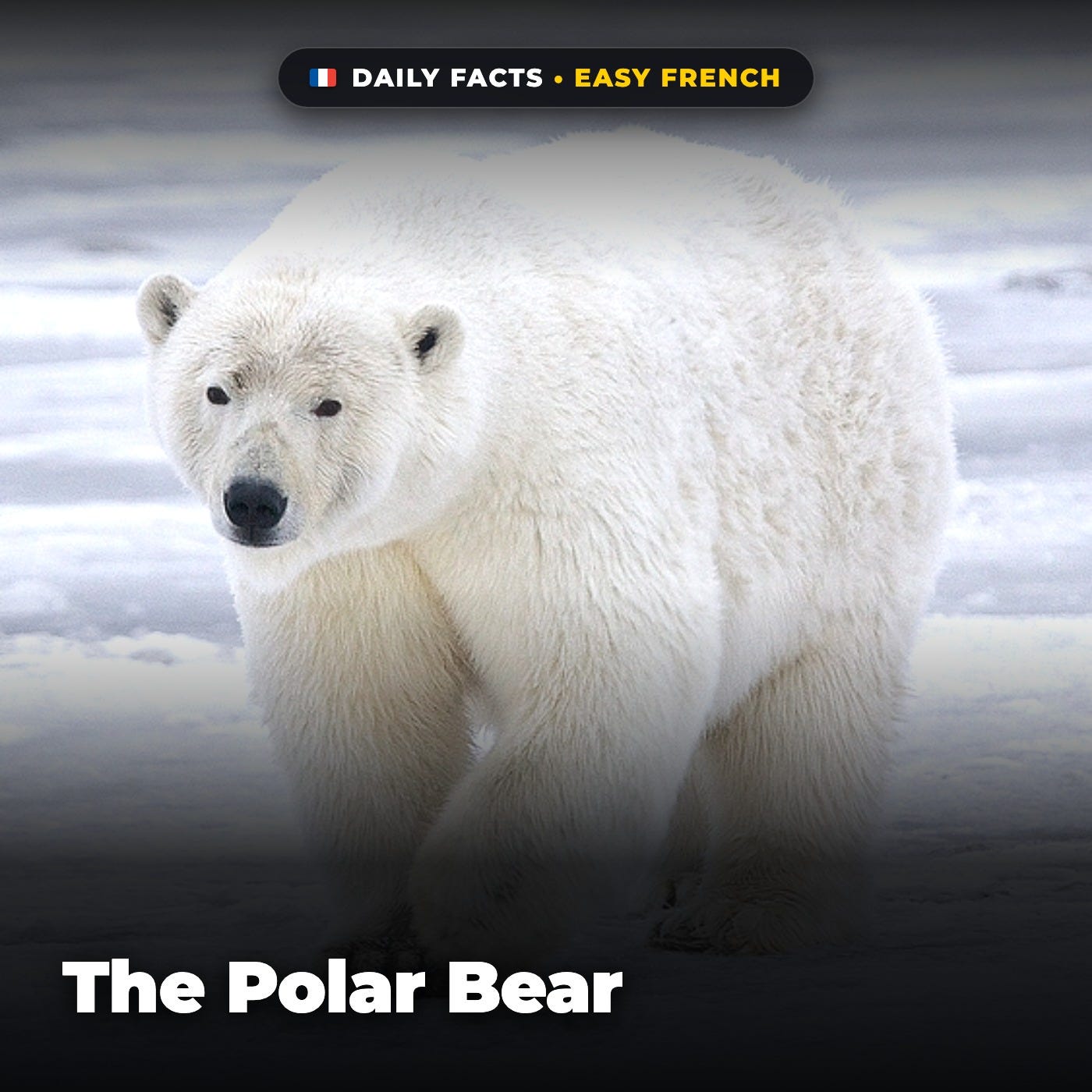
The Polar Bear in Easy French
17:31
Episode #27

The Polar Bear in Easy French

The polar bear is a large bear native to the Arctic and nearby areas. It is closely related to the brown bear, and the two species can interbreed. The polar bear is the largest extant species of bear and land carnivore by body mass, with adult males weighing 300–800 kg (660–1,760 lb). The species is sexually dimorphic, as adult females are much smaller.

l'histoire (history / story)le monde (world)l'exemple (example)
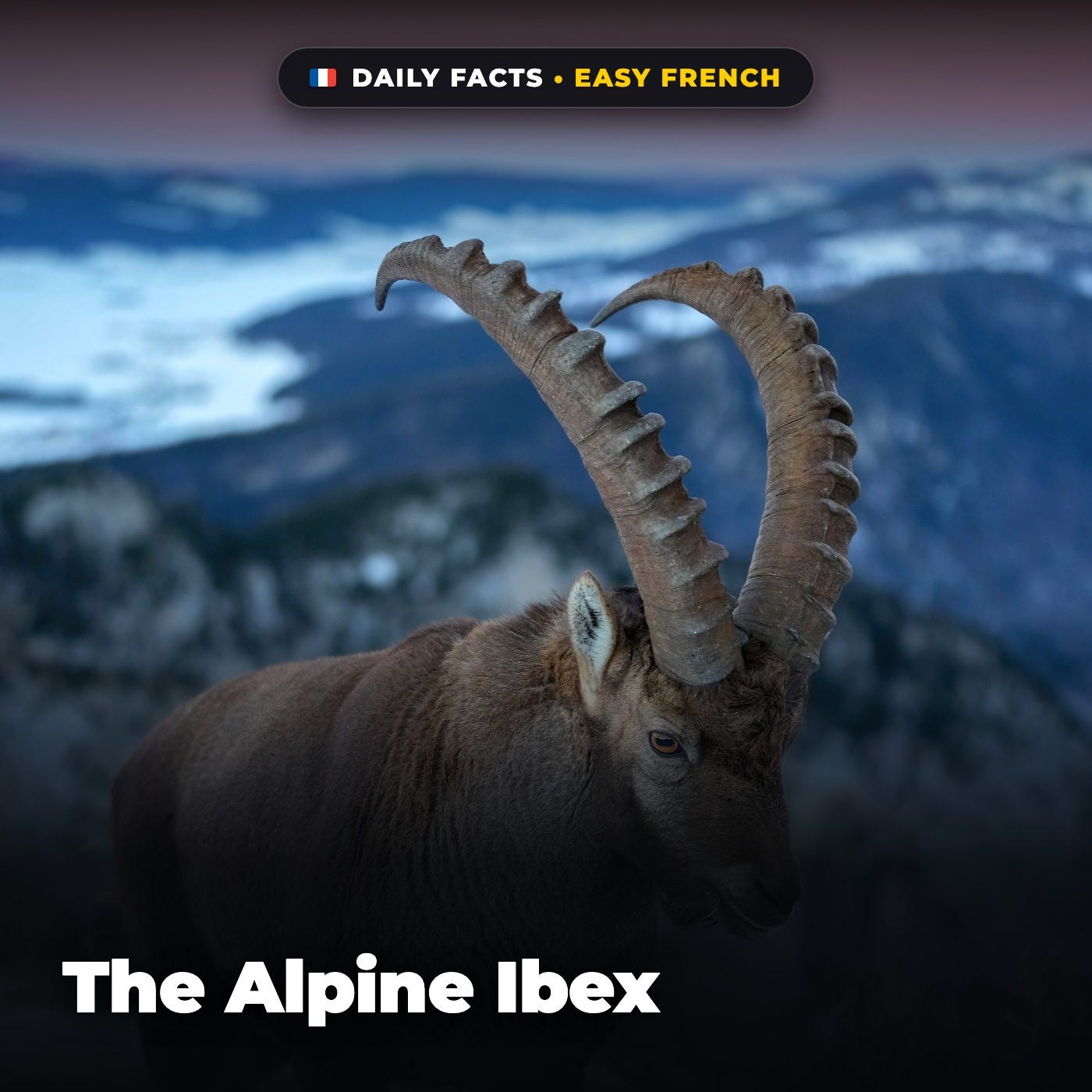
The Alpine Ibex in Easy French
14:10
Episode #26

The Alpine Ibex in Easy French

The Alpine ibex is a wild goat that lives high in the rugged European Alps. These extraordinary climbers easily navigate steep cliffs and rocky slopes where few other animals can survive. Male ibexes are famous for their magnificent curved horns, which can grow up to a meter in length. Today, learning about their life in the mountains offers an exciting glimpse into alpine wildlife.

le bouquetin (Alpine ibex)la corne (horn)grimper (to climb)
The Giraffe in Easy French
10:22
Episode #25

The Giraffe in Easy French

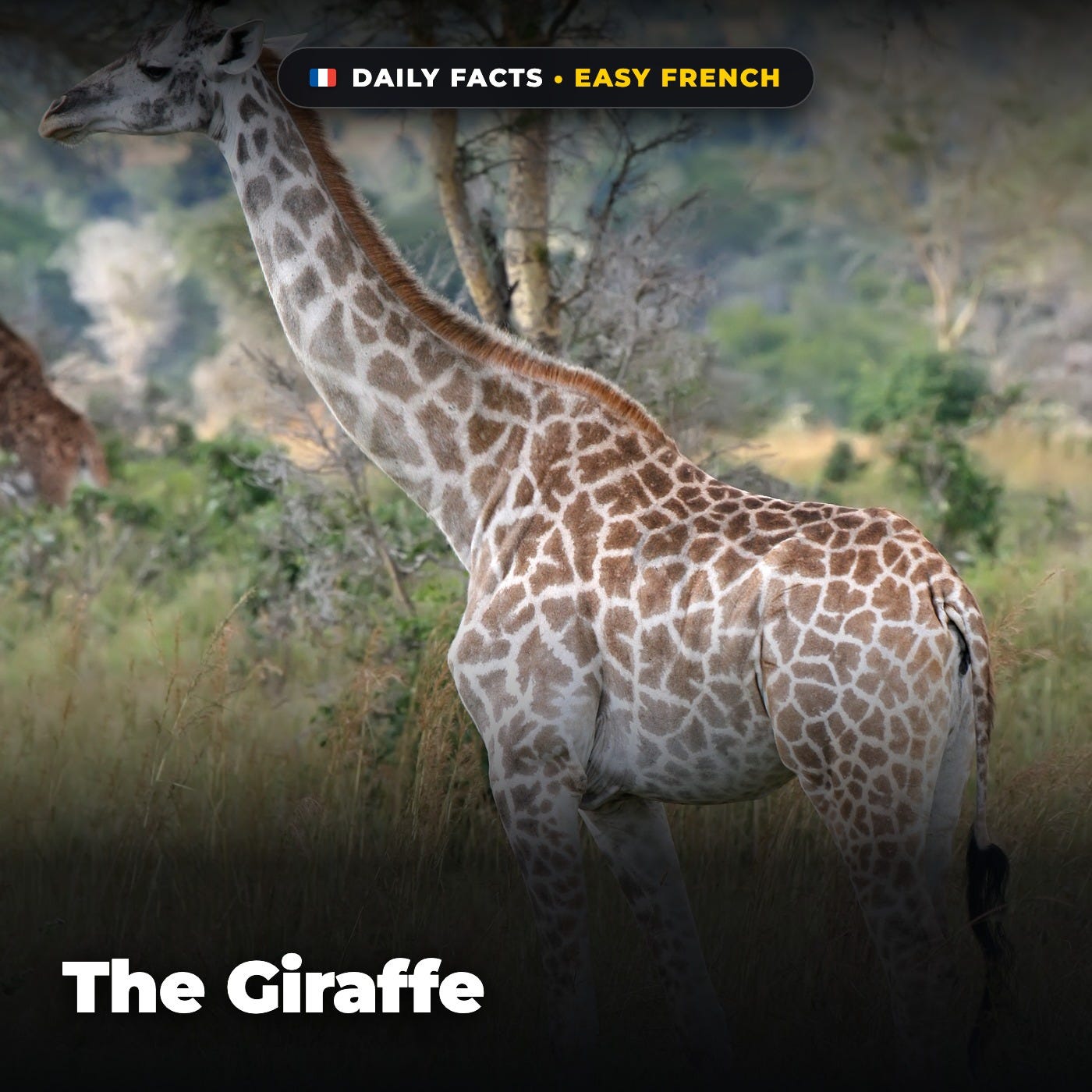
Giraffes are large African hoofed mammals. They are the tallest living terrestrial animals and the largest ruminants on Earth. They are classified under the family Giraffidae, along with their closest extant relative, the okapi. Traditionally, giraffes have been thought of as one species, Giraffa camelopardalis, with nine subspecies.

l'histoire (history / story)le monde (world)l'exemple (example)
The South Pole Expedition in Easy French
7:44
Episode #24

The South Pole Expedition in Easy French

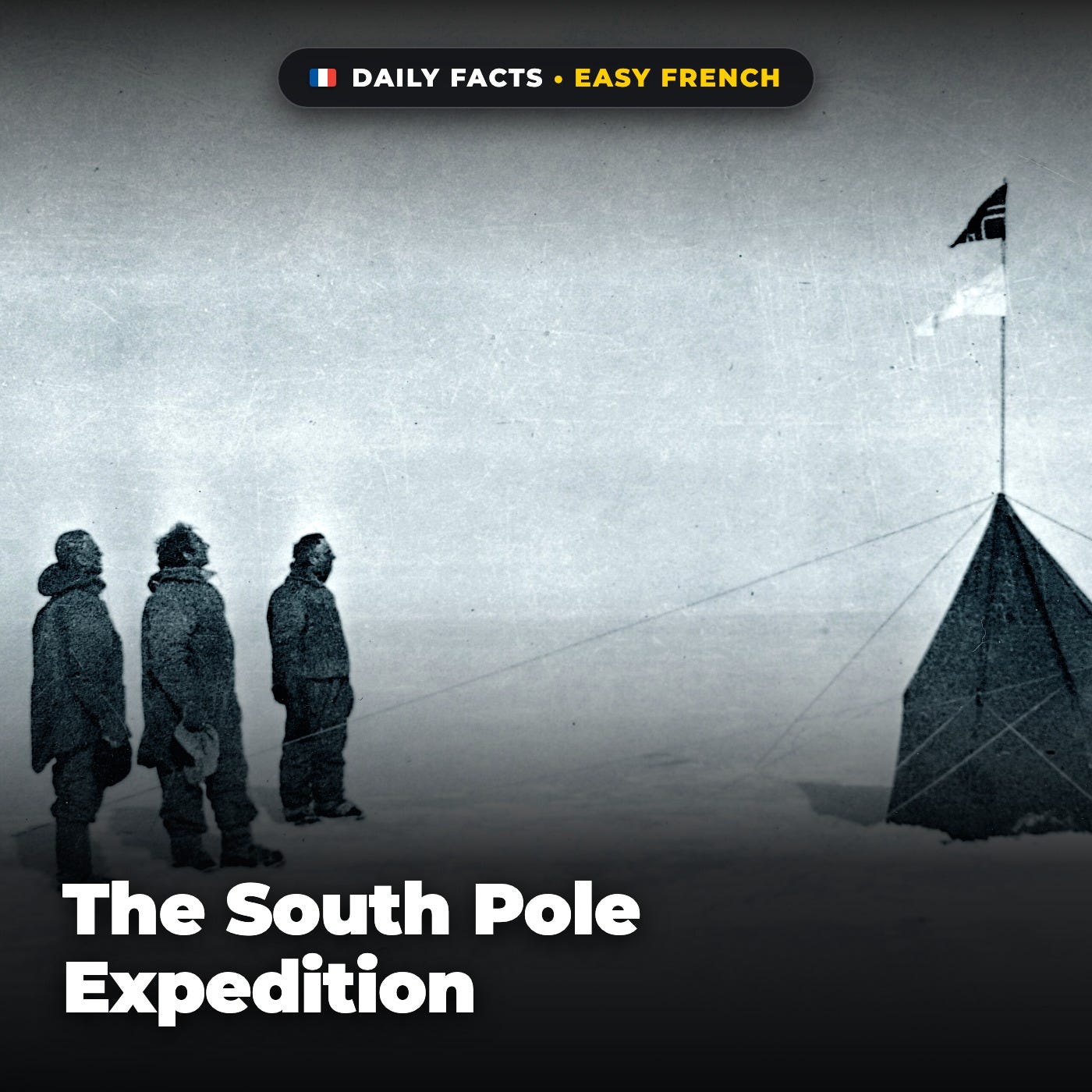
In late 1911, the frozen wilderness of Antarctica became the stage for one of history's greatest races. Norwegian explorer Roald Amundsen led a brave team into the unknown white desert to reach the bottom of the world. Relying on skilled sled dogs and smart planning, Amundsen successfully reached the South Pole weeks before his British rival. Today, their daring journey stands as an unforgettable tale of human endurance and polar exploration.

le pôle Sud (South Pole)la glace (ice)le traîneau (sled)
Elephants in Easy French
6:49
Episode #23

Elephants in Easy French

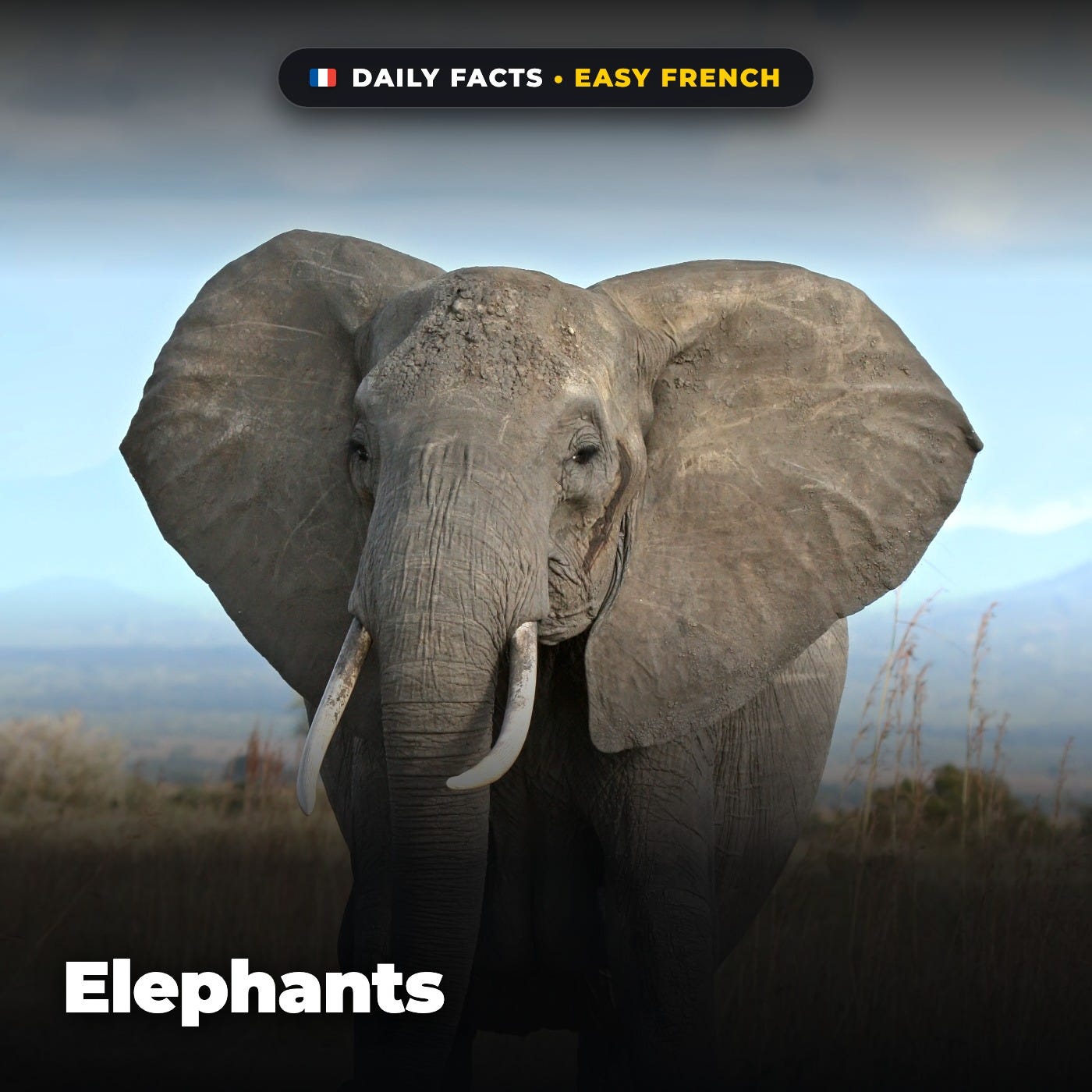
Elephants are the largest living land animals on Earth, roaming gracefully across parts of Africa and Asia. With their versatile long trunks and gentle nature, these magnificent creatures fascinate nature lovers worldwide. From cooling down with their giant ears to using their tusks as clever tools, elephants show incredible survival skills and deep social bonds. Join us today as we discover the wonderful world of these gentle giants in simple, everyday language!

l'éléphant (elephant)la trompe (trunk)la défense (tusk)
The Bald Eagle in Easy French
11:00
Episode #22

The Bald Eagle in Easy French

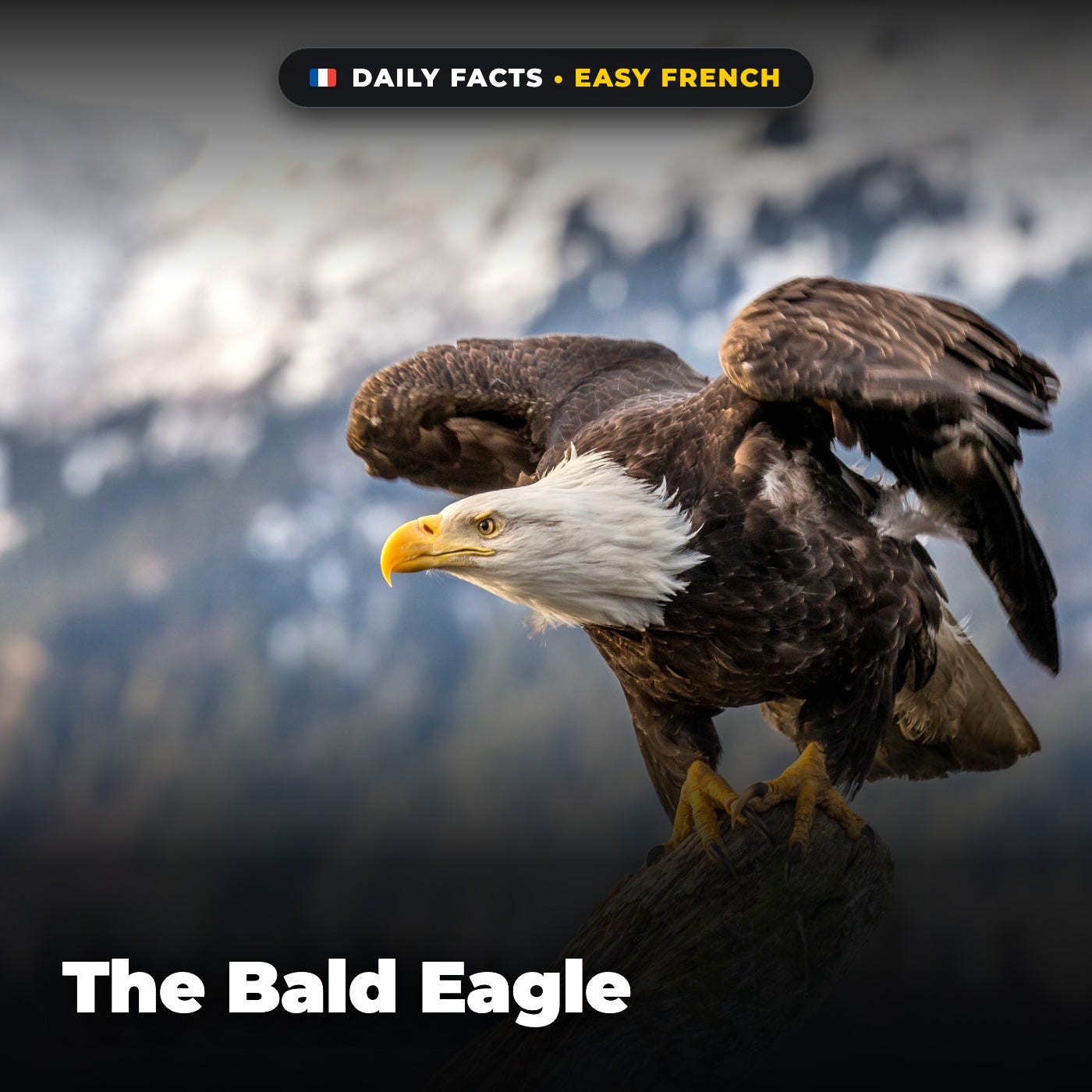
The bald eagle is an iconic bird of prey native to North America, instantly recognized by its striking white head and dark body. Soaring high above vast lakes and coastal shores, this magnificent raptor has captured human admiration for centuries. Known for building enormous treetop nests and hunting fish with sharp talons, the eagle stands as a proud national symbol. Today, its dramatic comeback from near extinction showcases one of history's greatest wildlife conservation successes.

l'aigle (eagle)la plume (feather)le nid (nest)
The British Empire in Easy French
17:16
Episode #21

The British Empire in Easy French

The British Empire comprised the dominions, colonies, protectorates, mandates, and other territories ruled or administered by the United Kingdom and its predecessor states. It began with the overseas possessions and trading posts established by England in the late 16th and early 17th centuries, and colonisation attempts by Scotland during the 17th century. At its height in the 19th and early 20th centuries, it was the largest empire in history and, for a century, was the foremost global power. By 1913 the British Empire held sway over 412 million people, 23 per cent of the world population at the time, and by 1920 it covered 35.5 million km2 (13.7 million sq mi), 24 per cent of the Earth's total land area.

l'histoire (history / story)le monde (world)l'exemple (example)
The History of Timekeeping in Easy French
29:43
Episode #20

The History of Timekeeping in Easy French

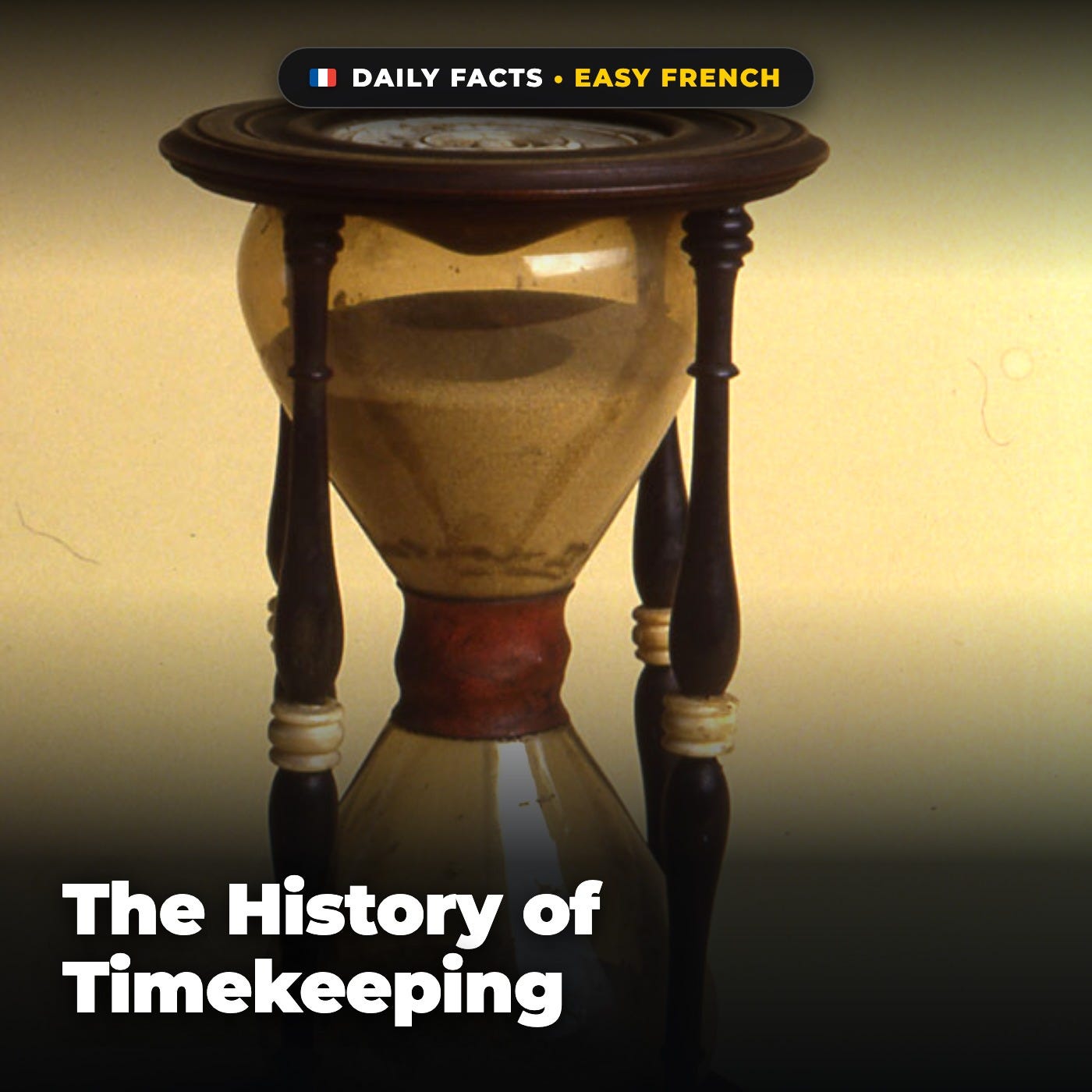
The history of timekeeping devices dates back to when ancient civilizations first observed astronomical bodies as they moved across the sky. Devices and methods for keeping time have gradually improved through a series of new inventions, starting with measuring time by continuous processes, such as the flow of liquid in water clocks, to mechanical clocks, and eventually repetitive, oscillatory processes, such as the swing of pendulums. Oscillating timekeepers are used in modern timepieces. Sundials and water clocks were first used in ancient Egypt c.

l'histoire (history / story)le monde (world)l'exemple (example)
The Construction of the Panama Canal in Easy French
11:12
Episode #19

The Construction of the Panama Canal in Easy French

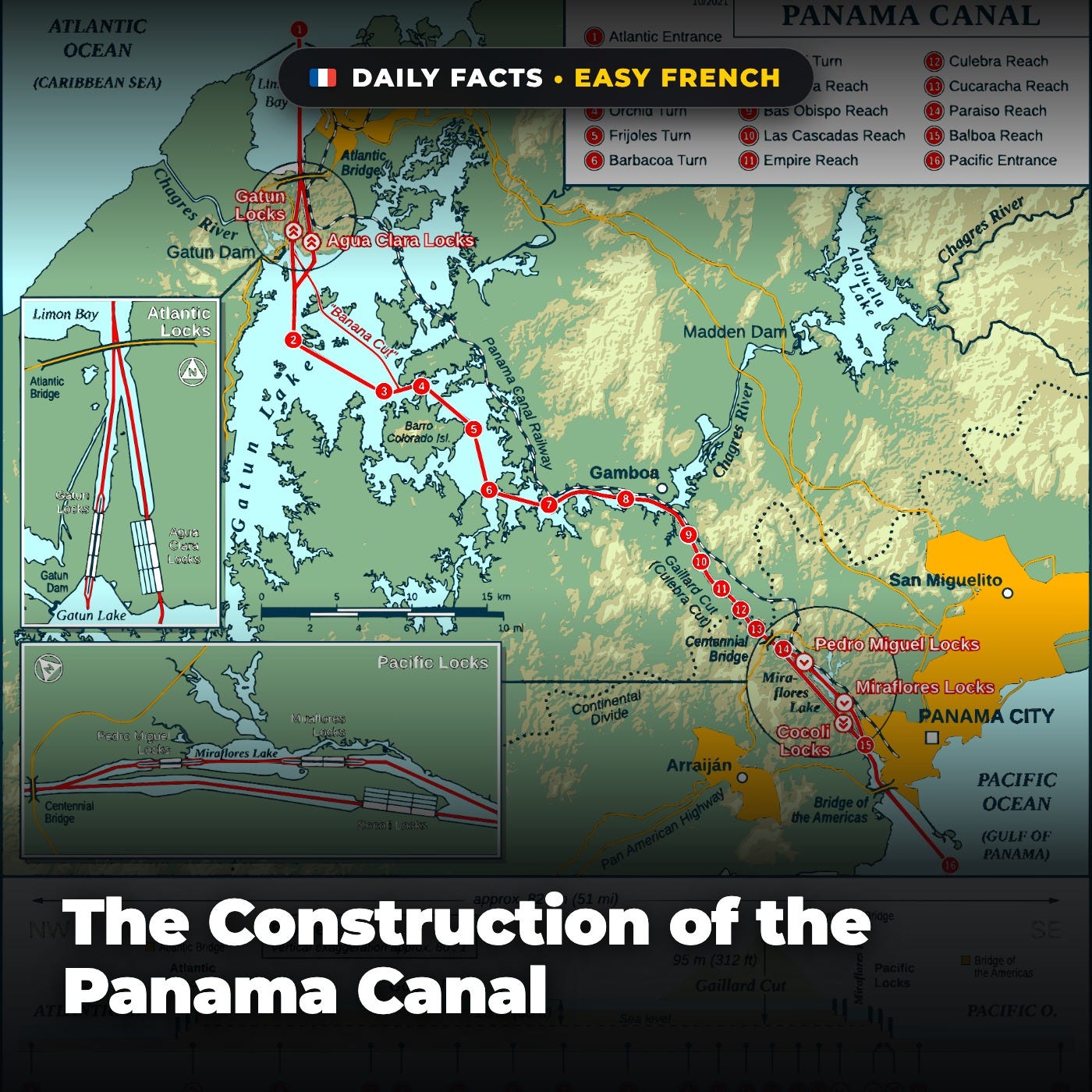
The Panama Canal is an artificial 82-kilometer (51-mile) waterway in Panama that connects the Caribbean Sea in the Atlantic Ocean with the Pacific Ocean. It cuts across the narrowest point of the Isthmus of Panama and is a conduit for maritime trade between the Atlantic Ocean and the Pacific Ocean. Locks at each end lift ships up to Gatun Lake, an artificial fresh water lake 26 meters (85 ft) above sea level, created by damming the Chagres River and Lake Alajuela to reduce the amount of excavation work required for the canal. Locks then lower the ships at the other end.

l'histoire (history / story)le monde (world)l'exemple (example)
The Emperor Penguin in Easy French
18:41
Episode #18

The Emperor Penguin in Easy French

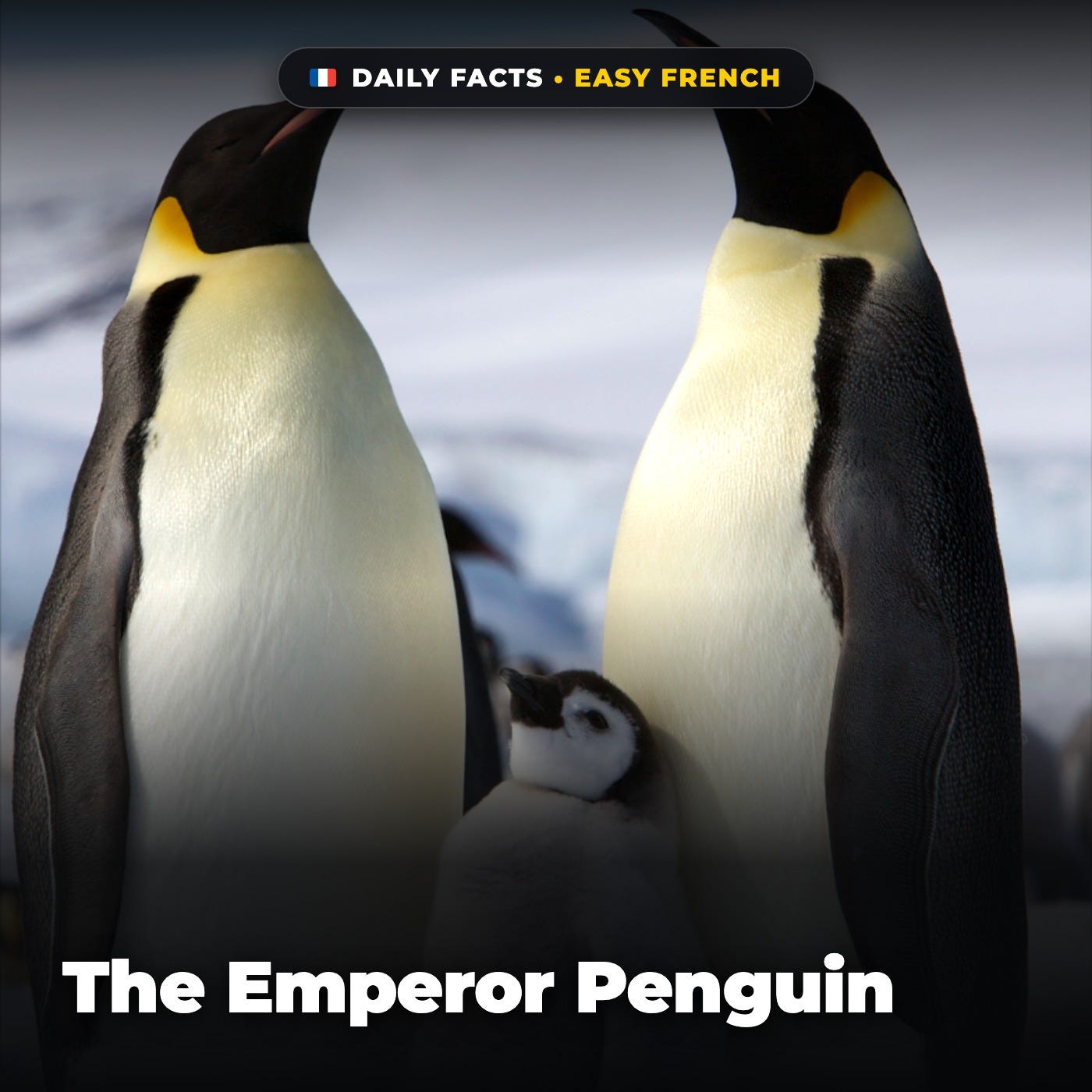
The emperor penguin is the tallest and heaviest of all living penguin species and is endemic to Antarctica. The male and female are similar in plumage and size, reaching 100 cm (39 in) in length and weighing from 22 to 45 kg. Feathers of the head and back are black and sharply delineated from the white belly, pale-yellow breast and bright-yellow ear patches.

l'histoire (history / story)le monde (world)l'exemple (example)
The Tasmanian Tiger in Easy French
20:39
Episode #17

The Tasmanian Tiger in Easy French

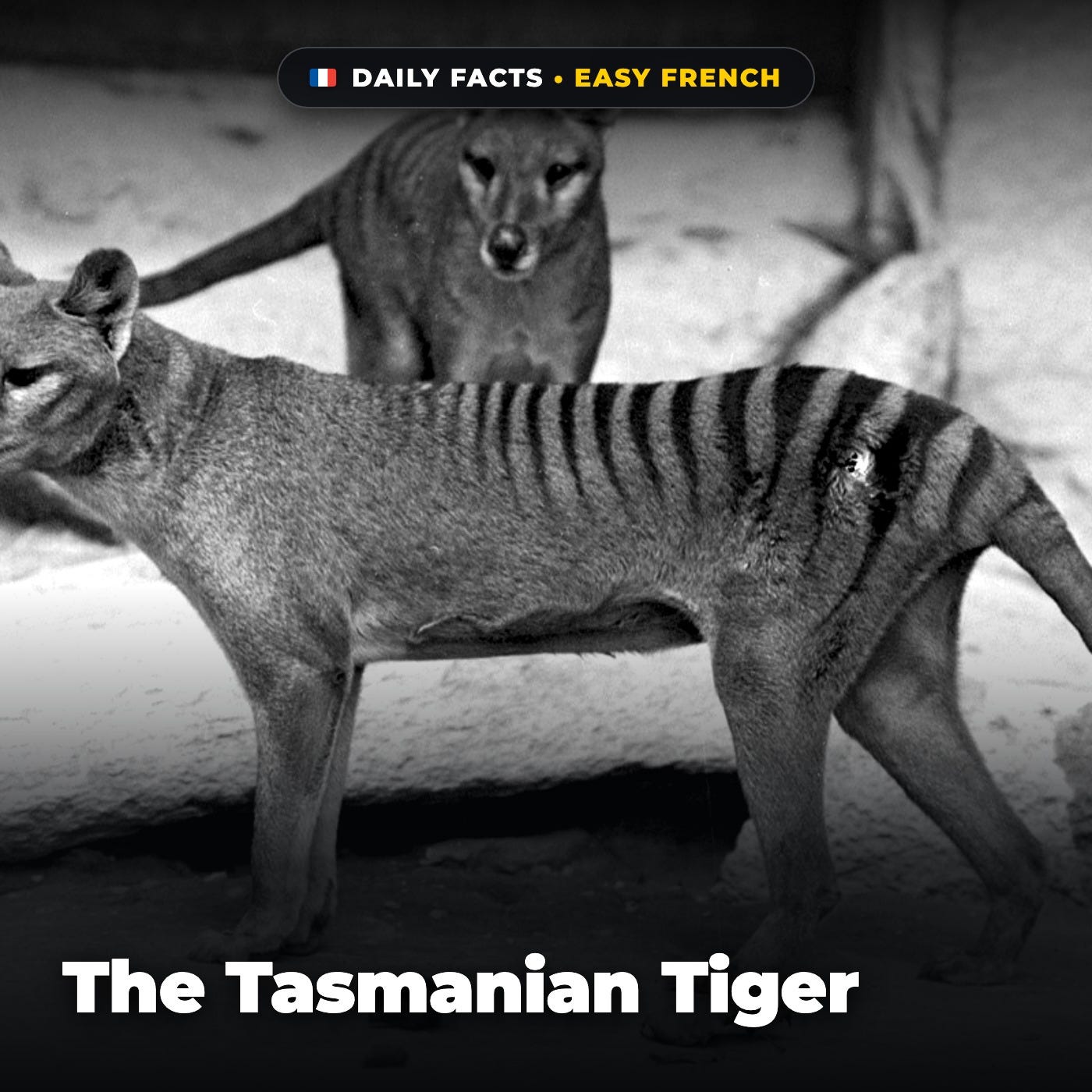
The thylacine, also commonly known as the Tasmanian tiger, Tasmanian wolf or marsupial wolf, is an extinct species of carnivorous marsupial formerly native to the Australian mainland, Tasmania and New Guinea. It became extinct on mainland Australia and New Guinea approximately 3,600–3,200 years ago, possibly following the arrival of the dingo, which was introduced to Australia around the same period but never reached Tasmania. Prior to European settlement, the species remained widespread in Tasmania, where its population was estimated to number several thousand individuals. During the 19th century, the species was increasingly persecuted because of its perceived threat to livestock, with government-sponsored bounty schemes encouraging its extermination.

l'histoire (history / story)le monde (world)l'exemple (example)
The Journey of the Golden Discs in Easy French
18:16
Episode #16

The Journey of the Golden Discs in Easy French

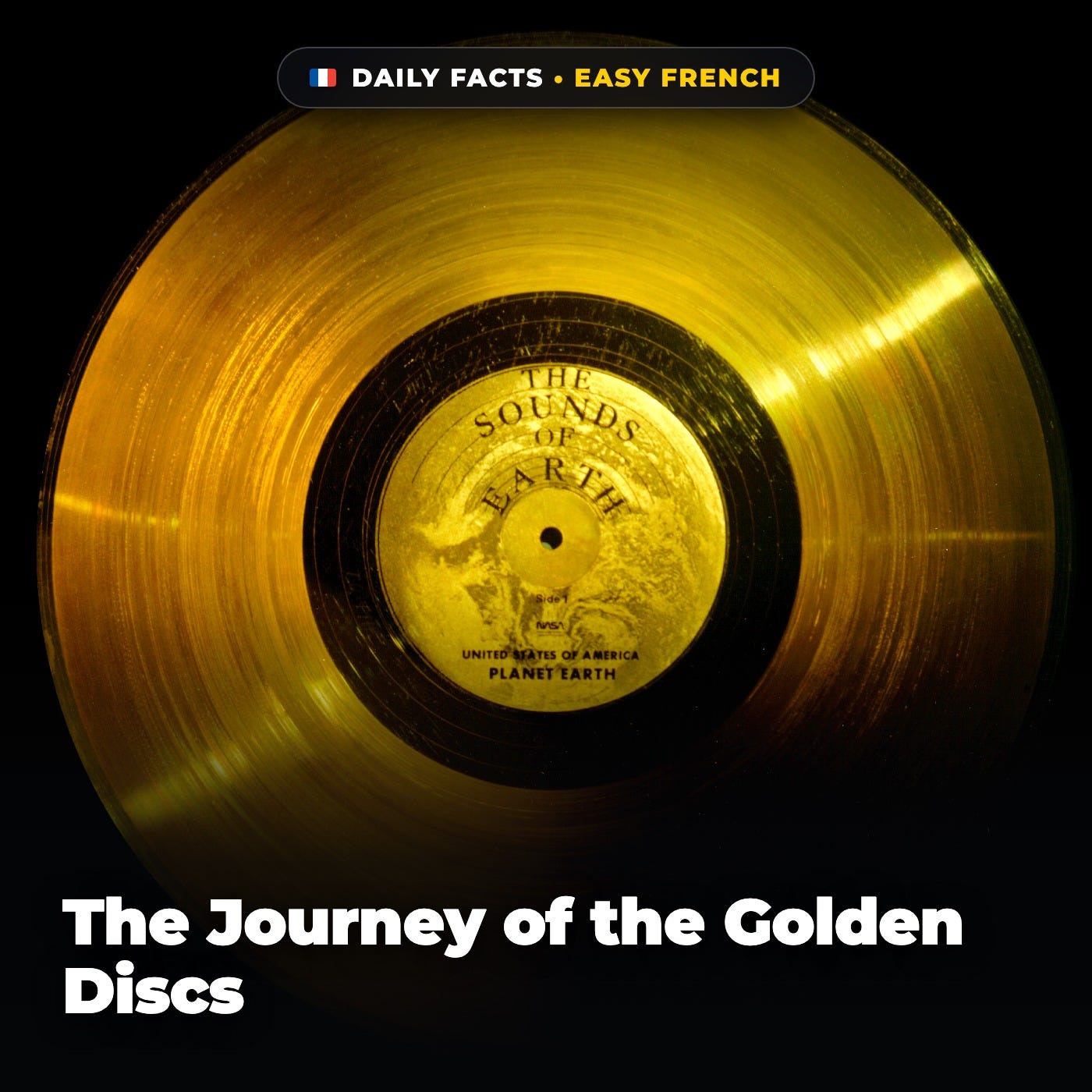
The Voyager Golden Records are two identical phonograph records, with one copy aboard each of the two Voyager spacecraft launched in 1977. The records contain sounds and data to reconstruct raster scan images selected to portray the diversity of life and culture on Earth, and are intended for any intelligent extraterrestrial life form who may find them. The records are a time capsule.

l'histoire (history / story)le monde (world)l'exemple (example)
The History of Coffee in Easy French
19:04
Episode #15

The History of Coffee in Easy French

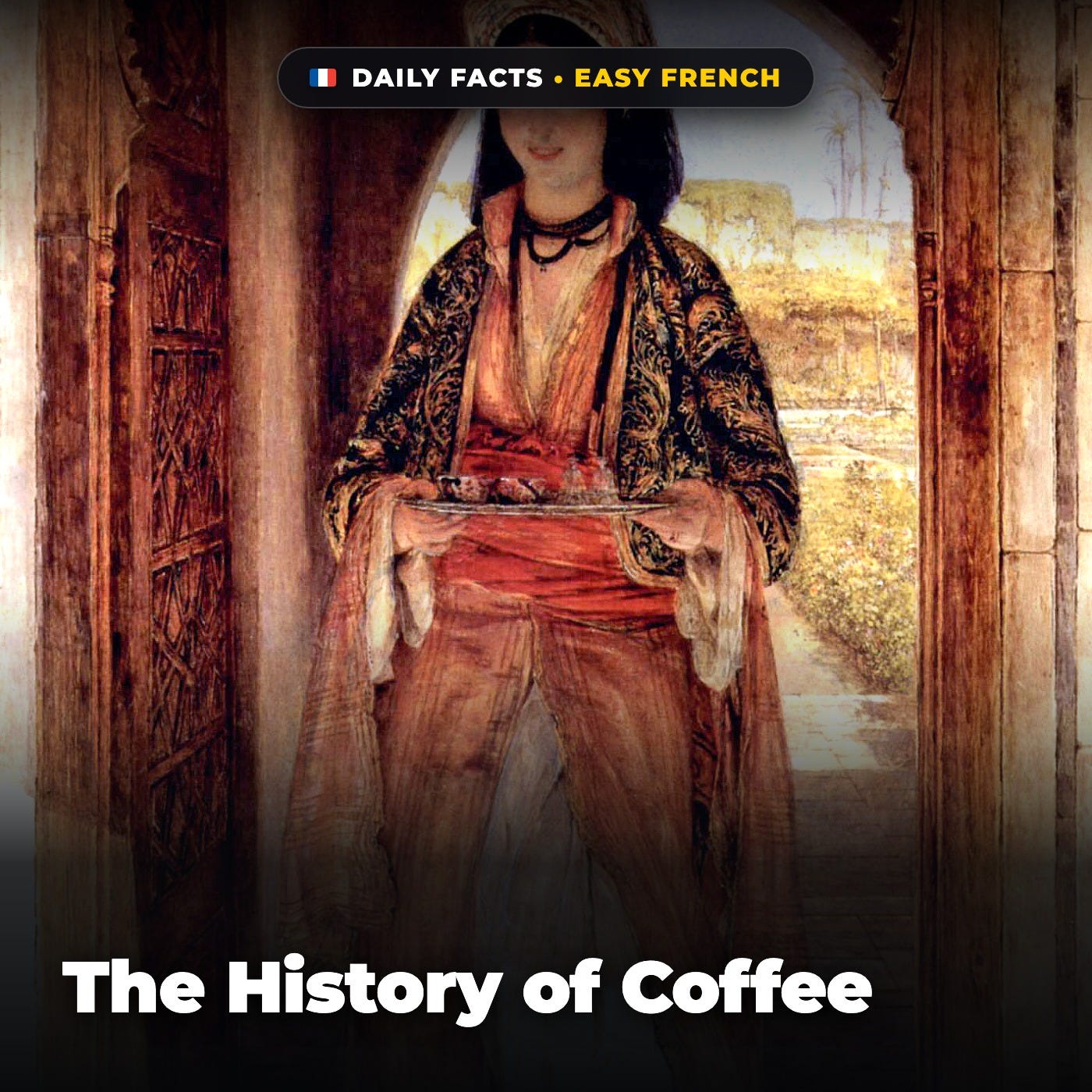
The history of coffee spans many centuries. Wild coffee plants originated in Ethiopia, while the beverage itself has its roots in Yemen, where it was harvested, roasted, and brewed; Sufi Muslims in the 15th century used it to aid concentration during night prayers. In this episode, we break down the most important facts and stories about The History of Coffee using clear, beginner-friendly A1

Practice everyday beginner vocabulary through real-world examples.l'histoire (history / story)le monde (world)
The Mystery of the Rosetta Stone in Easy French
20:12
Episode #14

The Mystery of the Rosetta Stone in Easy French

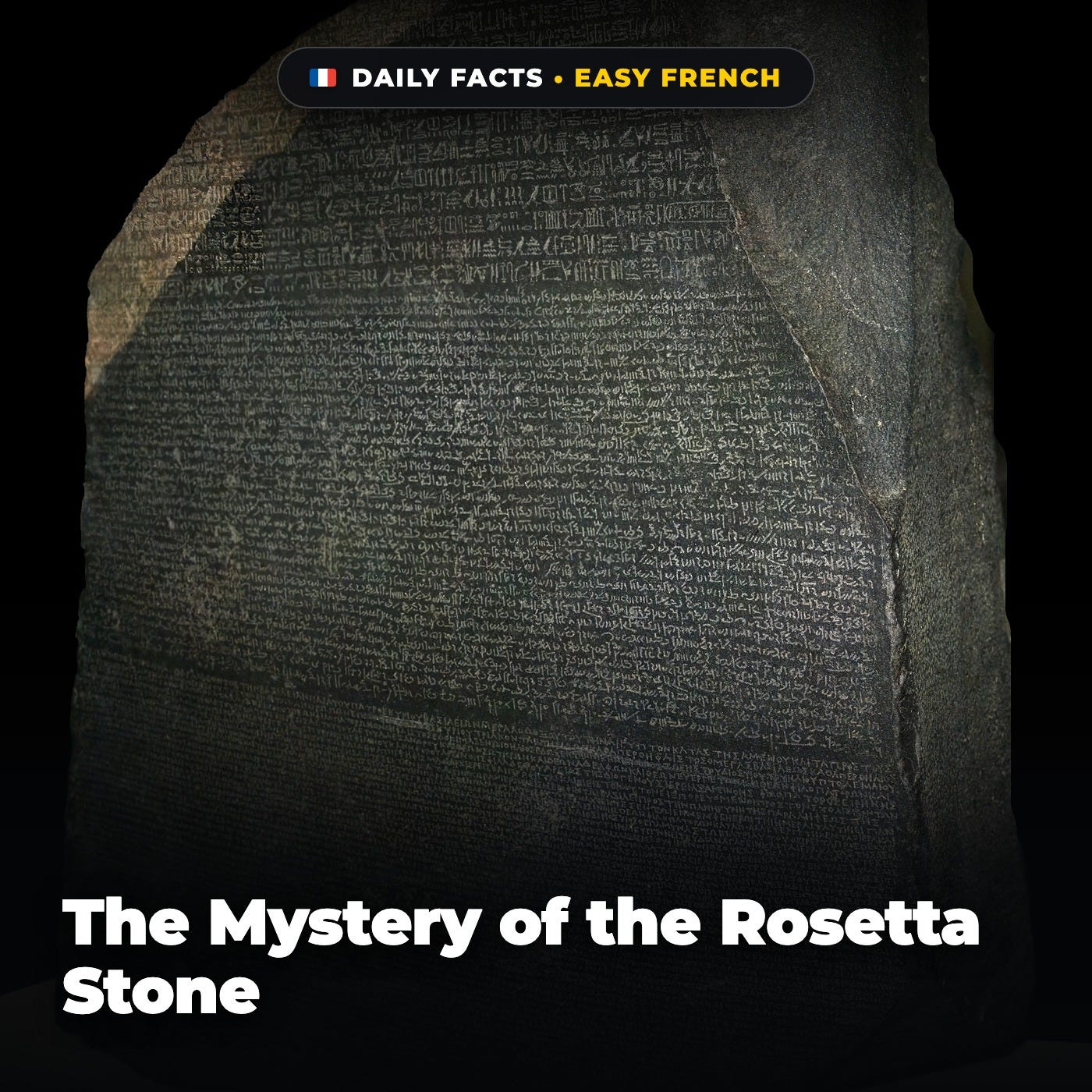
The Rosetta Stone is a stele of granodiorite inscribed with three versions of a decree issued in 196 BC during the Ptolemaic dynasty of Egypt, on behalf of King Ptolemy V Epiphanes. The top and middle texts are in Ancient Egyptian using hieroglyphic and Demotic scripts, respectively, while the bottom is in Ancient Greek. The decree has only minor differences across the three versions, making the Rosetta Stone key to deciphering the Egyptian scripts.

l'histoire (history / story)le monde (world)l'exemple (example)
The Tomb of Tutankhamun in Easy French
10:31
Episode #13

The Tomb of Tutankhamun in Easy French

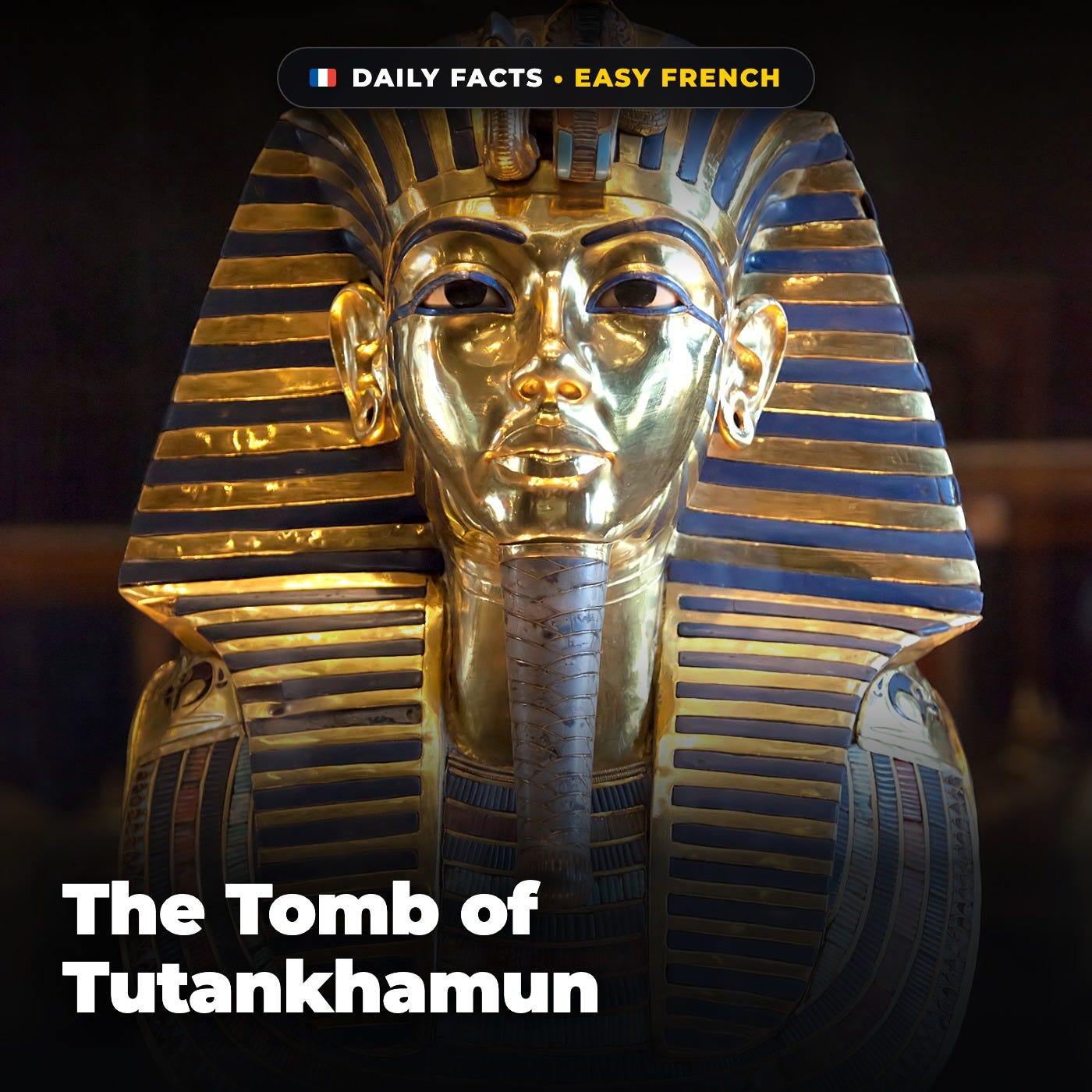
Tutankhamun or Tutankhamen, was the third to last pharaoh of the Eighteenth Dynasty of ancient Egypt, who ruled c. 1332 – 1323 BC, dying at about the age of 19. Born Tutankhaten, his administration restored the traditional polytheistic form of ancient Egyptian religion, undoing a previous shift to the religion known as Atenism. Tutankhamun's tomb door proclaims his devotion to the ancient Egyptian gods.

l'histoire (history / story)le monde (world)l'exemple (example)
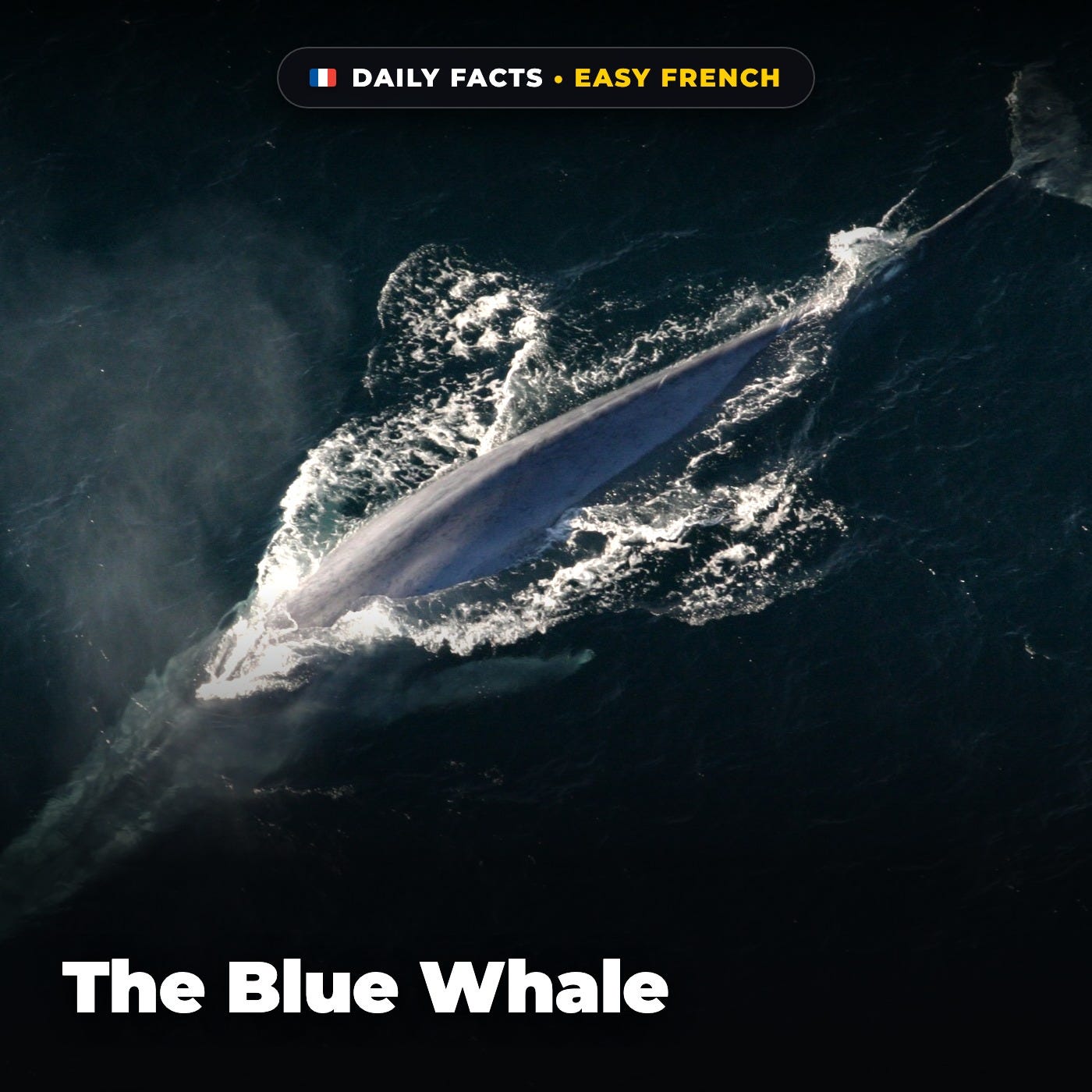
The Blue Whale in Easy French
20:48
Episode #12

The Blue Whale in Easy French

The blue whale is a species of baleen whale and the largest marine mammal in the rorqual family Balaenopteridae. Reaching a maximum confirmed length of 29.9–30.5 m (98–100 ft) and weighing up to 190–200 t, it is the largest animal known to have ever existed. The blue whale's long and slender body can be of various shades of greyish-blue on its upper surface and somewhat lighter underneath. Four subspecies are recognized: B.

l'histoire (history / story)le monde (world)l'exemple (example)
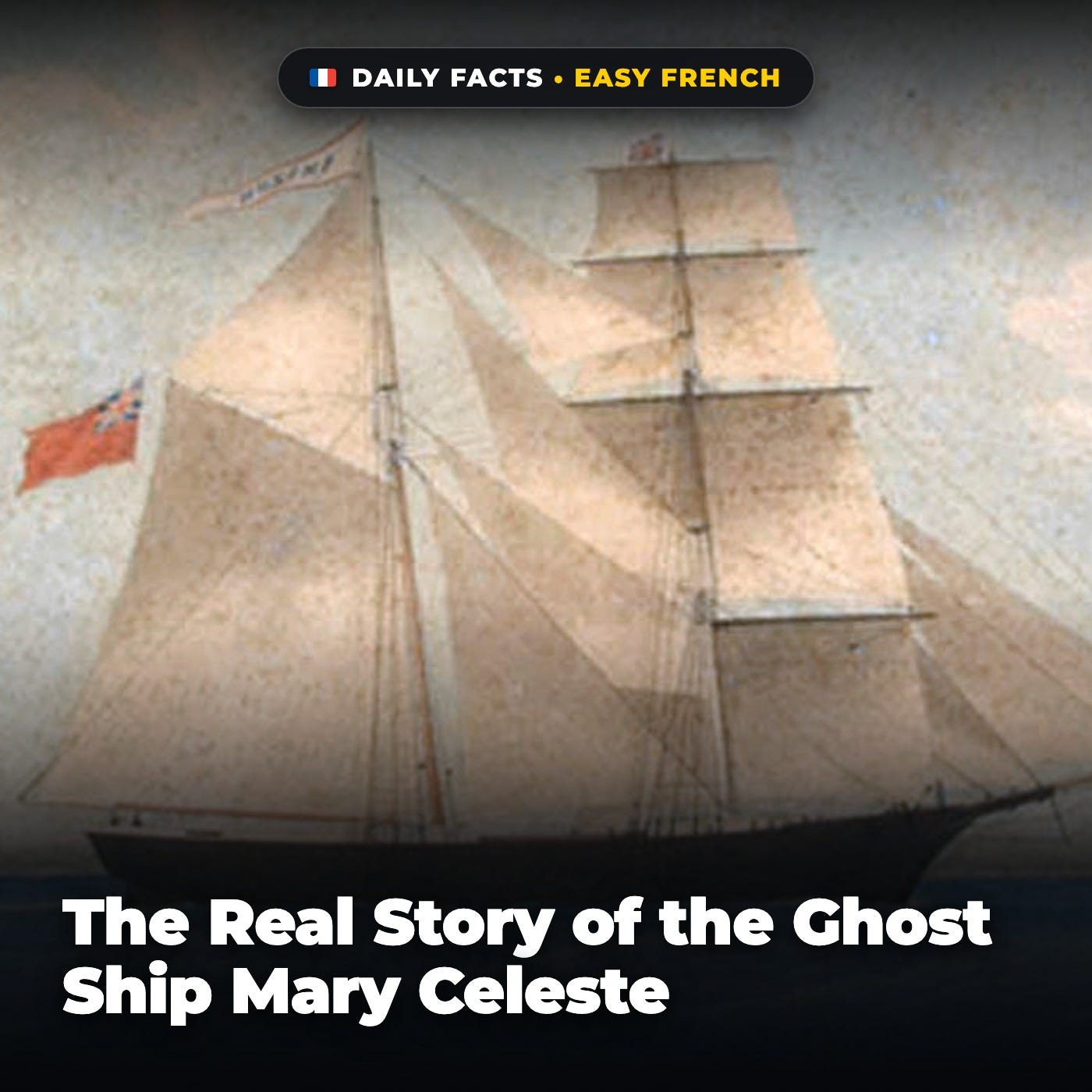
The Real Story of the Ghost Ship Mary Celeste in Easy French
12:49
Episode #11

The Real Story of the Ghost Ship Mary Celeste in Easy French

Mary Celeste was a Canadian-built, American-registered, merchant brigantine that was discovered adrift and deserted in the Atlantic Ocean off the Azores on December 4, 1872. In this episode, we break down the most important facts and stories about The Real Story of the Ghost Ship Mary Celeste using clear, beginner-friendly A1

Practice everyday beginner vocabulary through real-world examples.l'histoire (history / story)le monde (world)
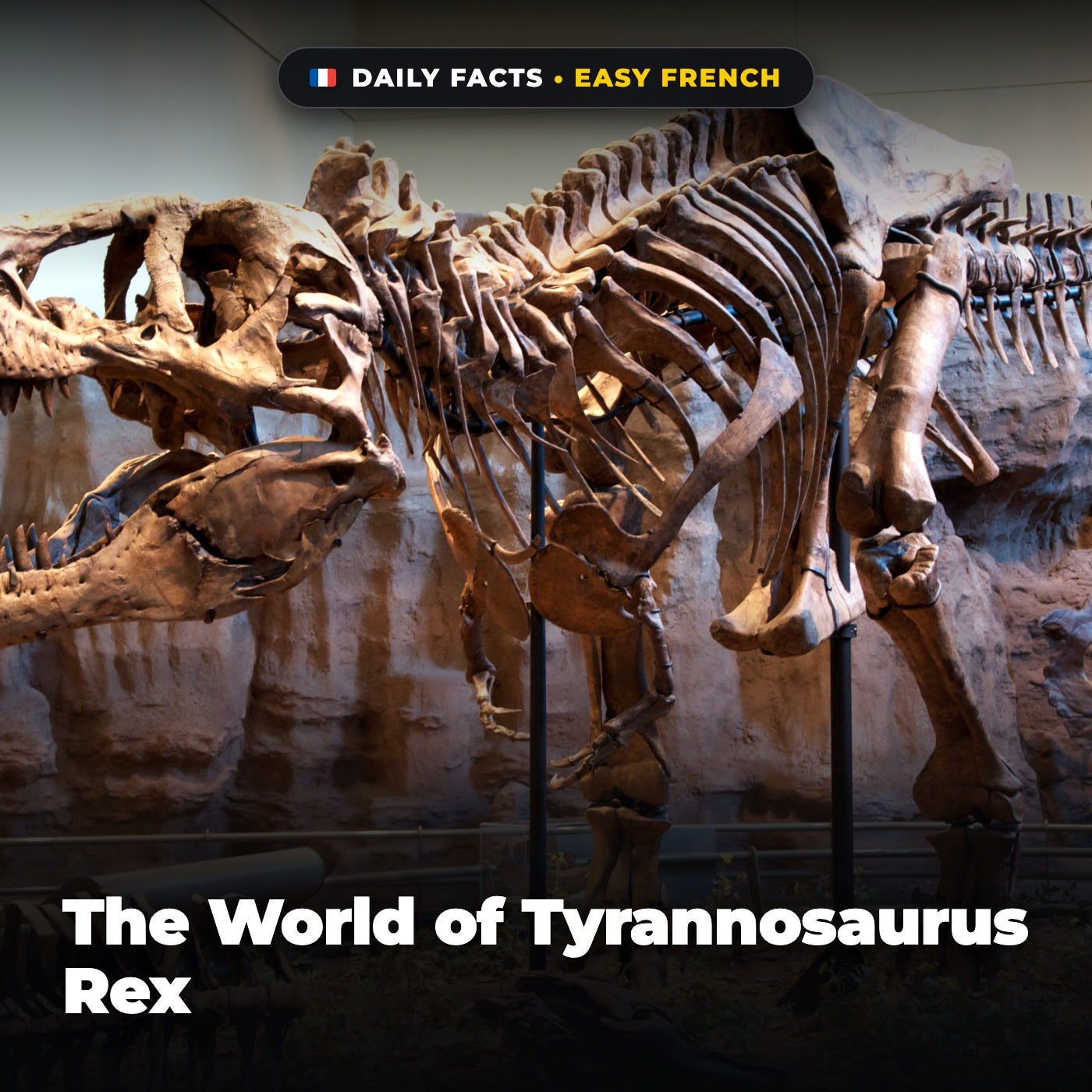
The World of Tyrannosaurus Rex in Easy French
8:22
Episode #10

The World of Tyrannosaurus Rex in Easy French

Tyrannosaurus is a genus of large theropod dinosaur. The type species Tyrannosaurus rex, often shortened to T. rex or colloquially T-Rex, is one of the best represented theropods. It lived throughout what is now western North America, on what was then an island continent known as Laramidia.

l'histoire (history / story)le monde (world)l'exemple (example)
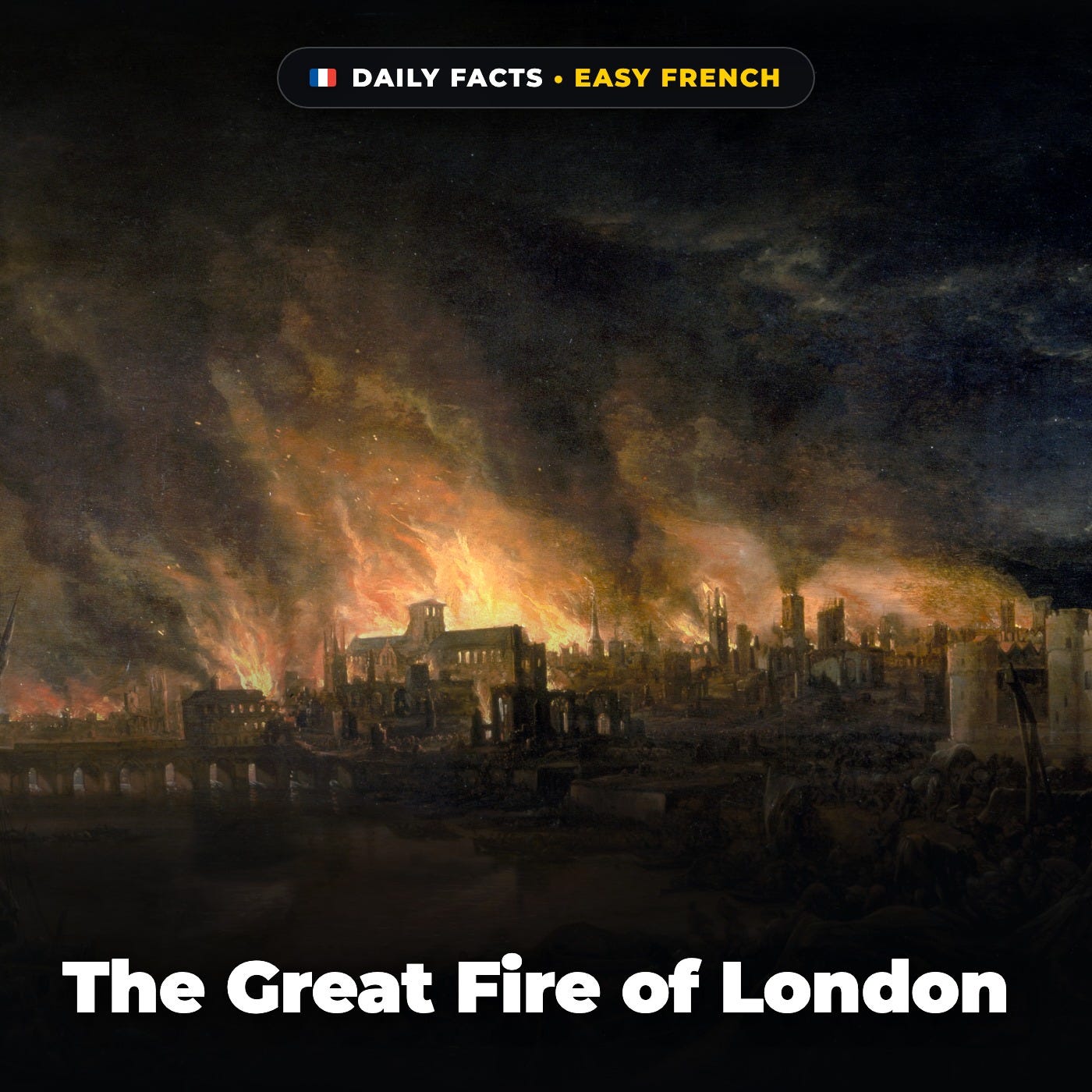
The Great Fire of London in Easy French
18:32
Episode #9

The Great Fire of London in Easy French

The Great Fire of London occurred from Sunday 2 September to Wednesday 5 September 1666, gutting the medieval City of London inside the old Roman city wall, while also extending past the wall to the west. The death toll is generally thought to have been relatively small, although some historians have challenged this belief. In this episode, we break down the most important facts and stories about The Great Fire of London using clear, beginner-friendly A1

Practice everyday beginner vocabulary through real-world examples.l'histoire (history / story)le monde (world)
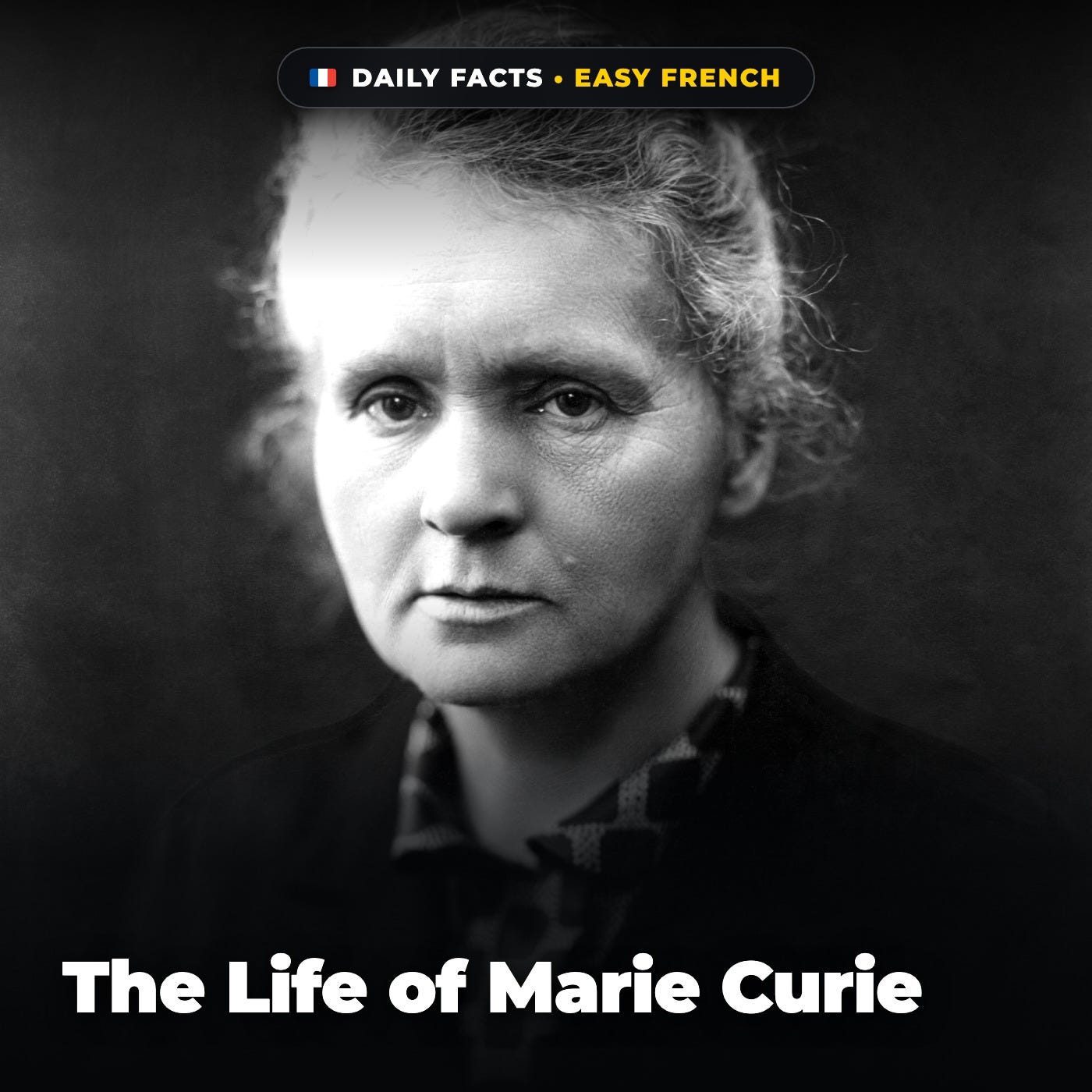
The Life of Marie Curie in Easy French
22:22
Episode #8

The Life of Marie Curie in Easy French

Maria Salomea Skłodowska Curie, better known as Marie Curie, was a Polish and naturalised-French physicist and chemist. She shared the 1903 Nobel Prize in Physics with her husband, Pierre Curie, "for their joint researches on the radioactivity phenomena discovered by Professor Henri Becquerel". She won the 1911 Nobel Prize in Chemistry "[for] the discovery of the elements radium and polonium, by the isolation of radium and the study of the nature and compounds of this remarkable element".

l'histoire (history / story)le monde (world)l'exemple (example)
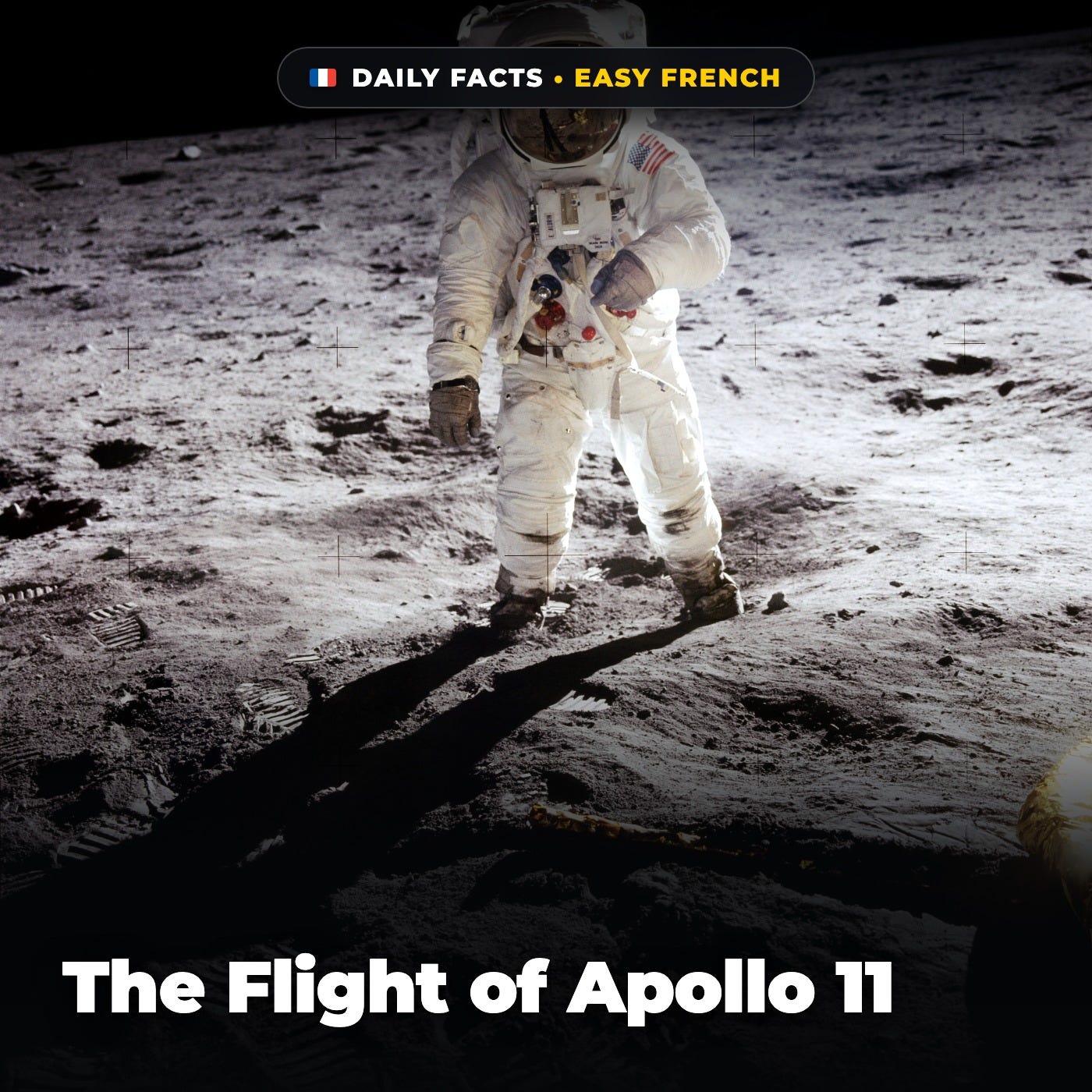
The Flight of Apollo 11 in Easy French
22:10
Episode #7

The Flight of Apollo 11 in Easy French

Apollo 11 was the American spaceflight that first landed humans on the Moon, and the fifth crewed mission of NASA's Apollo program. The mission was crewed by Commander Neil Armstrong, Command Module Pilot Michael Collins, and Lunar Module Pilot Edwin "Buzz" Aldrin, all of whom were on their second and final spaceflight. In this episode, we break down the most important facts and stories about The Flight of Apollo 11 using clear, beginner-friendly A1

Practice everyday beginner vocabulary through real-world examples.l'histoire (history / story)le monde (world)
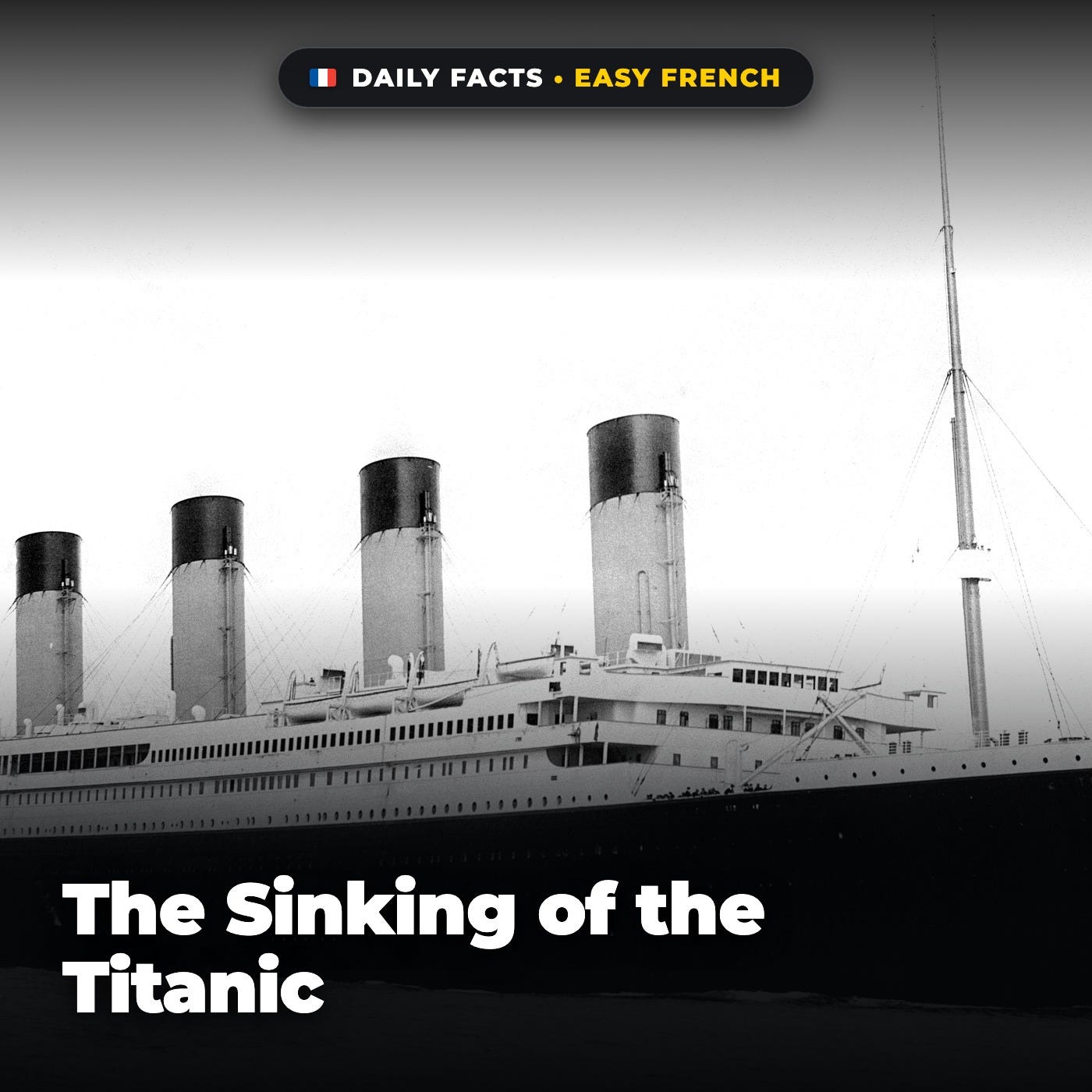
The Sinking of the Titanic in Easy French
18:38
Episode #6

The Sinking of the Titanic in Easy French

In April 1912, the massive passenger liner RMS Titanic set sail on its famous maiden voyage to New York City. Considered a marvel of modern engineering, the grand ship carried more than 2,200 excited passengers and crew members. Tragedy struck late at night in the freezing North Atlantic when the vessel collided with a giant iceberg. The catastrophic sinking claimed around 1,500 lives and transformed global maritime safety laws forever.

le navire (ship)l'iceberg (iceberg)couler (to sink)
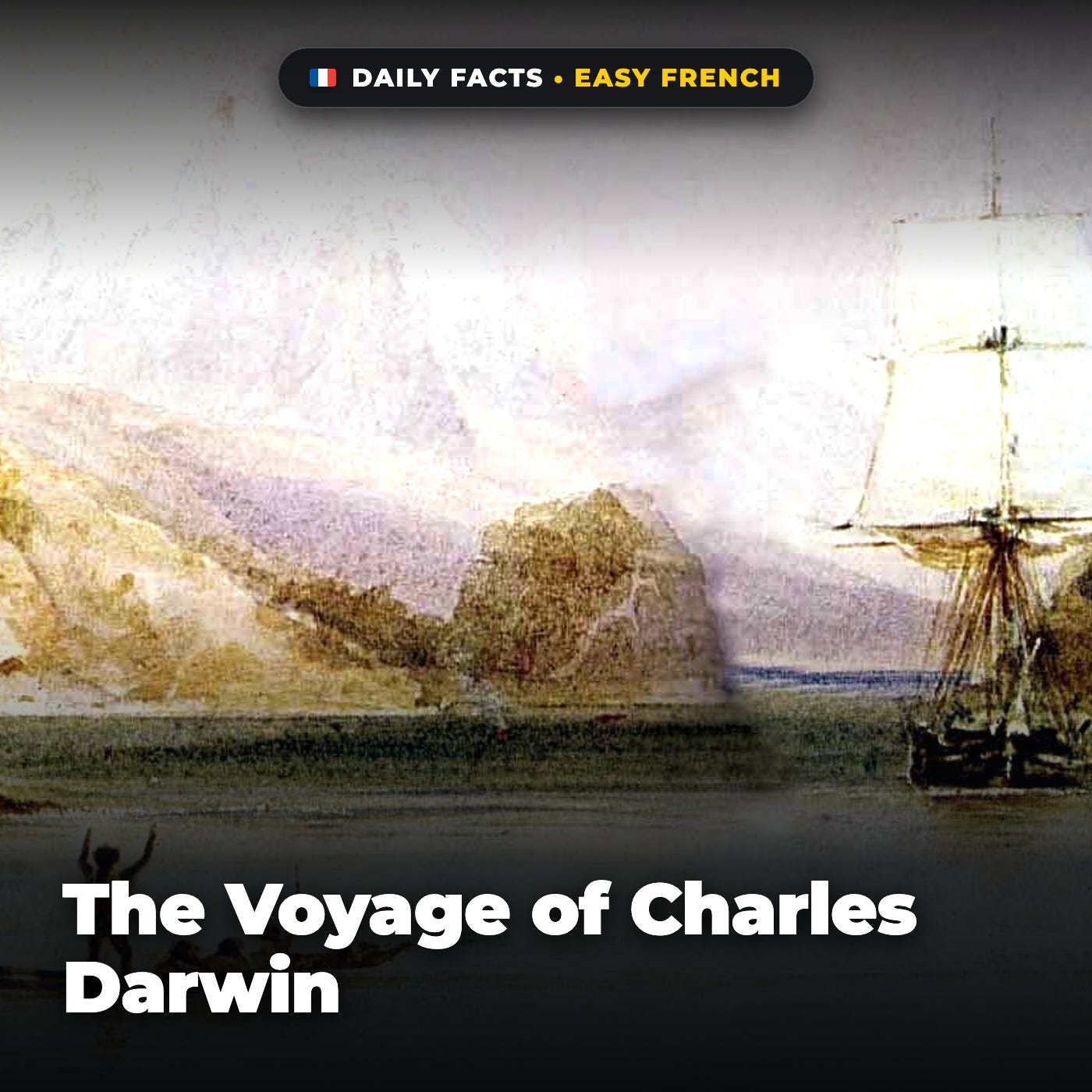
The Voyage of Charles Darwin in Easy French
13:51
Episode #5

The Voyage of Charles Darwin in Easy French

In December 1831, a young Charles Darwin stepped aboard HMS Beagle for what was meant to be a simple surveying mission around South America. Instead, the five-year voyage turned into an epic adventure that transformed his understanding of nature forever. Darwin spent months collecting strange fossils, exploring lush rainforests, and observing unique wildlife on remote islands like the Galápagos. These remarkable discoveries laid the foundation for his groundbreaking ideas on evolution and changed modern science.

le navire (ship)le voyage (journey/voyage)le fossile (fossil)
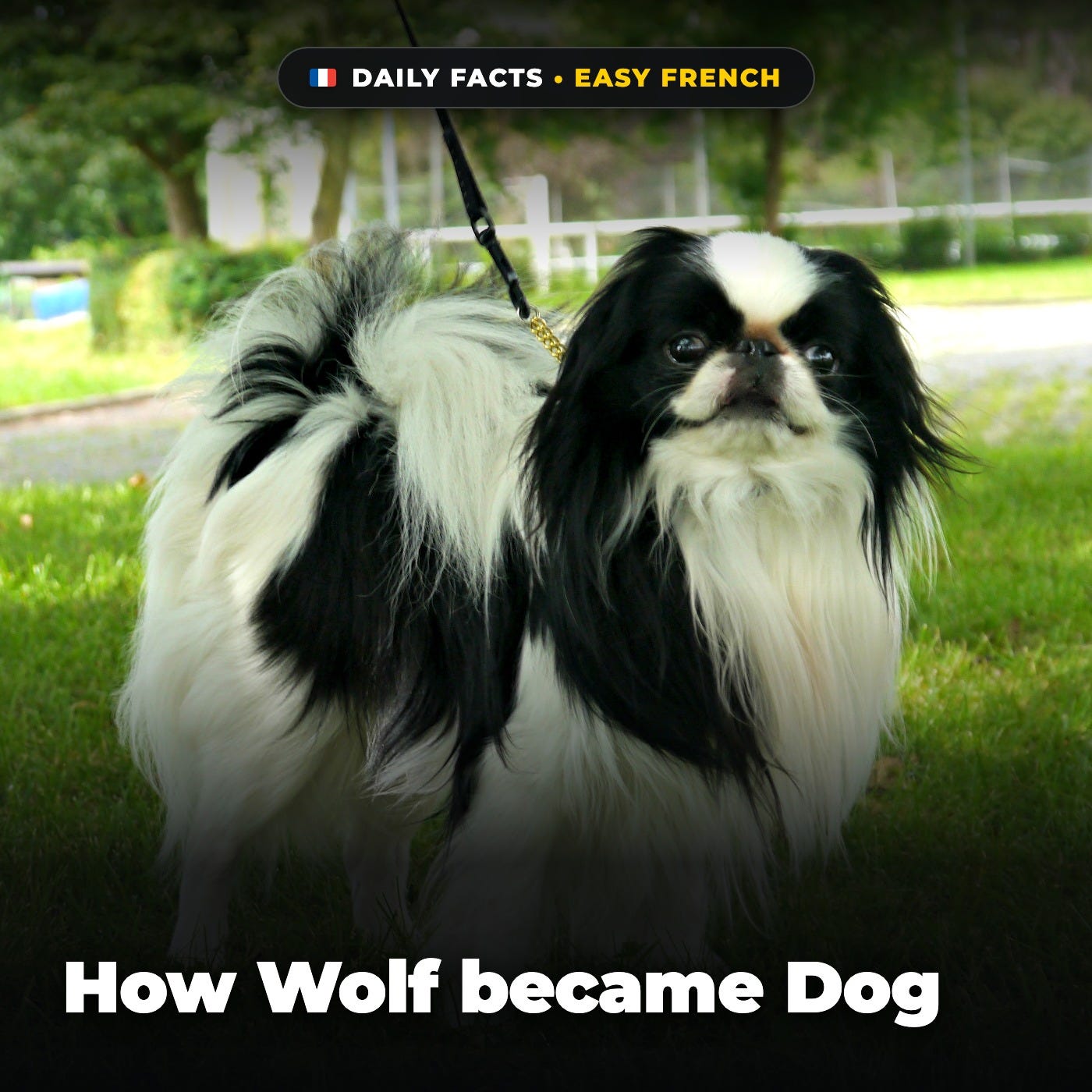
How Wolf became Dog in Easy French
13:24
Episode #4

How Wolf became Dog in Easy French

Thousands of years ago, curious wild wolves began walking toward human campfires instead of running away. This unexpected friendship transformed dangerous predators into humanity's most loyal and loving animal companions. Scientists now study ancient bones and genetics to discover how this incredible transformation happened during the Ice Age. Today, millions of modern dogs around the world still carry the ancient heritage of their wild ancestors.

le loup (wolf)le chien (dog)l'ami (friend)
Film during Nazi Era in Easy French
16:41
Episode #3

Film during Nazi Era in Easy French

During the 1930s and 1940s, cinema became one of the most powerful tools of state influence in Germany. The regime quickly recognized the emotional impact of the big screen and seized total control over the national film industry. From weekly newsreels to lavish historical epics, movies were carefully crafted to shape public opinion and spread ideology. Discover how moving pictures were transformed into potent instruments of persuasion and everyday entertainment.

le film (movie)le cinéma (cinema)l'acteur (actor)
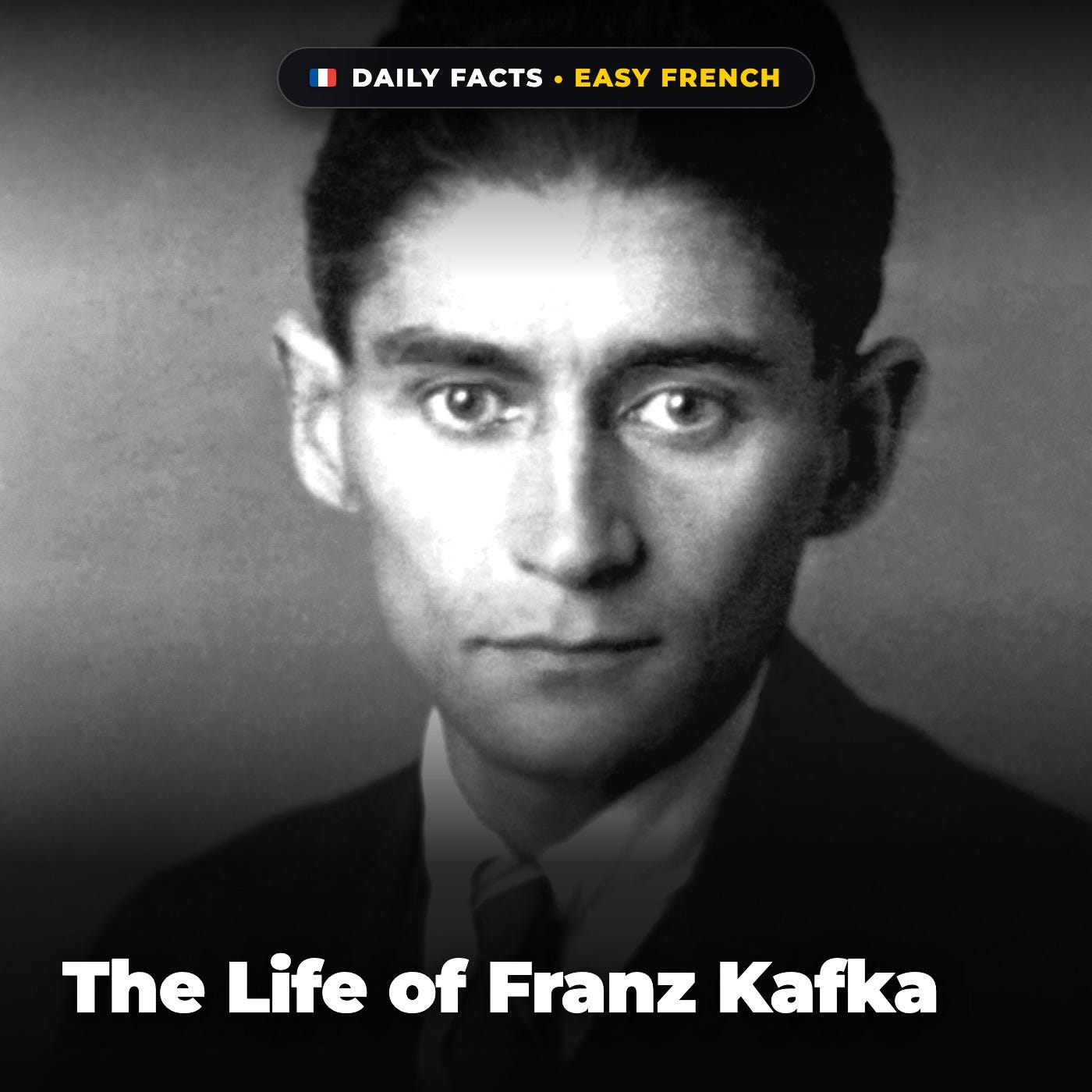
The Life of Franz Kafka in Easy French
22:54
Episode #2

The Life of Franz Kafka in Easy French

Franz Kafka was a Czech-born writer whose unique stories changed modern literature forever. Born in Prague, he captured the surreal struggles of ordinary people facing confusing, powerful systems. He worked as an insurance officer by day and crafted mysterious tales late into the night. Today, his imaginative masterpieces like The Metamorphosis inspire readers and thinkers across the globe.

l'écrivain (writer)la loi (law)le bureau (office)
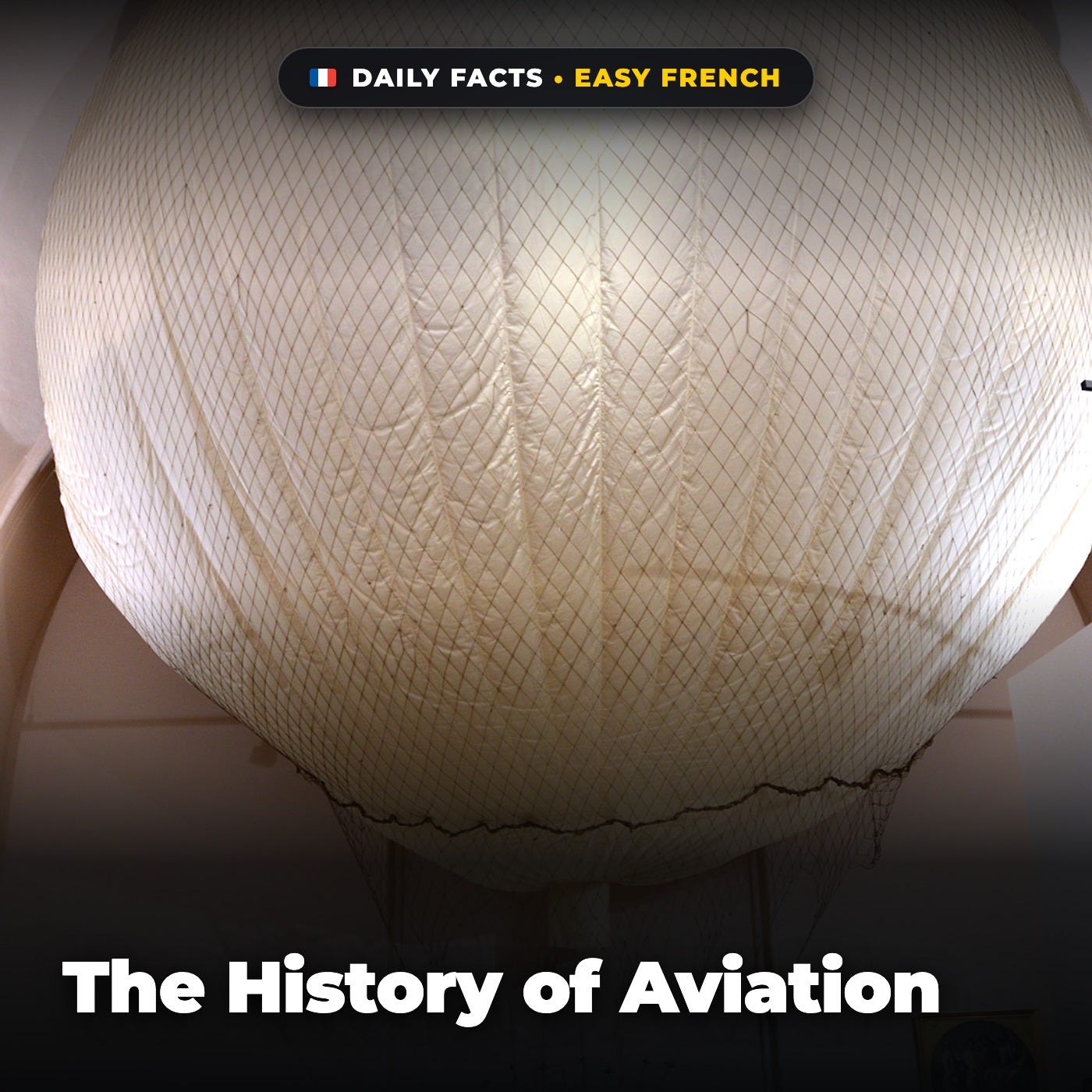
The History of Aviation in Easy French
28:43
Episode #1

The History of Aviation in Easy French

Humans have dreamed of soaring freely through the open sky like birds for thousands of years. From ancient Chinese kites to Leonardo da Vinci's visionary sketches, early dreamers boldly laid the foundations of flight. The twentieth century finally turned this ambitious fantasy into reality through powerful engines and courageous aviators. Today, advanced aircraft effortlessly connect our entire planet and travel faster than the speed of sound.

l'avion (airplane)l'aile (wing)voler (to fly)
Substack Premium Membership · 7-Day Free Trial

Master French Faster with the Premium Study Companion

Every podcast episode of Daily Facts in Easy French is free to listen to. Upgrade on Substack to unlock the complete interactive Study Companion designed around every single episode.

$5.99 / month
or $59/year (save ~18%) · 7-day free trial

What You Get in Every Premium Episode on Substack

  • Full Bilingual Parallel Transcripts (French ↔ English)

    Line-by-line French transcripts aligned side-by-side with natural English translations and timestamps — follow every spoken sentence without pausing to look up words.

  • 20 Core Vocabulary Words with Episode Quotes

    Carefully lemmatized key terms in base form with grammatical articles (le / la / l'), clear English translations, and authentic sentences quoted straight from the episode.

  • 3 Grammar Spotlights in Real Context

    High-impact French grammar patterns highlighted inside real sentences you just heard — learn structure naturally instead of memorizing abstract textbook tables.

  • 5-Question Comprehension Quiz + Answer Key

    Check how much you understood after every episode with five targeted multiple-choice questions and clear explanations written in simple French.

  • Writing Practice & Full Back-Catalog Archive

    Weekly subscriber discussion & writing prompts plus unlimited access to the entire growing library of Study Companions (including all episodes older than two weeks).

Free Listener$0 Forever

  • All daily French episodes at 80% speed
  • Web player on dailyfacts.uk + Spotify, Apple & pod.link
  • Episode summary, chapter markers & 4 preview words
  • New episode email notifications via Substack

Substack Premium7-Day Trial

  • Full bilingual parallel transcripts (French ↔ English)
  • 20 core vocabulary words with quotes & 3 Grammar Spotlights
  • 5-question comprehension quiz with answer keys
  • Writing practice & full archive access

French Learner FAQ

Is Daily Facts in Easy French suitable for complete beginners?

Yes. Daily Facts in Easy French is specifically created for CEFR A1–A2 beginners learning French. Every episode uses short sentences, everyday core vocabulary, and natural repetition at 80% speaking speed so beginners can follow real stories from day one.

How can I listen to Daily Facts in Easy French in my favorite podcast app?

Visit our pod.link page (https://pod.link/6818718344) to open Daily Facts in Easy French directly in Apple Podcasts, Spotify, Pocket Casts, Overcast, Castro, YouTube Music, or any RSS podcast player — or stream any episode directly right here on dailyfacts.uk/french/.

What do I get with Daily Facts in Easy French Premium on Substack?

A Substack Premium membership ($5.99/month or $59/year, with a 7-day free trial) unlocks the complete Premium Study Companion for every episode: full bilingual parallel transcripts (French ↔ English with timestamps), 20 lemmatized core vocabulary words with articles (le / la / l') and episode quotes, 3 Grammar Spotlights in context, a 5-question comprehension quiz with answer keys, writing practice, and full archive access.

How fast is the French audio spoken?

Every episode is mastered at 80% of normal conversational speed (0.8x). In our built-in web player, 1.0x plays the episode at this recorded 80% slow speed; you can slow it down further to 0.8x or speed up to 1.25x (natural pace) anytime.