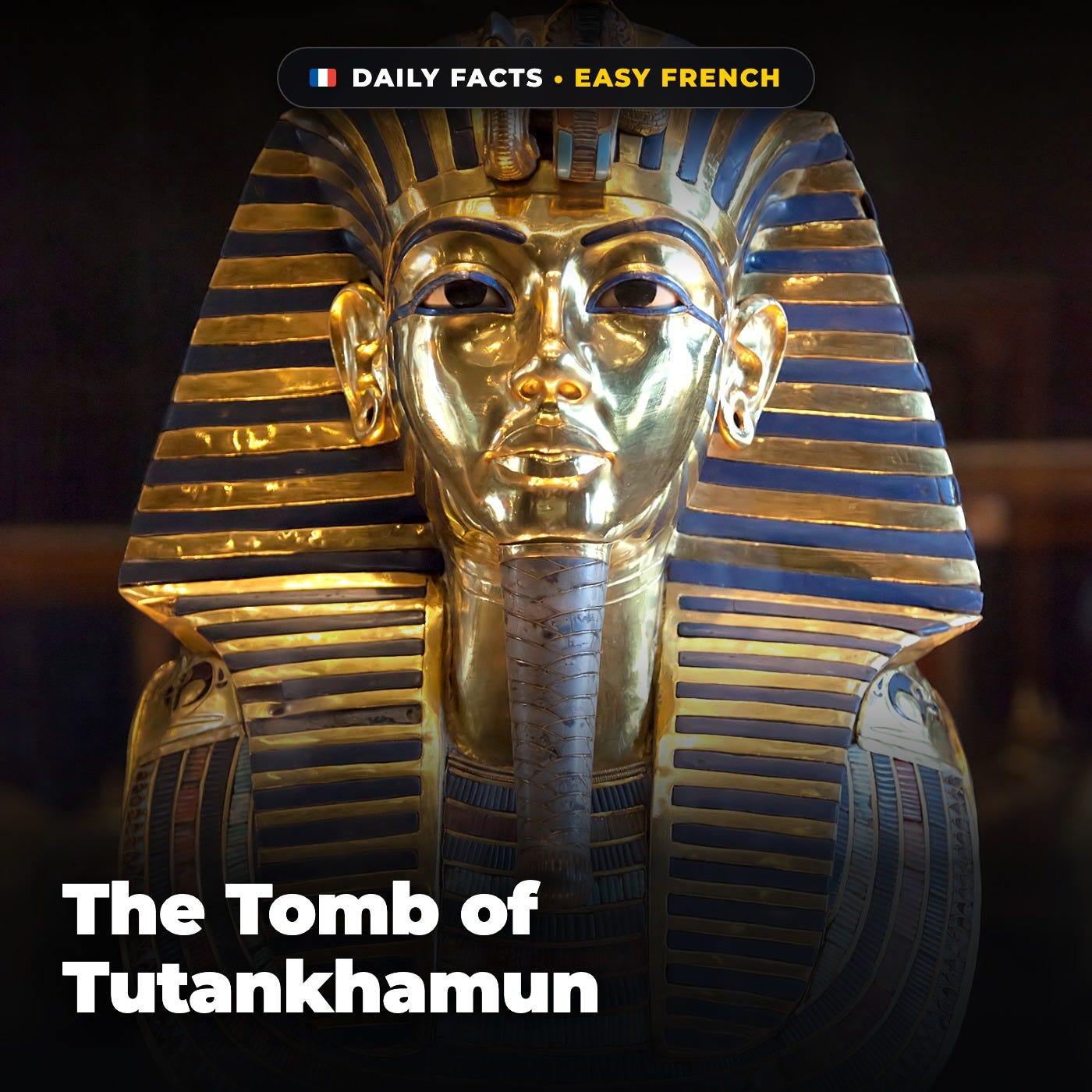
The Tomb of Tutankhamun in Easy French
Easy French · CEFR A1–A2 80% Slow Speed 10:31 Oct 5, 2026

The Tomb of Tutankhamun in Easy French

0:00 10:31

About This Episode

Tutankhamun or Tutankhamen, was the third to last pharaoh of the Eighteenth Dynasty of ancient Egypt, who ruled c. 1332 – 1323 BC, dying at about the age of 19.

Born Tutankhaten, his administration restored the traditional polytheistic form of ancient Egyptian religion, undoing a previous shift to the religion known as Atenism. Tutankhamun's tomb door proclaims his devotion to the ancient Egyptian gods.
Key Topics & Highlights

  • Tutankhamun or Tutankhamen, was the third to last pharaoh of the Eighteenth Dynasty of ancient Egypt, who ruled c.
  • 1332 – 1323 BC, dying at about the age of 19.
  • Born Tutankhaten, his administration restored the traditional polytheistic form of ancient Egyptian religion, undoing a previous shift to the religion known as Atenism.
  • Tutankhamun's tomb door proclaims his devotion to the ancient Egyptian gods.
Chapters & Timestamps

Click any chapter timestamp to jump directly to that section in the audio player.

Preview French Vocabulary

Click any preview word to hear pronunciation. Unlock all 20 core vocabulary words with episode context quotes inside the Substack Premium Study Companion.

More Daily Facts in Easy French Episodes

Browse All 59 Episodes →
The Colosseum of Rome in Easy French
9:04
CEFR A1–A2

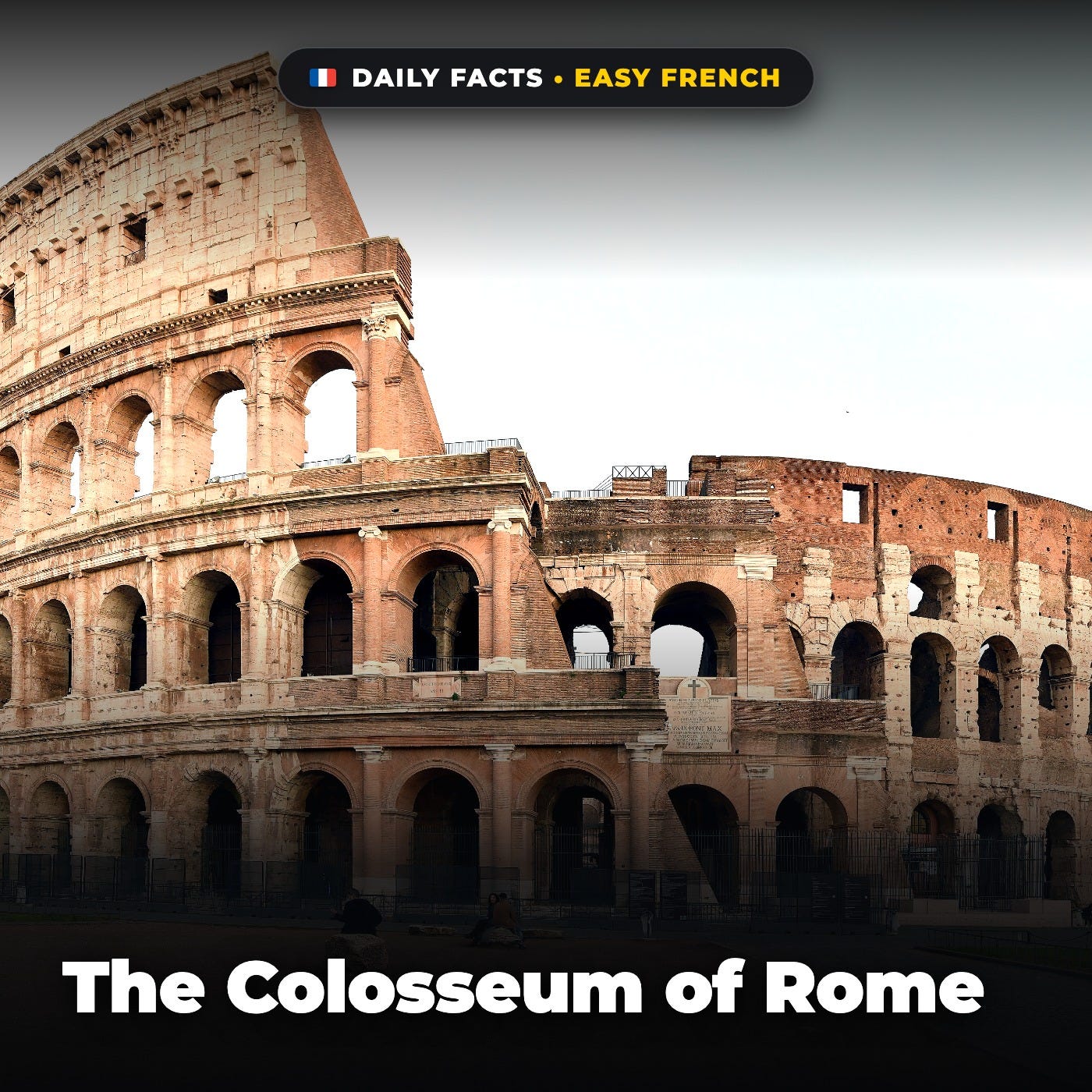
The Colosseum of Rome in Easy French

The Colosseum is an elliptical amphitheatre in the centre of the city of Rome, Italy, just east of the Roman Forum. It is the largest ancient amphitheatre ever built, and is the largest standing amphitheatre in the world. Construction began under the Emperor Vespasian in 72 and was completed in AD 80 under his successor and heir, Titus. Further modifications were made during the reign of Domitian.

The Taj Mahal in Easy French
8:37
CEFR A1–A2

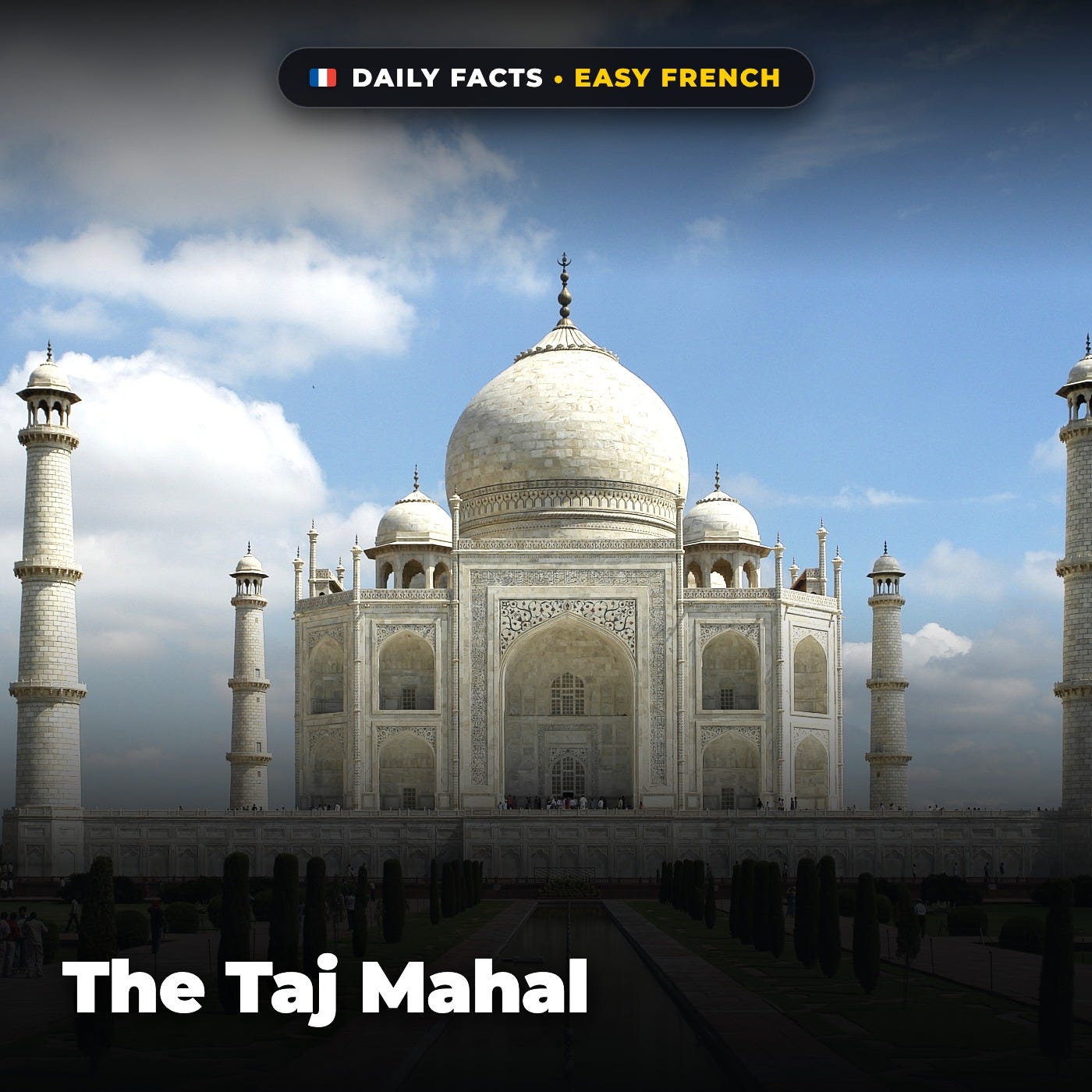
The Taj Mahal in Easy French

The Taj Mahal is an ivory-white marble mausoleum on the right bank of the river Yamuna in Agra, Uttar Pradesh, India. It was commissioned in 1631 by the fifth Mughal emperor, Shah Jahan, to house the tomb of his late wife, Mumtaz Mahal; it also houses the tomb of Shah Jahan himself. The tomb is the centrepiece of a 17-hectare (42-acre) complex, which includes a mosque and a guest house, and is set in formal gardens bounded on three sides by a crenellated wall.

The Great Wall of China in Easy French
10:52
CEFR A1–A2

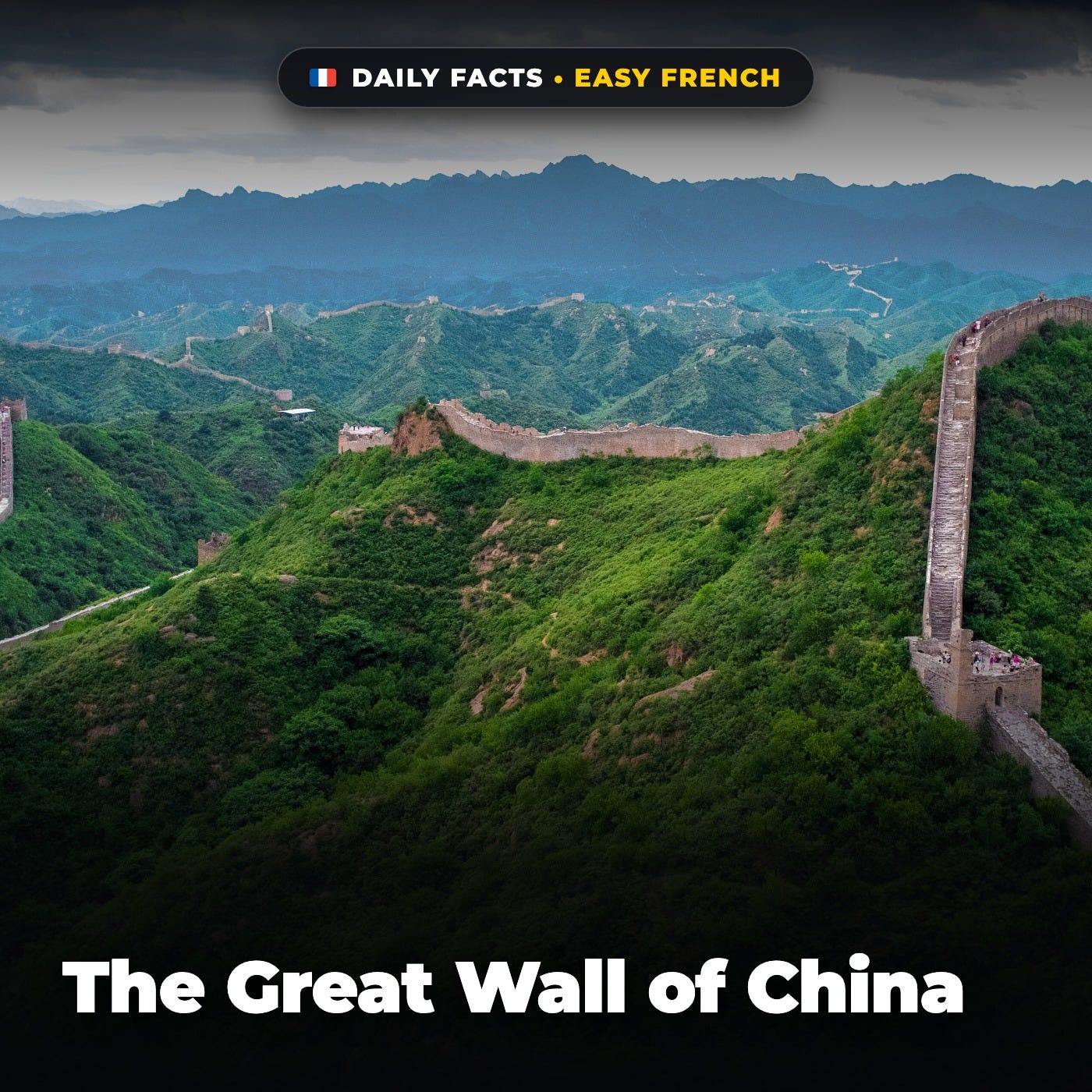
The Great Wall of China in Easy French

The Great Wall of China is a series of fortifications in China. They were built across the historical northern borders of ancient Chinese states and Imperial China as protection against various nomadic groups from the Eurasian Steppe. The first walls date to the 7th century BC; these were joined together in the Qin dynasty. Successive dynasties expanded the wall system; the best-known sections were built by the Ming dynasty (1368–1644).