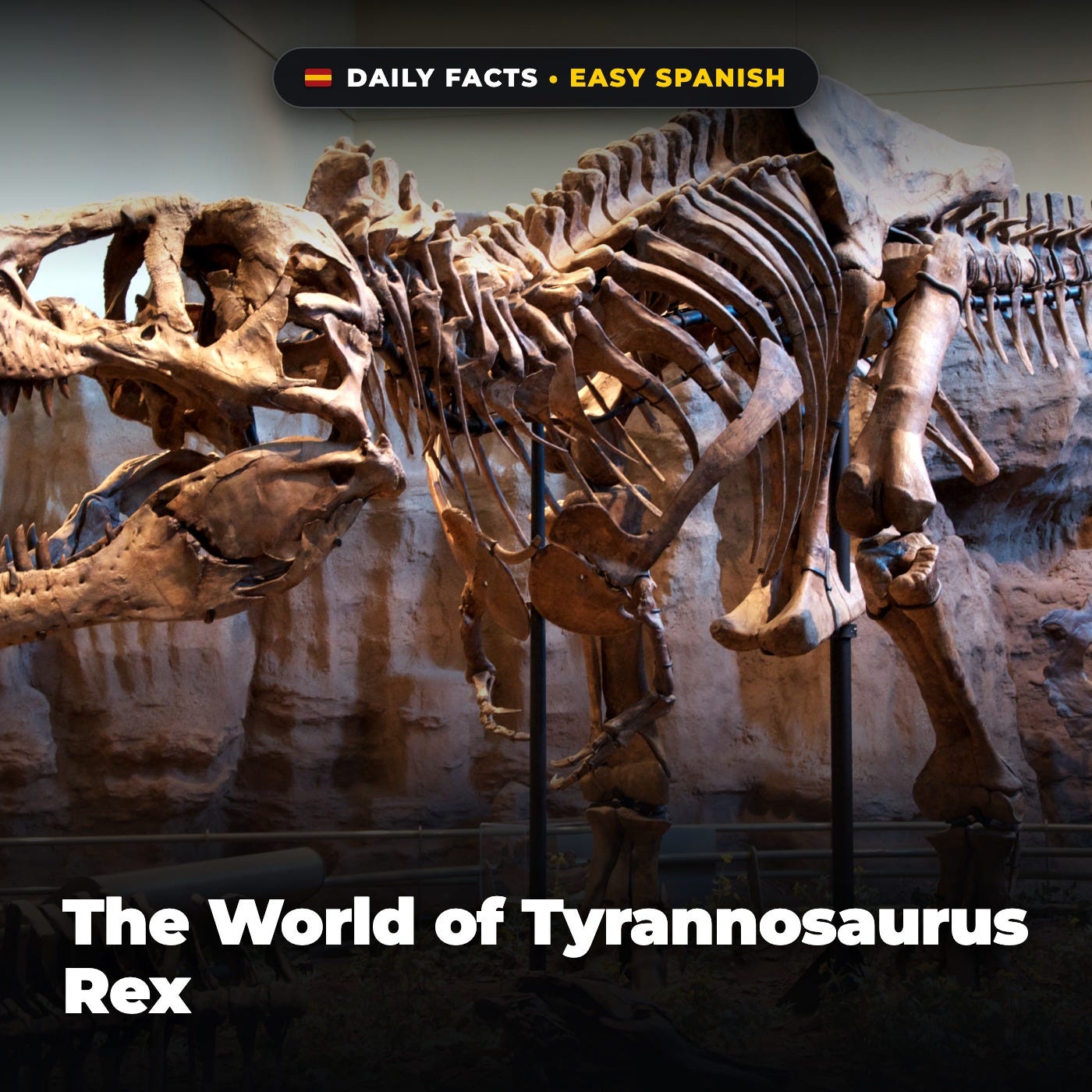
The World of Tyrannosaurus Rex in Easy Spanish
Easy Spanish · CEFR A1–A2 80% Slow Speed 11:05 Oct 2, 2026

The World of Tyrannosaurus Rex in Easy Spanish

0:00 11:05

About This Episode

Enter the prehistoric world of Tyrannosaurus Rex, the undisputed king of the Late Cretaceous dinosaurs! Towering 4 meters tall and weighing up to 9 tons, this apex predator ruled North America 66 million years ago.

Uncover fascinating scientific facts about T-Rex's bone-crushing bite force, binocular vision, keen sense of smell, and the ongoing debate over whether it was an active hunter or opportunistic scavenger.
Key Topics & Highlights

  • T-Rex lived approximately 68 to 66 million years ago in western North America.
  • It possessed the strongest bite force of any known terrestrial animal—capable of crushing solid bone.
  • Its forward-facing eyes provided binocular depth perception superior to modern hawks.
  • Despite small two-fingered arms, its legs and muscular tail allowed steady movement across open terrain.

Chapters & Timestamps

Click any chapter timestamp to jump directly to that section in the audio player.

Preview Spanish Vocabulary

Click any preview word to hear pronunciation. Unlock all 20 core vocabulary words with episode context quotes inside the Substack Premium Study Companion.

More Daily Facts in Easy Spanish Episodes

Browse All 59 Episodes →
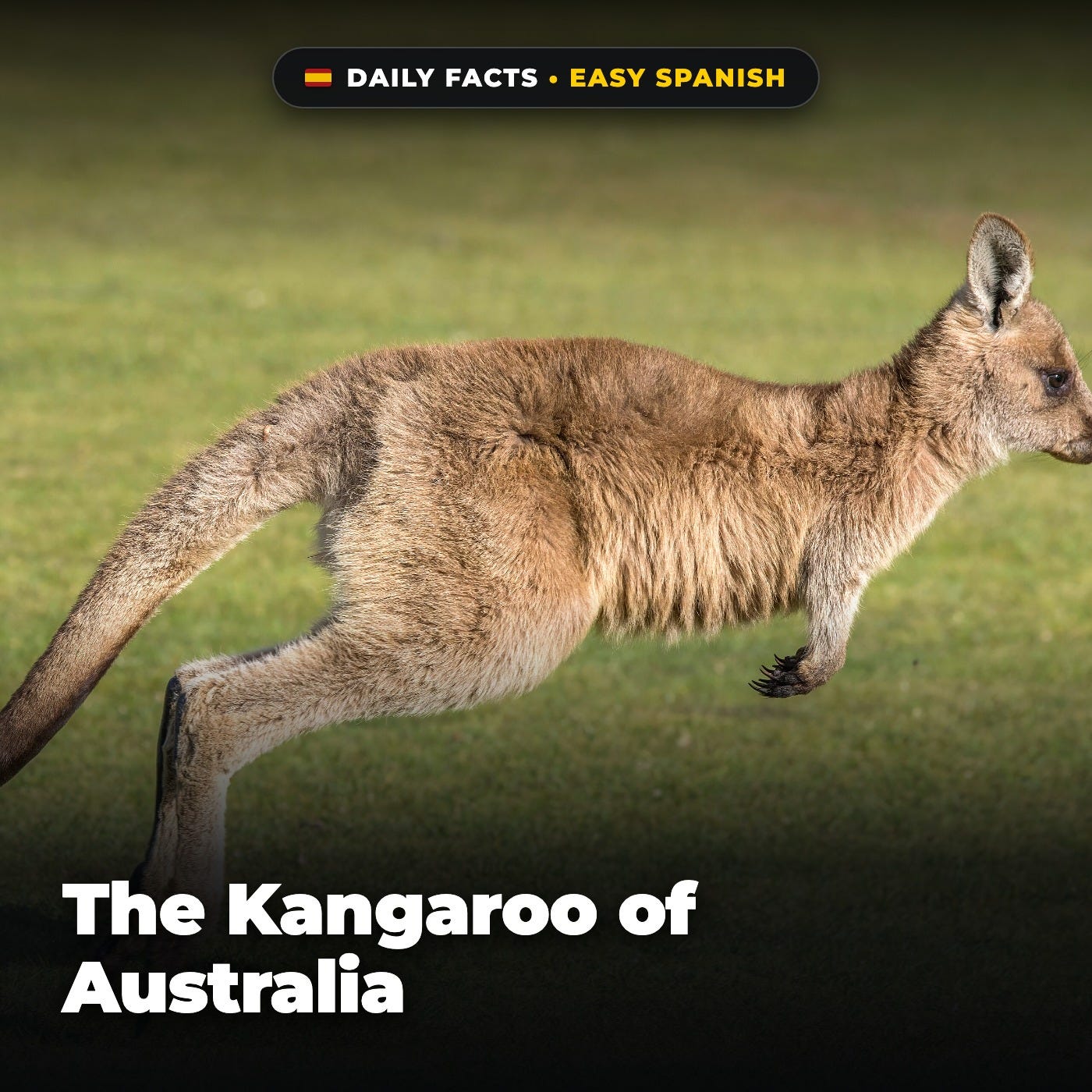
The Kangaroo of Australia in Easy Spanish
16:14
CEFR A1–A2

The Kangaroo of Australia in Easy Spanish

Kangaroos are marsupials from the subfamily Macropodinae. In common use, the term is used to describe the largest species from this family, the red kangaroo, as well as the antilopine kangaroo, eastern grey kangaroo, and western grey kangaroo. Kangaroos are indigenous to Australia and New Guinea. The Australian government estimated that 42.8 million kangaroos lived within the commercial harvest areas of Australia in 2019, down from 53.2 million in 2013.

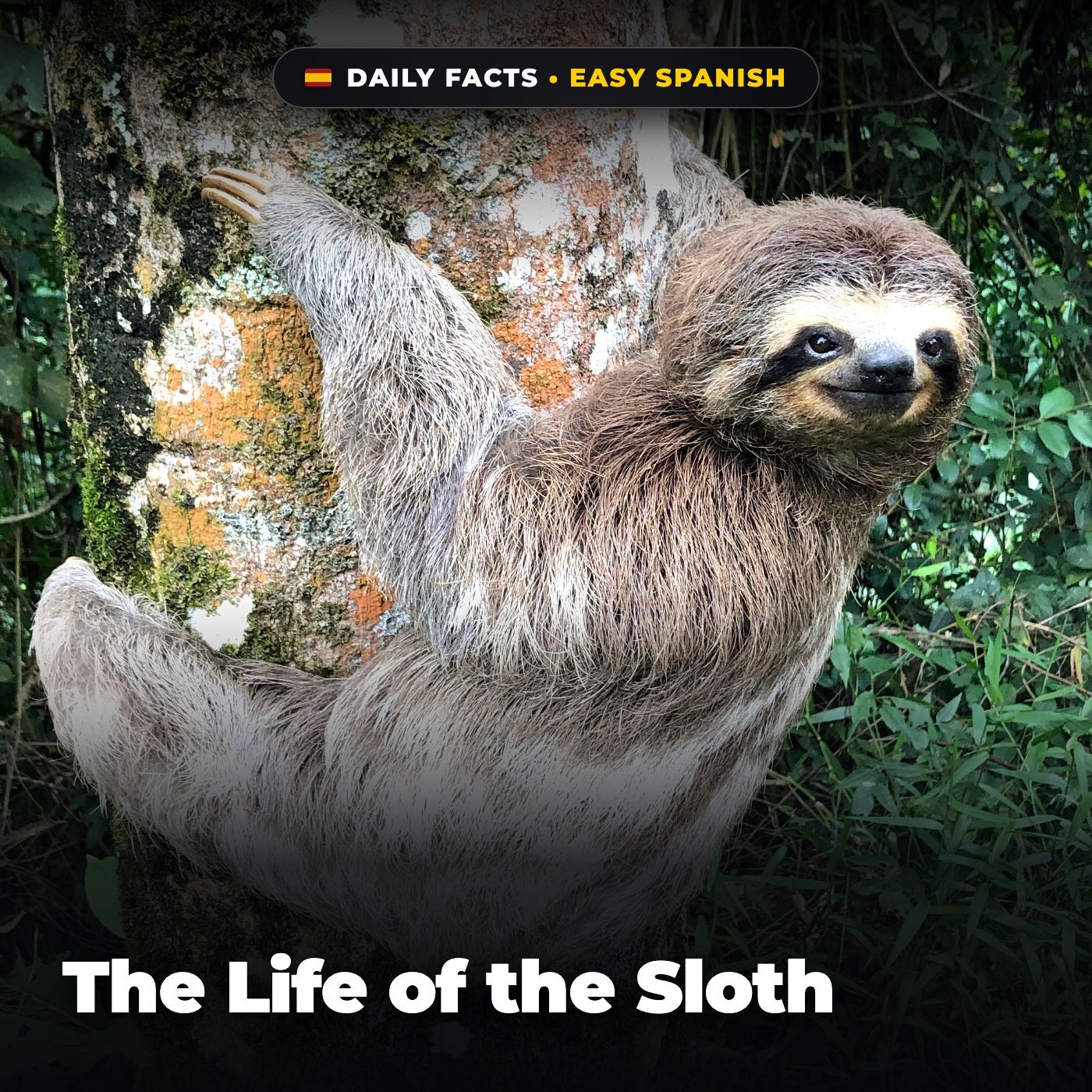
The Life of the Sloth in Easy Spanish
7:51
CEFR A1–A2

The Life of the Sloth in Easy Spanish

Sloths are a Neotropical group of xenarthran mammals constituting the suborder Folivora, including the extant arboreal tree sloths and extinct terrestrial ground sloths. Noted for their slowness of movement, tree sloths spend most of their lives hanging upside down in the trees of the tropical rainforests of South America and Central America. Sloths are considered to be most closely related to anteaters, together making up the xenarthran order Pilosa.

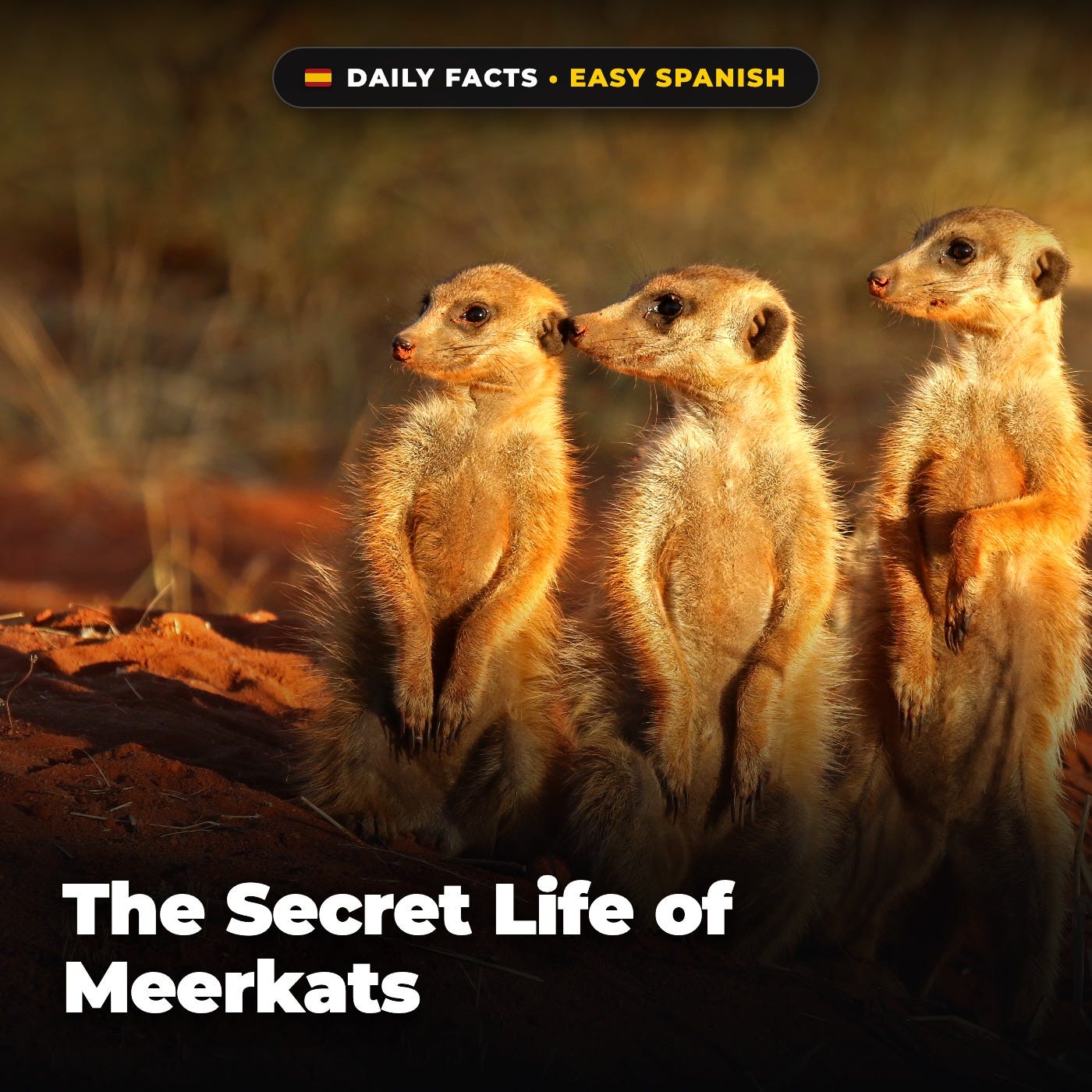
The Secret Life of Meerkats in Easy Spanish
17:10
CEFR A1–A2

The Secret Life of Meerkats in Easy Spanish

The meerkat or suricate is a small mongoose found in southern Africa. It is characterised by a broad head, large eyes, a pointed snout, long legs, a thin tapering tail, and a brindled coat pattern. The head-and-body length is around 24–35 cm (9.4–13.8 in), and the weight is typically between 0.62 and 0.97 kg. The coat is light grey to yellowish-brown with alternate, poorly defined light and dark bands on the back.