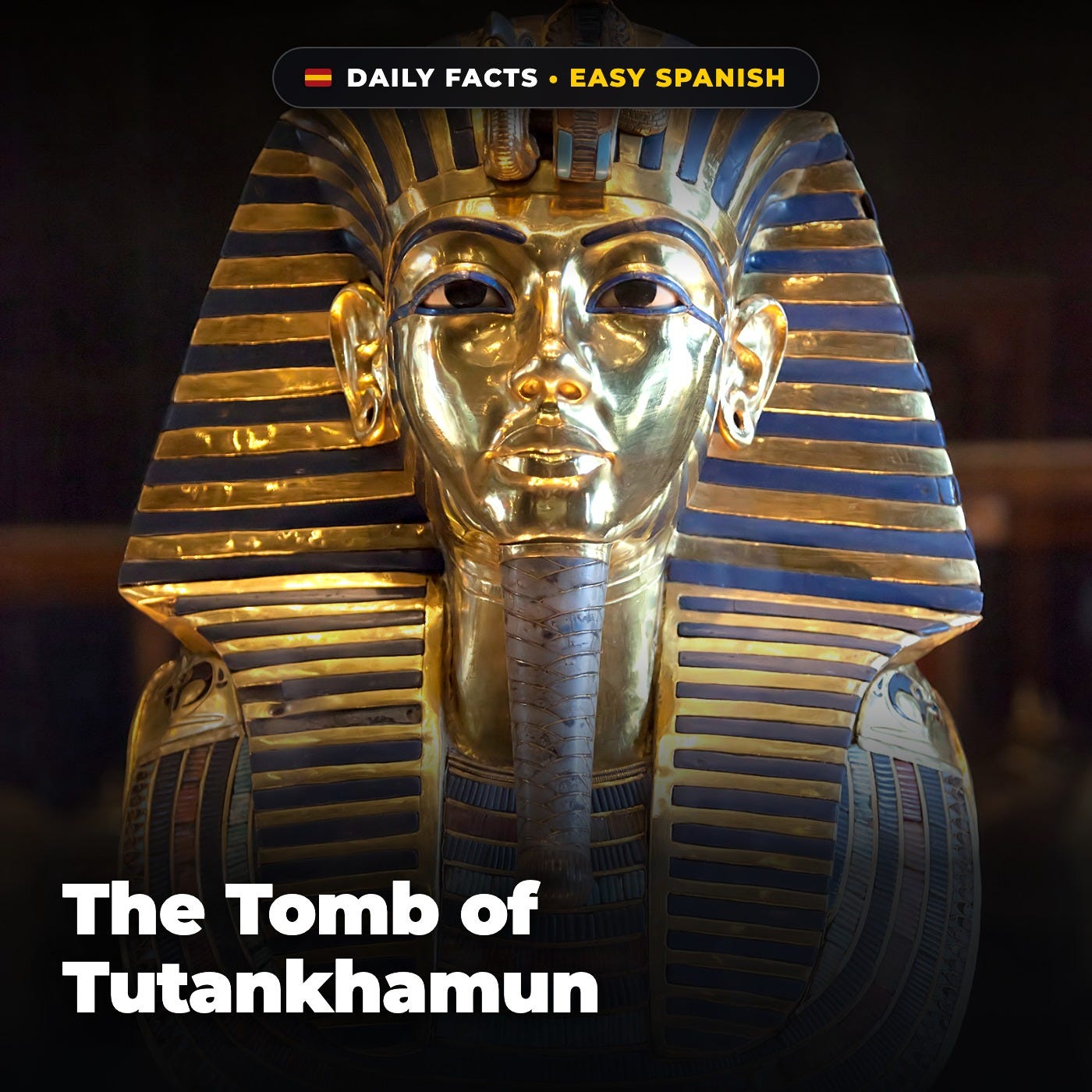
The Tomb of Tutankhamun in Easy Spanish
Easy Spanish · CEFR A1–A2 80% Slow Speed 13:35 Oct 6, 2026

The Tomb of Tutankhamun in Easy Spanish

0:00 13:35

About This Episode

Step into the Valley of the Kings in November 1922, where British archaeologist Howard Carter made the most sensational discovery in archaeological history: the intact tomb of Pharaoh Tutankhamun.

Peep through the doorway to see "wonderful things"—over 5,000 priceless treasures, golden chariots, ornate thrones, and the iconic solid-gold death mask of Egypt's famous boy king.
Key Topics & Highlights

  • Tutankhamun became pharaoh of Ancient Egypt around age 9 and ruled until his sudden death at age 19.
  • Howard Carter and Lord Carnarvon spent five years searching before discovering the buried entrance staircase.
  • The tomb contained over 5,000 undisturbed artifacts, including three nesting coffins and the solid gold mask.
  • The discovery captivated global media and popularized the famous legend of the 'Curse of the Pharaohs'.

Chapters & Timestamps

Click any chapter timestamp to jump directly to that section in the audio player.

Preview Spanish Vocabulary

Click any preview word to hear pronunciation. Unlock all 20 core vocabulary words with episode context quotes inside the Substack Premium Study Companion.

More Daily Facts in Easy Spanish Episodes

Browse All 59 Episodes →
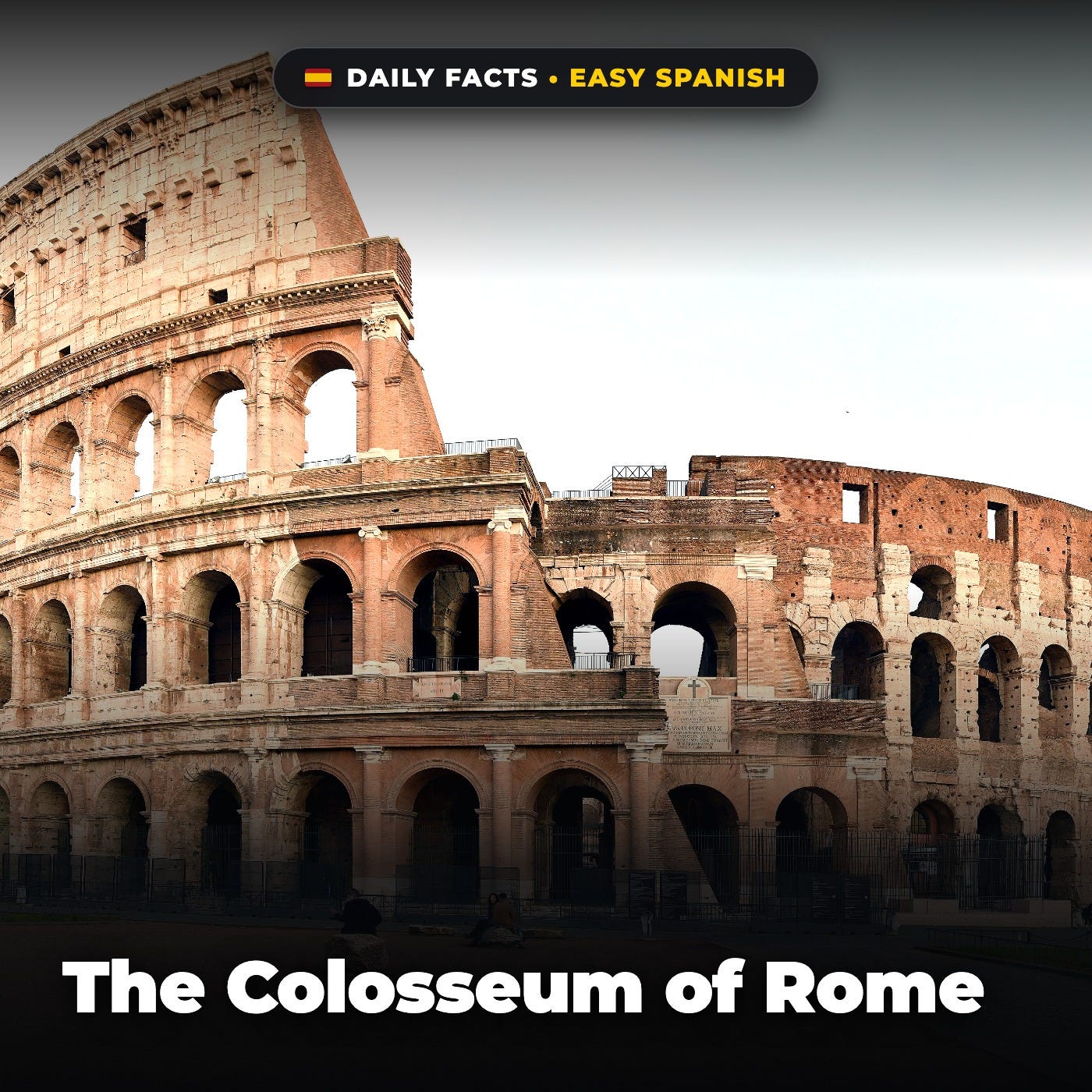
The Colosseum of Rome in Easy Spanish
18:50
CEFR A1–A2

The Colosseum of Rome in Easy Spanish

The Colosseum is an elliptical amphitheatre in the centre of the city of Rome, Italy, just east of the Roman Forum. It is the largest ancient amphitheatre ever built, and is the largest standing amphitheatre in the world. Construction began under the Emperor Vespasian in 72 and was completed in AD 80 under his successor and heir, Titus. Further modifications were made during the reign of Domitian.

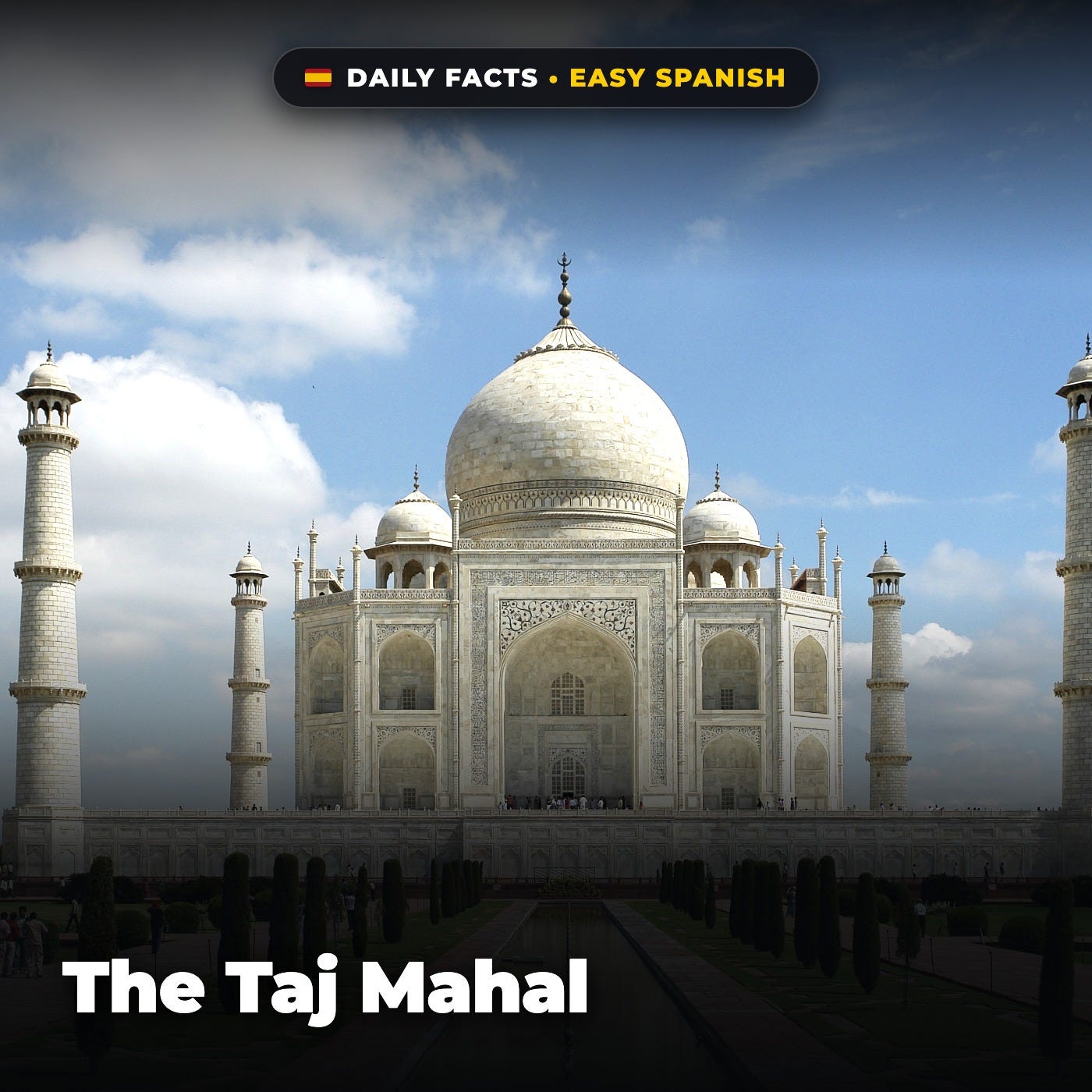
The Taj Mahal in Easy Spanish
10:32
CEFR A1–A2

The Taj Mahal in Easy Spanish

The Taj Mahal is an ivory-white marble mausoleum on the right bank of the river Yamuna in Agra, Uttar Pradesh, India. It was commissioned in 1631 by the fifth Mughal emperor, Shah Jahan, to house the tomb of his late wife, Mumtaz Mahal; it also houses the tomb of Shah Jahan himself. The tomb is the centrepiece of a 17-hectare (42-acre) complex, which includes a mosque and a guest house, and is set in formal gardens bounded on three sides by a crenellated wall.

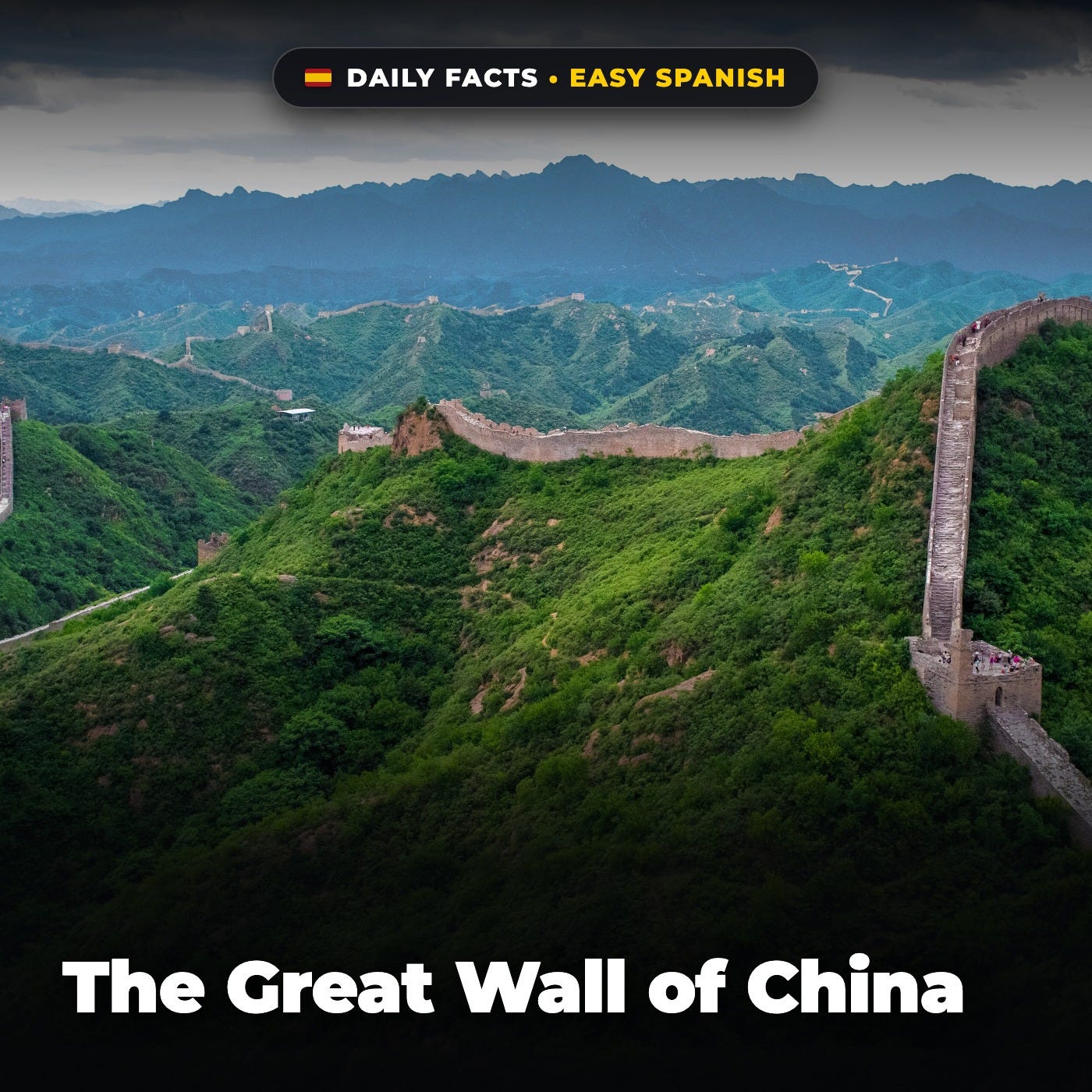
The Great Wall of China in Easy Spanish
15:18
CEFR A1–A2

The Great Wall of China in Easy Spanish

The Great Wall of China is a series of fortifications in China. They were built across the historical northern borders of ancient Chinese states and Imperial China as protection against various nomadic groups from the Eurasian Steppe. The first walls date to the 7th century BC; these were joined together in the Qin dynasty. Successive dynasties expanded the wall system; the best-known sections were built by the Ming dynasty (1368–1644).