The Alpine Ibex in Easy Spanish
Easy Spanish · CEFR A1–A2 80% Slow Speed 12:36 Oct 18, 2026

The Alpine Ibex in Easy Spanish

0:00 12:36

About This Episode

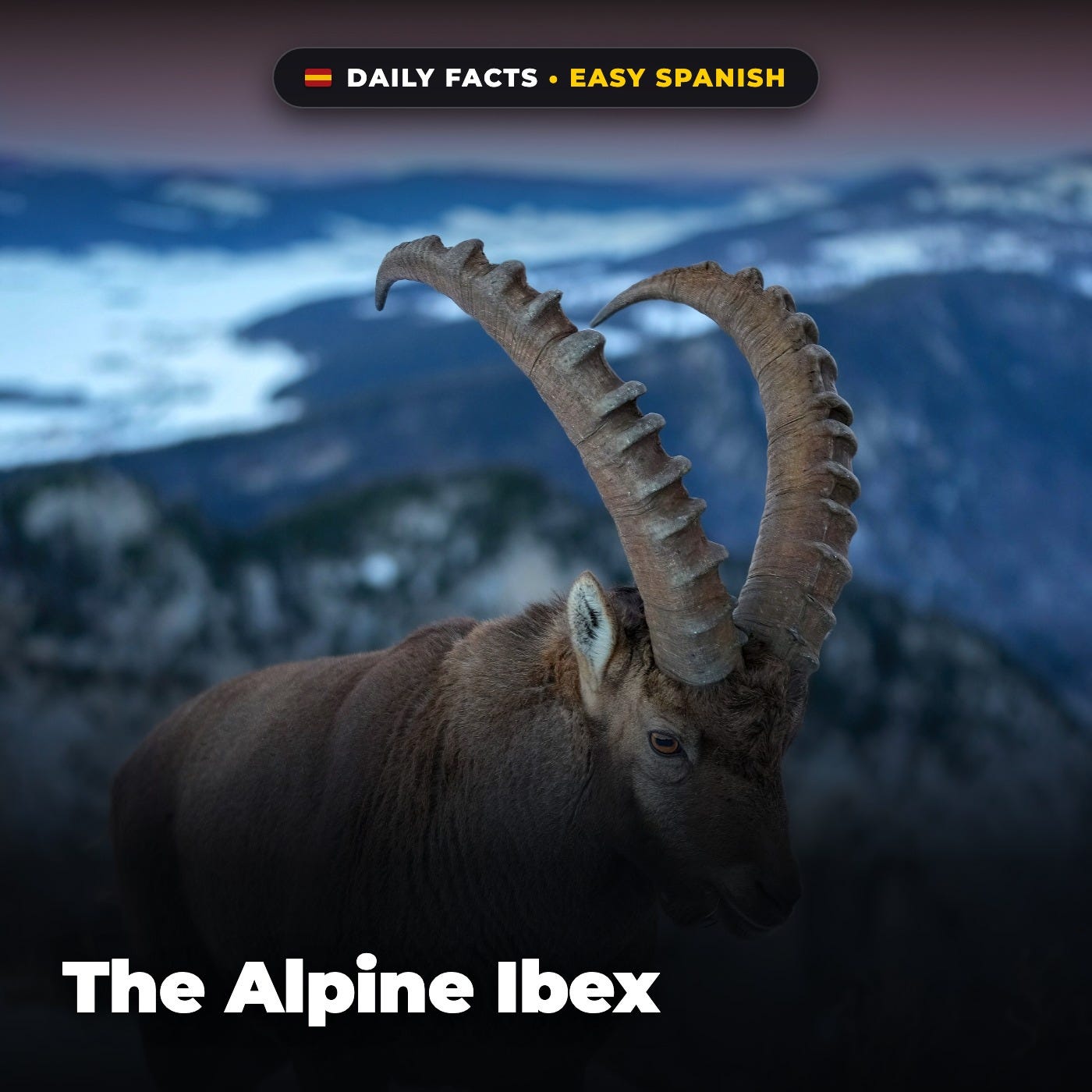
The Alpine ibex is a wild goat that lives high in the rugged European Alps. These extraordinary climbers easily navigate steep cliffs and rocky slopes where few other animals can survive.

Male ibexes are famous for their magnificent curved horns, which can grow up to a meter in length. Today, learning about their life in the mountains offers an exciting glimpse into alpine wildlife.
Key Topics & Highlights

  • The Alpine ibex can live at extreme elevations reaching up to 3,300 meters above sea level.
  • Male ibexes grow huge curved horns that are much longer and heavier than those of females.
  • Their specialized flexible hooves act like suction cups to grip nearly vertical rock faces.
  • The species was once close to extinction before protected breeding programs saved it in the Alps.

Chapters & Timestamps

Click any chapter timestamp to jump directly to that section in the audio player.

Preview Spanish Vocabulary

Click any preview word to hear pronunciation. Unlock all 20 core vocabulary words with episode context quotes inside the Substack Premium Study Companion.

More Daily Facts in Easy Spanish Episodes

Browse All 59 Episodes →
The Kangaroo of Australia in Easy Spanish
16:14
CEFR A1–A2

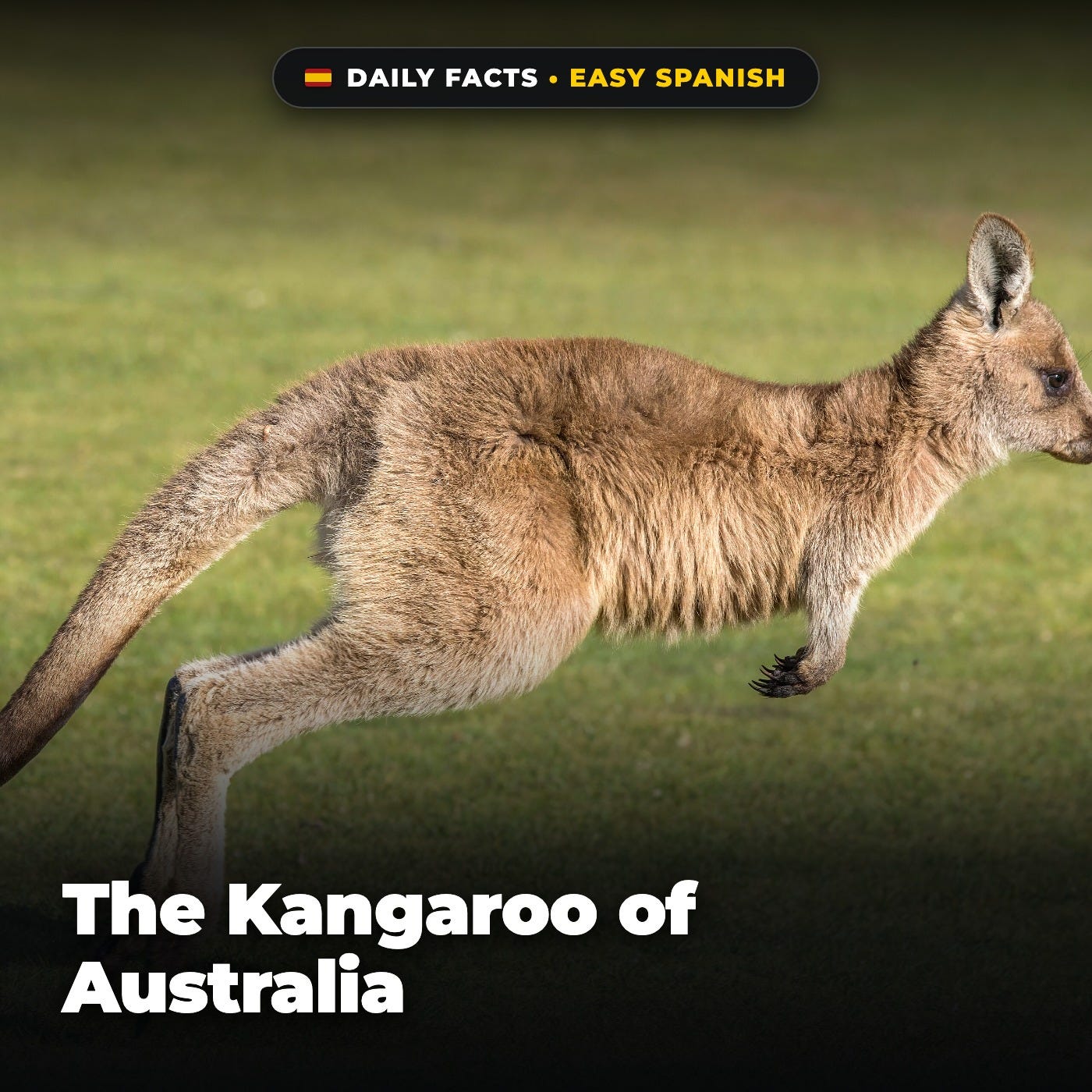
The Kangaroo of Australia in Easy Spanish

Kangaroos are marsupials from the subfamily Macropodinae. In common use, the term is used to describe the largest species from this family, the red kangaroo, as well as the antilopine kangaroo, eastern grey kangaroo, and western grey kangaroo. Kangaroos are indigenous to Australia and New Guinea. The Australian government estimated that 42.8 million kangaroos lived within the commercial harvest areas of Australia in 2019, down from 53.2 million in 2013.

The Life of the Sloth in Easy Spanish
7:51
CEFR A1–A2

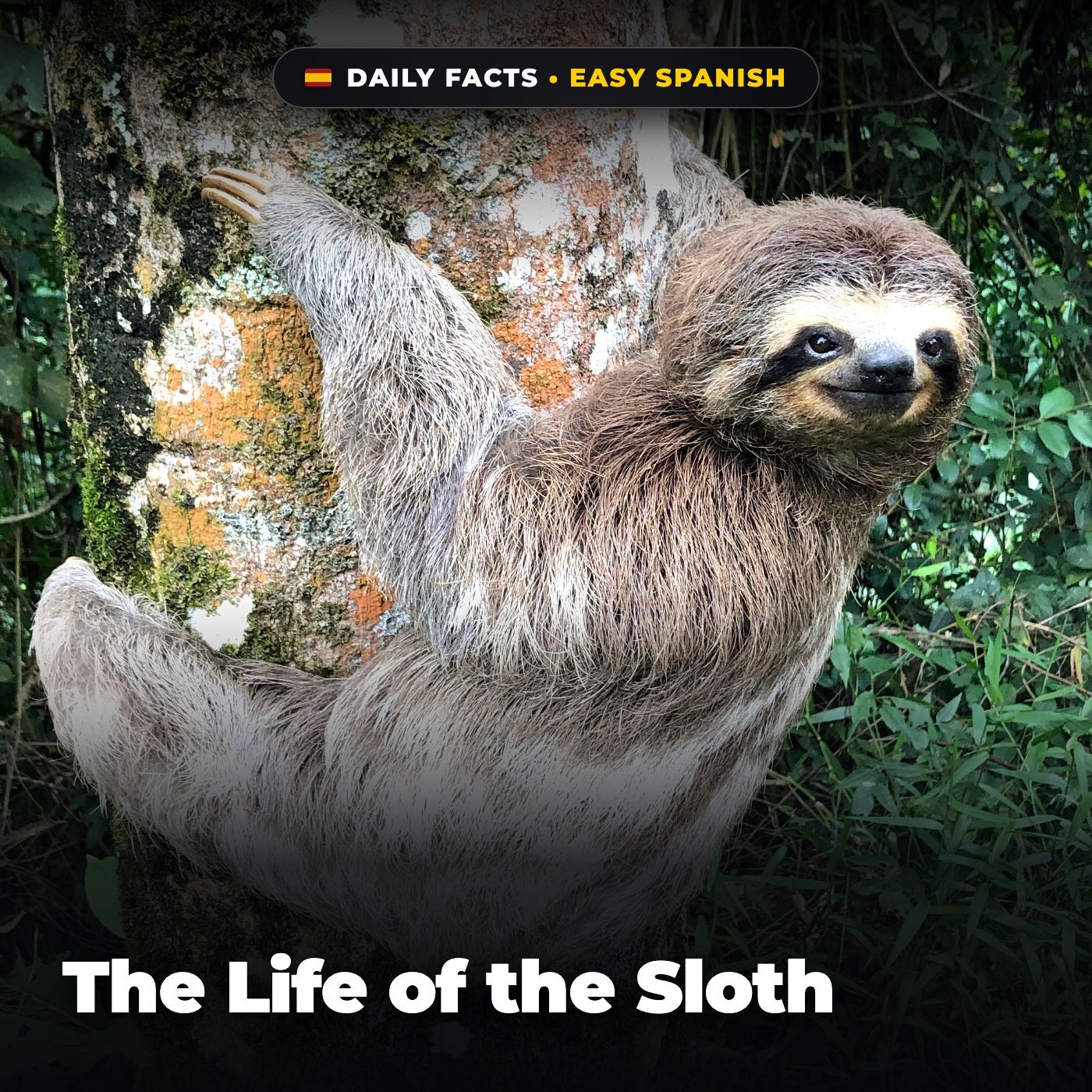
The Life of the Sloth in Easy Spanish

Sloths are a Neotropical group of xenarthran mammals constituting the suborder Folivora, including the extant arboreal tree sloths and extinct terrestrial ground sloths. Noted for their slowness of movement, tree sloths spend most of their lives hanging upside down in the trees of the tropical rainforests of South America and Central America. Sloths are considered to be most closely related to anteaters, together making up the xenarthran order Pilosa.

The Secret Life of Meerkats in Easy Spanish
17:10
CEFR A1–A2

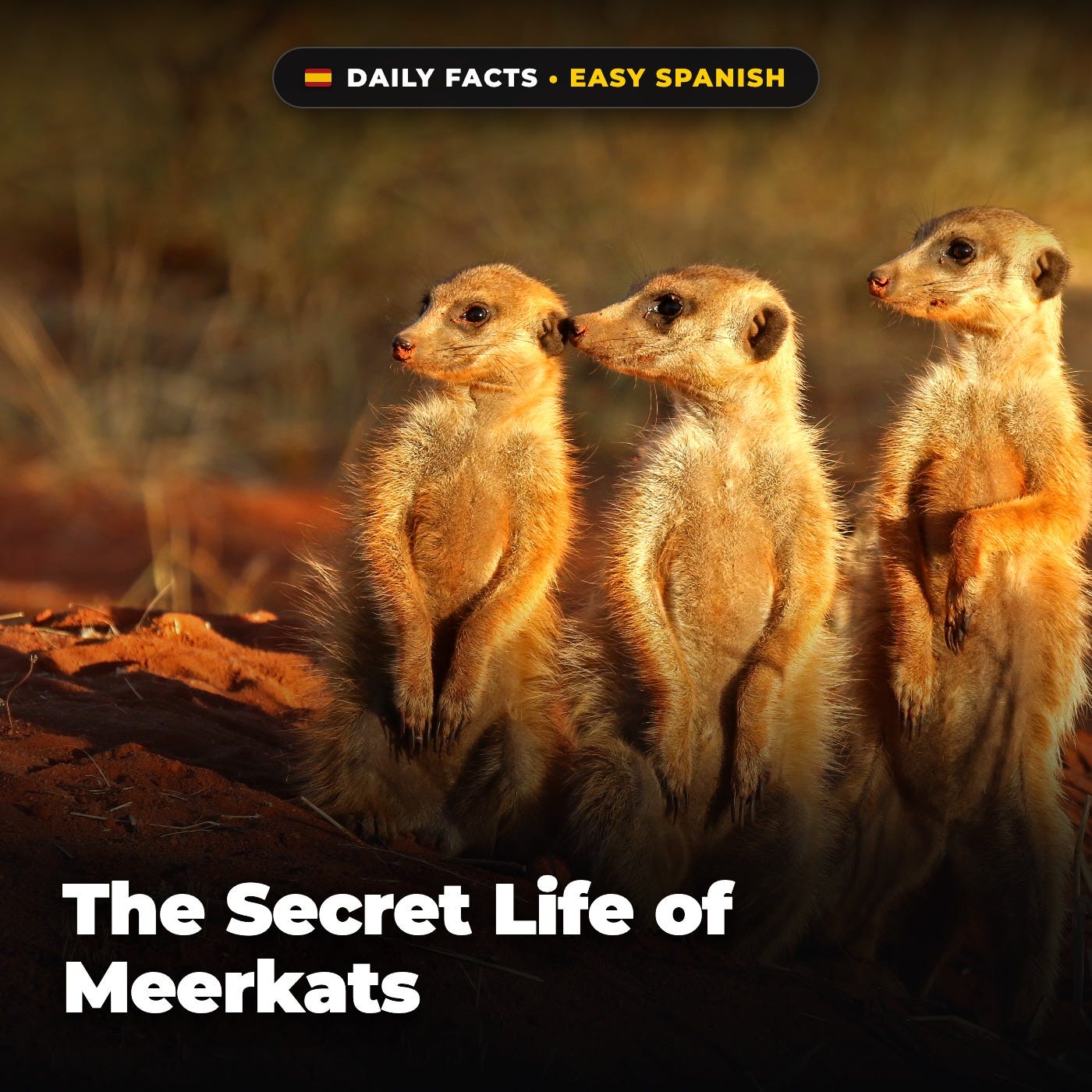
The Secret Life of Meerkats in Easy Spanish

The meerkat or suricate is a small mongoose found in southern Africa. It is characterised by a broad head, large eyes, a pointed snout, long legs, a thin tapering tail, and a brindled coat pattern. The head-and-body length is around 24–35 cm (9.4–13.8 in), and the weight is typically between 0.62 and 0.97 kg. The coat is light grey to yellowish-brown with alternate, poorly defined light and dark bands on the back.