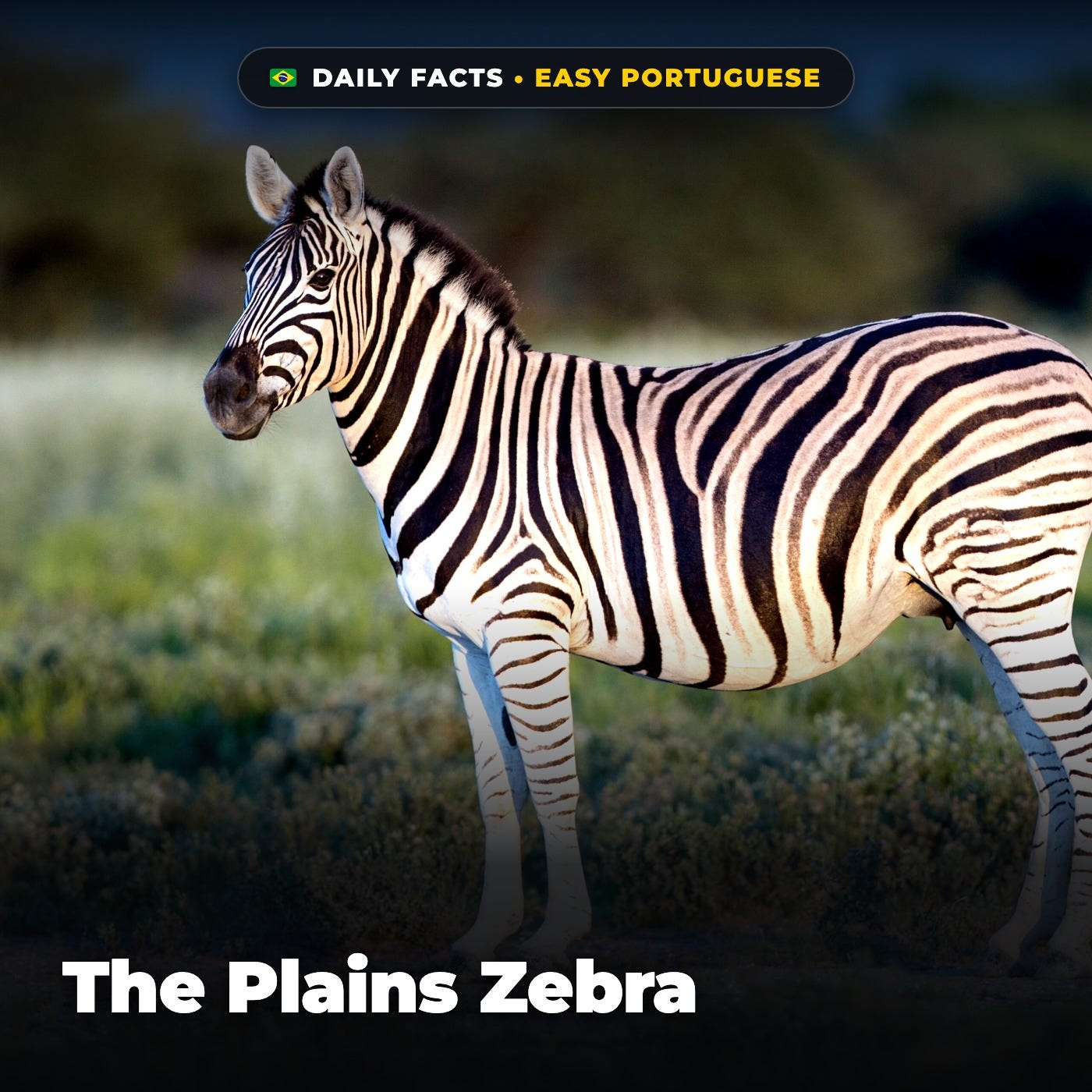
The Plains Zebra in Easy Portuguese
Easy Portuguese · CEFR A1–A2 80% Slow Speed 11:29 Nov 15, 2026

The Plains Zebra in Easy Portuguese

0:00 11:29

About This Episode

The plains zebra is the most common and geographically widespread species of zebra. Its range is fragmented, but spans much of southern and eastern Africa south of the Sahara.

Six or seven subspecies have been recognised, including the quagga which was thought to be a separate species. More recent research supports variations in zebra populations being clines rather than subspecies.
Key Topics & Highlights

  • The plains zebra is the most common and geographically widespread species of zebra.
  • Its range is fragmented, but spans much of southern and eastern Africa south of the Sahara.
  • Six or seven subspecies have been recognised, including the quagga which was thought to be a separate species.
  • More recent research supports variations in zebra populations being clines rather than subspecies.
Chapters & Timestamps

Click any chapter timestamp to jump directly to that section in the audio player.

Preview Portuguese Vocabulary

Click any preview word to hear pronunciation. Unlock all 20 core vocabulary words with episode context quotes inside the Substack Premium Study Companion.

More Daily Facts in Easy Portuguese Episodes

Browse All 100 Episodes →
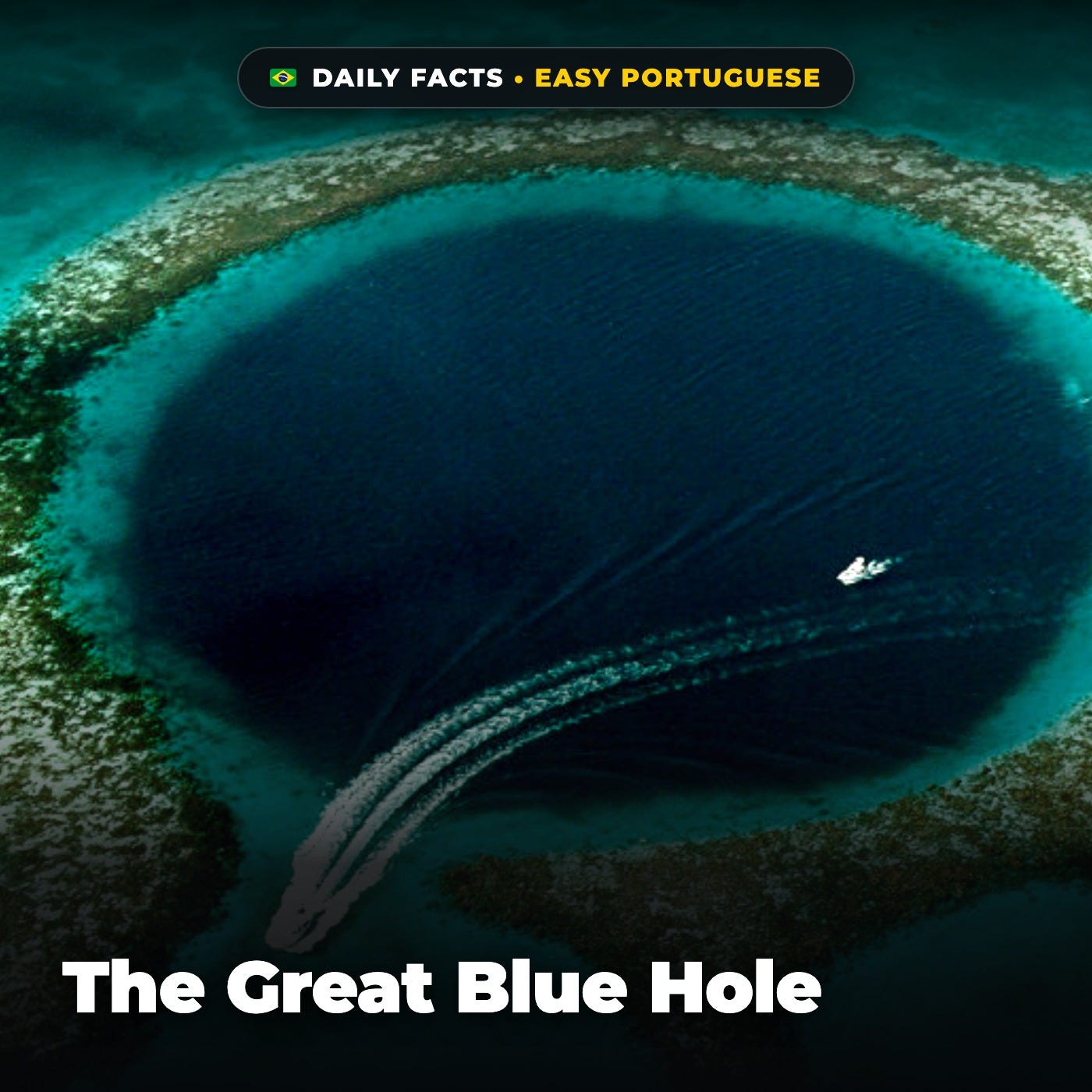
The Great Blue Hole in Easy Portuguese
10:40
CEFR A1–A2

The Great Blue Hole in Easy Portuguese

The Great Blue Hole is a large marine sinkhole off the coast of Belize. It lies near the center of Lighthouse Reef, a small atoll 70 km (43 mi) from the mainland and Belize City. The hole is circular in shape, 318 m (1,043 ft) across and 124 m (407 ft) deep. It has a surface area of 70,650 square metres (760,500 sq ft).

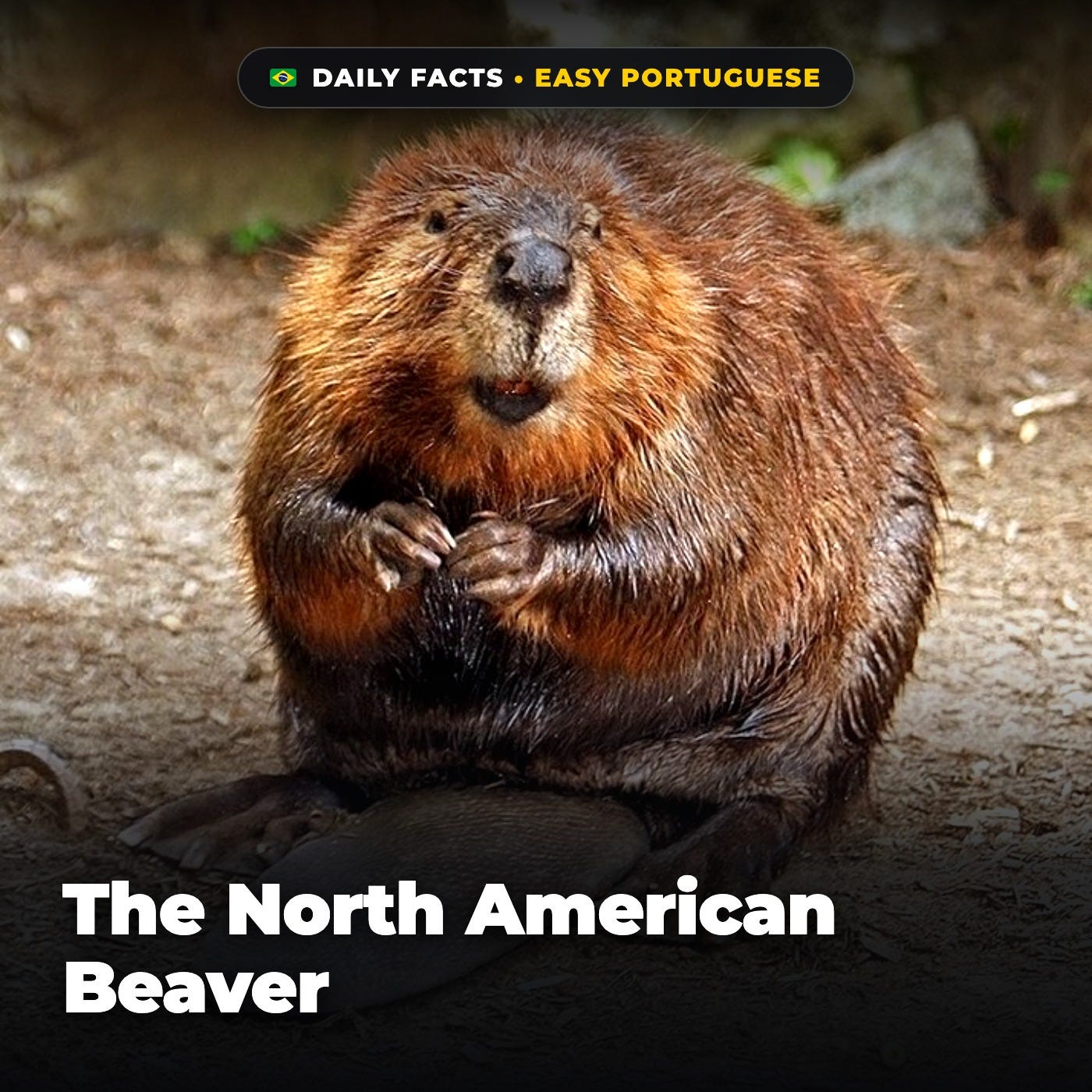
The North American Beaver in Easy Portuguese
12:21
CEFR A1–A2

The North American Beaver in Easy Portuguese

The North American beaver is one of two extant beaver species, along with the Eurasian beaver. It is native to North America and has been introduced in South America (Patagonia) and Europe. The North American beaver is one of the national symbols of Canada and the official state mammal of Oregon and New York. North American beavers are widespread across the continental United States, Canada, southern Alaska, and some parts of northern Mexico.

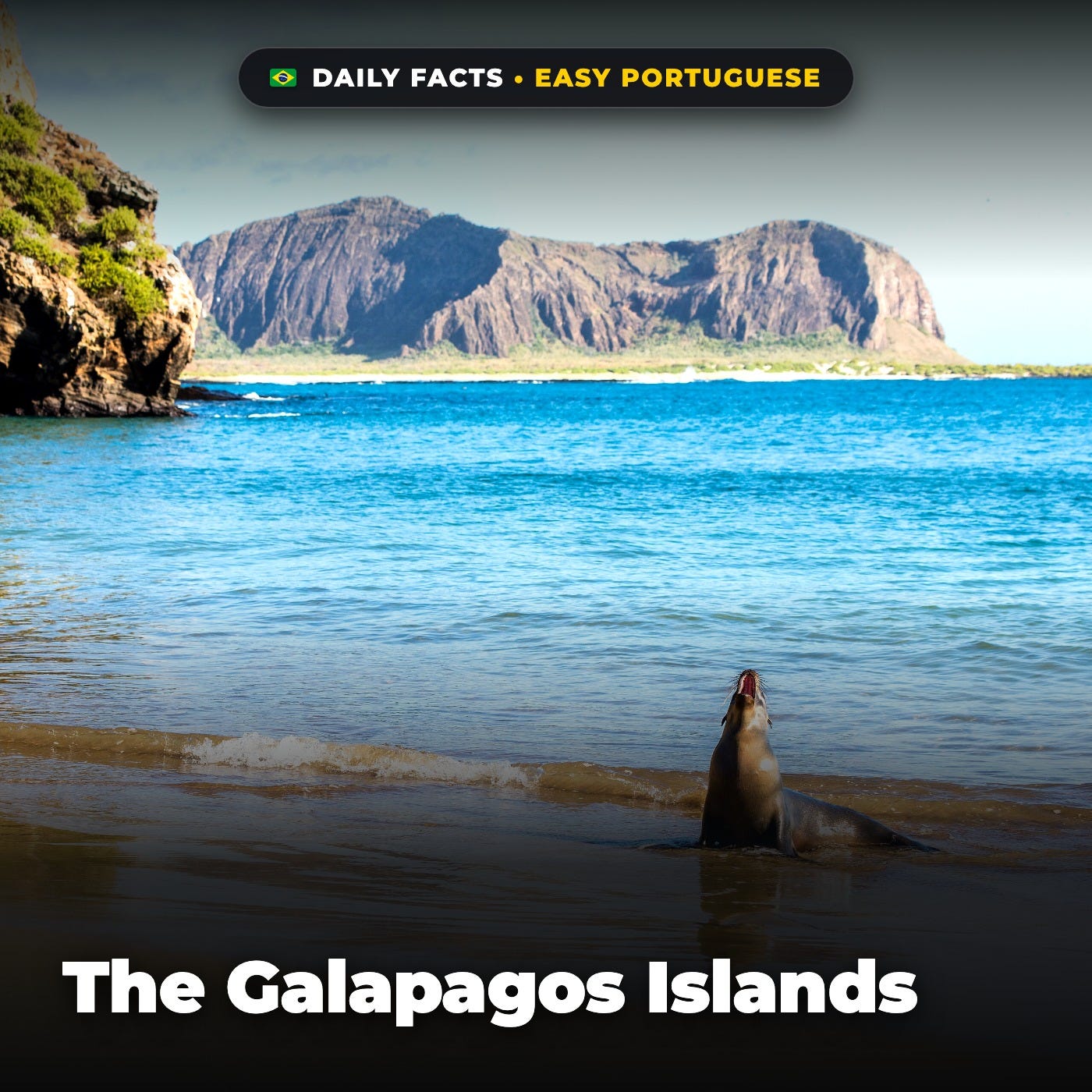
The Galapagos Islands in Easy Portuguese
13:20
CEFR A1–A2

The Galapagos Islands in Easy Portuguese

The Galápagos Islands are an archipelago of volcanic islands in the Eastern Pacific, located around the equator, 485 nautical miles west of the mainland of South America. They form the Galápagos Province of the Republic of Ecuador, with a population of slightly over 33,450 in 2020. The province is divided into the cantons of San Cristóbal, Santa Cruz, and Isabela, the three most populated islands in the chain. The Galápagos are famous for their large number of endemic species, which were studied by Charles Darwin in the 1830s and inspired his theory of evolution by means of natural selection.