Mount Everest in Easy Portuguese
Easy Portuguese · CEFR A1–A2 80% Slow Speed 13:54 Oct 22, 2026

Mount Everest in Easy Portuguese

0:00 13:54

About This Episode

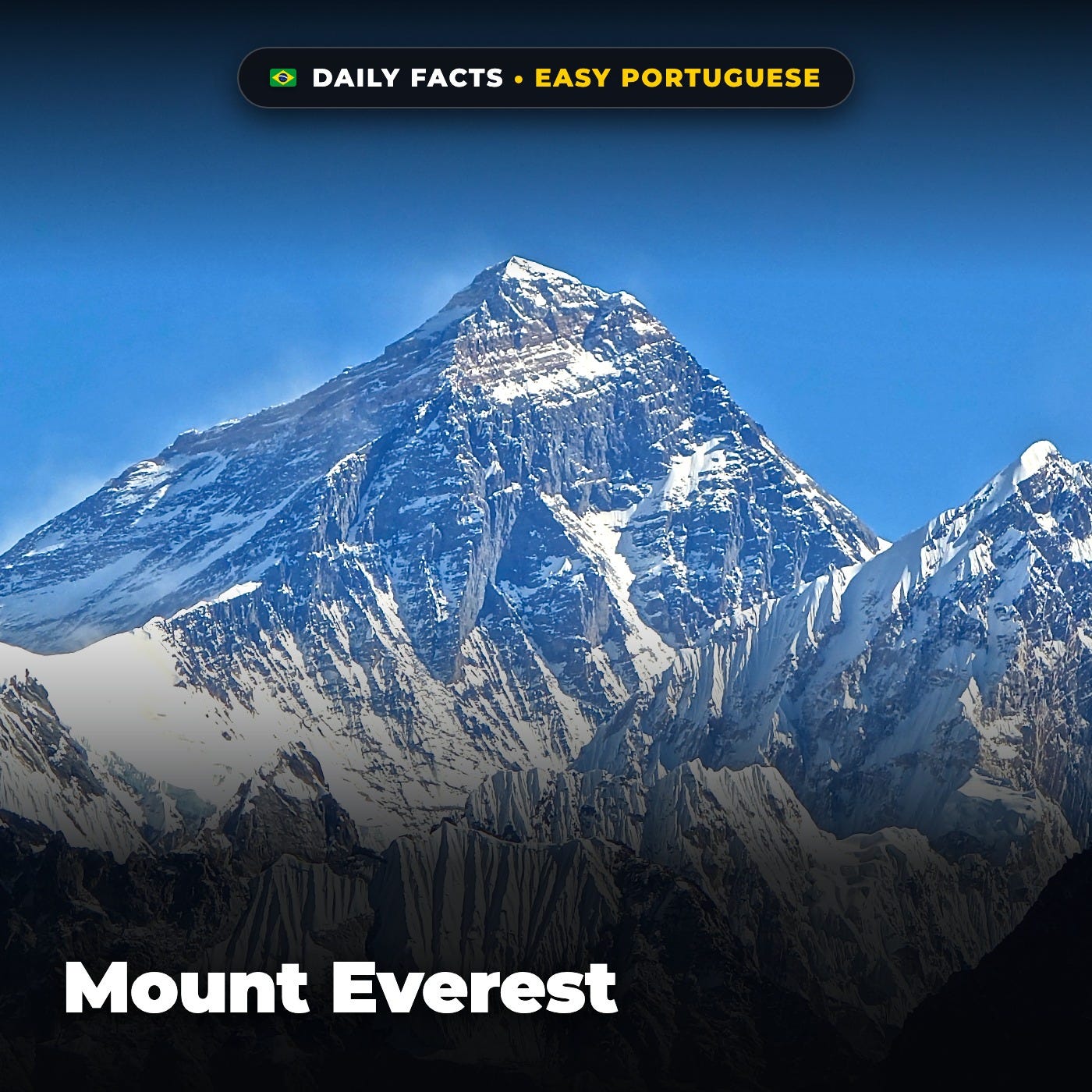
Mount Everest is the highest mountain on Earth, towering dramatically over the mighty Himalayas on the border of Nepal and China. Rising nearly nine kilometers into the sky, its snowy summit attracts brave climbers from all around the world.

Known locally as Sagarmatha and Chomolangma, this legendary peak holds profound cultural and spiritual significance for native communities. Exploring its frozen slopes reveals incredible stories of human endurance, extreme weather, and awe-inspiring natural beauty.
Key Topics & Highlights

  • Mount Everest stands at an official elevation of 8,848.86 meters above sea level.
  • The mountain sits directly on the international border between Nepal and the autonomous region of Tibet in China.
  • Sir Edmund Hillary and Sherpa Tenzing Norgay achieved the first confirmed summit ascent in May 1953.
  • Tectonic forces continue to push the mountain upwards by a few millimeters every single year.

Chapters & Timestamps

Click any chapter timestamp to jump directly to that section in the audio player.

Preview Portuguese Vocabulary

Click any preview word to hear pronunciation. Unlock all 20 core vocabulary words with episode context quotes inside the Substack Premium Study Companion.

More Daily Facts in Easy Portuguese Episodes

Browse All 100 Episodes →
The Cataclysm of Krakatoa in Easy Portuguese
14:45
CEFR A1–A2

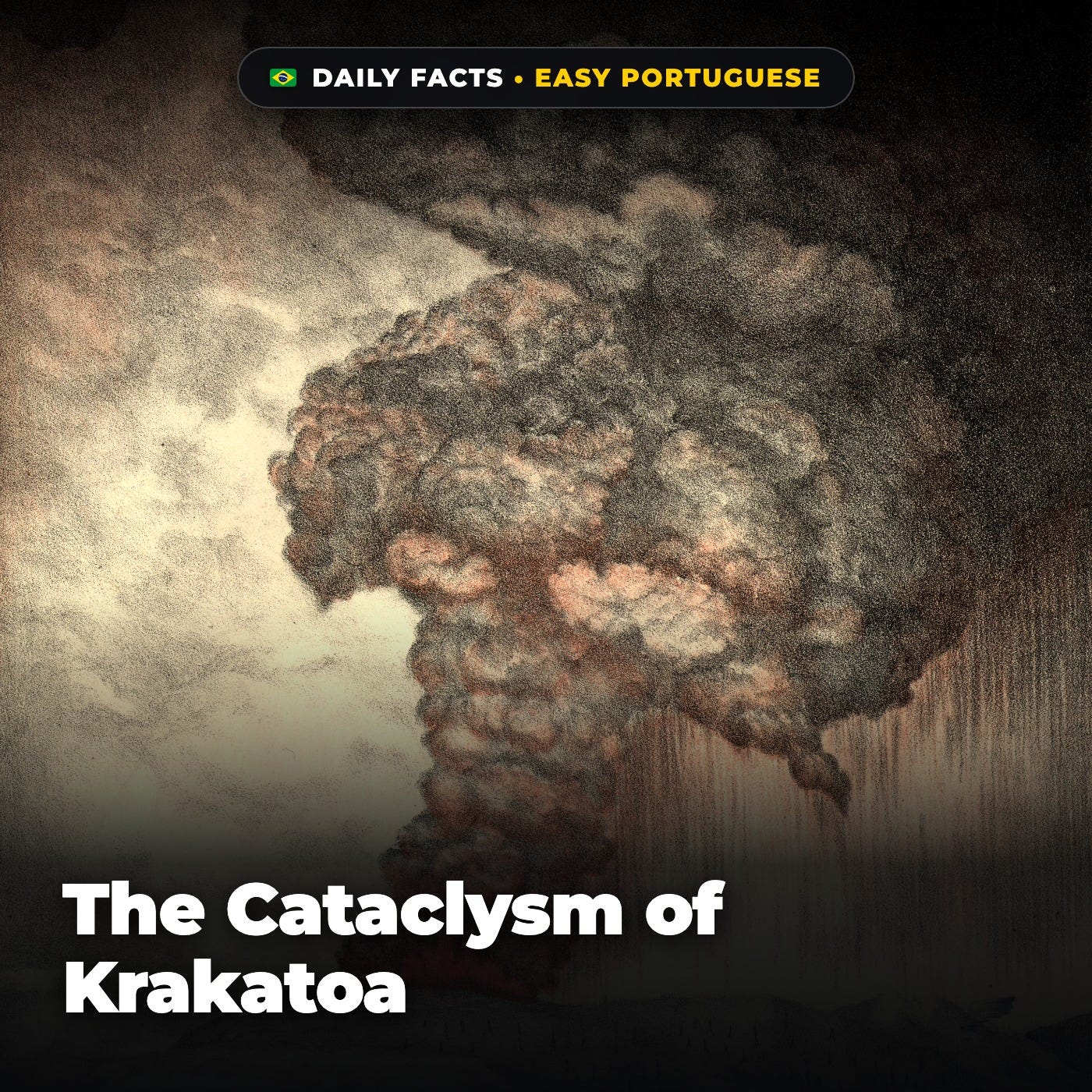
The Cataclysm of Krakatoa in Easy Portuguese

Krakatoa, also transcribed Krakatau, is a caldera in the Sunda Strait between the islands of Java and Sumatra in the Indonesian province of Lampung. The caldera is part of a volcanic island group comprising four islands. Two of them are known as Lang and Verlaten; another, Rakata, is the only remnant of an island, also called Krakatoa, mostly destroyed by an eruption in 1883 that created the caldera.

The Mystery of Stonehenge in Easy Portuguese
7:36
CEFR A1–A2

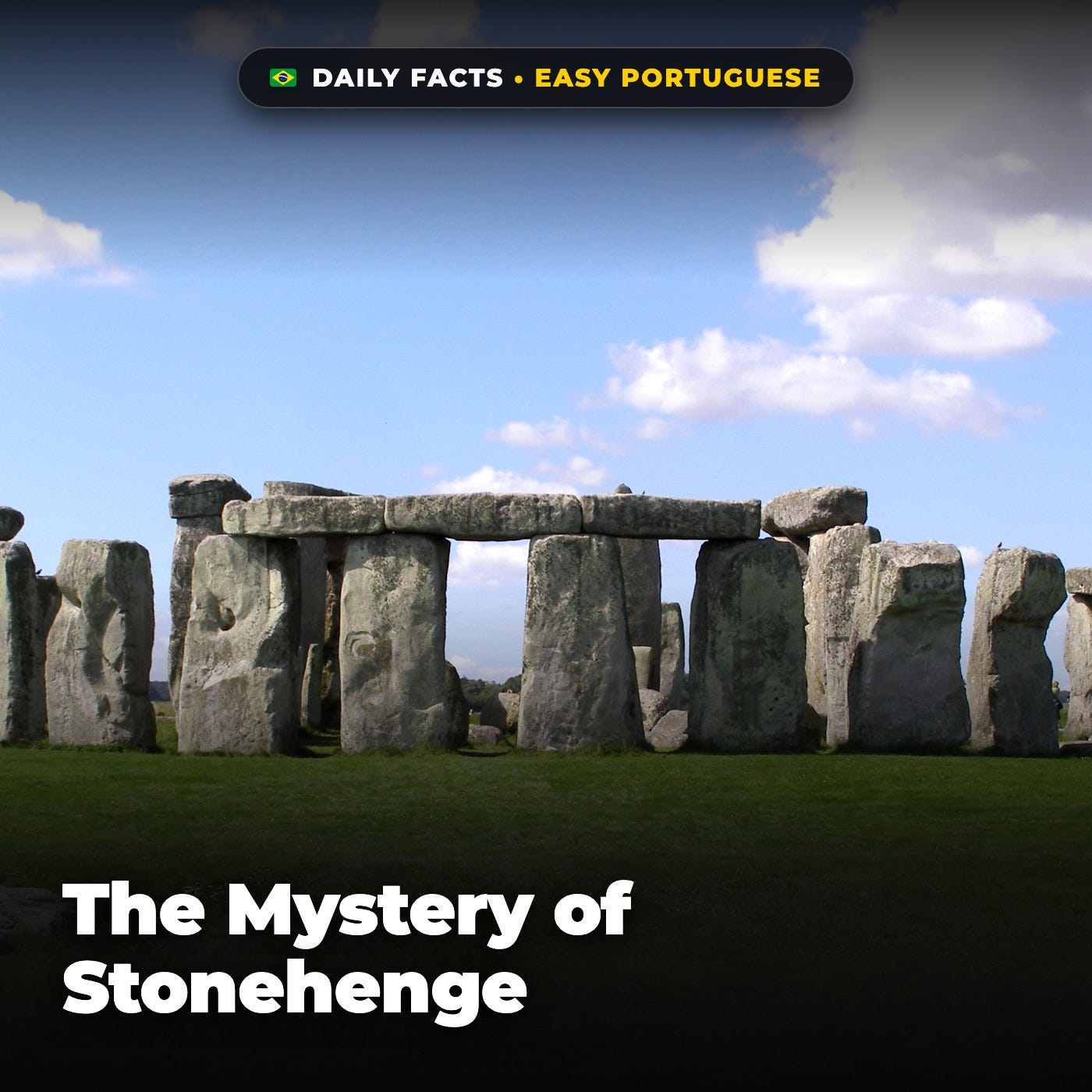
The Mystery of Stonehenge in Easy Portuguese

Stonehenge is a prehistoric megalithic structure on Salisbury Plain in Wiltshire, England, two miles (3 km) west of Amesbury. It consists of an outer ring of vertical sarsen standing stones, each around 13 feet (4.0 m) high, seven feet (2.1 m) wide, and weighing around 25 tons, topped by connecting horizontal lintel stones which are held in place with mortise and tenon joints—a feature unique among contemporary monuments. Inside is a ring of smaller bluestones. Inside these are free-standing trilithons: two bulkier vertical sarsens joined by a single lintel.

The Mystery of Andrée's Polar Expedition in Easy Portuguese
15:46
CEFR A1–A2

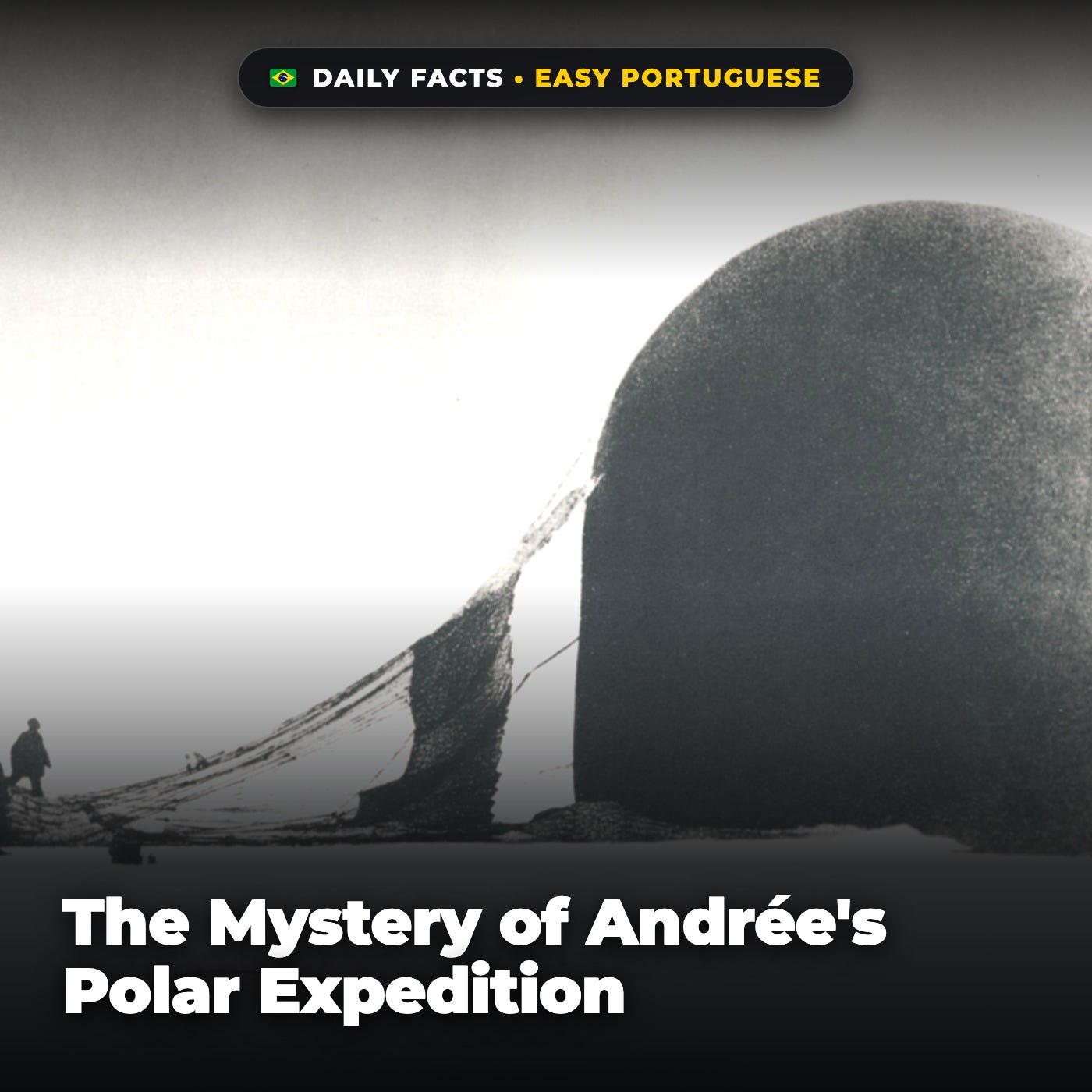
The Mystery of Andrée's Polar Expedition in Easy Portuguese

In July 1897, three brave Swedish explorers lifted off in a hydrogen balloon named Örnen to reach the North Pole. Their bold voyage quickly vanished into the freezing Arctic mist, leaving the world wondering about their fate for decades. Thirty-three years later, their final camp, frozen diaries, and undeveloped film were miraculously discovered on a desolate island. Today, we explore the daring journey, tragic struggles, and enduring mysteries of the famous Andrée expedition.