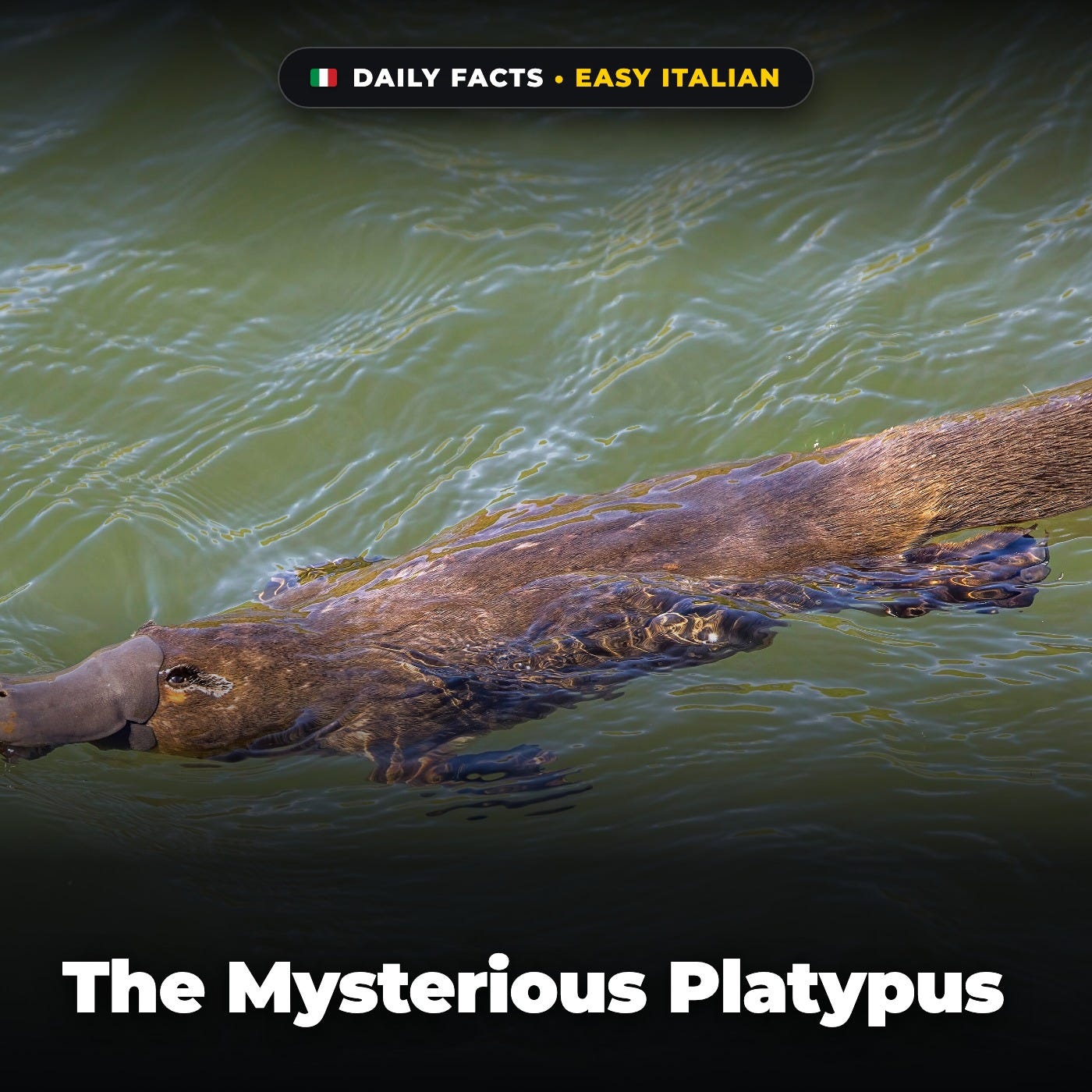
The Mysterious Platypus in Easy Italian
Easy Italian · CEFR A1–A2 80% Slow Speed 31:31 Nov 19, 2026

The Mysterious Platypus in Easy Italian

0:00 31:31

About This Episode

The platypus, sometimes referred to as the duck-billed platypus, is a semiaquatic, egg-laying mammal endemic to eastern Australia, including Tasmania. The platypus is the sole living representative of the family Ornithorhynchidae and genus Ornithorhynchus, though a number of related species appear in the fossil record.

Together with the four species of echidna, it is one of the five extant species of monotremes, mammals that lay eggs instead of giving birth to live young. Like other monotremes, the platypus has a sense of electrolocation, which it uses to detect prey in water while its eyes, ears and nostrils are closed.
Key Topics & Highlights

  • The platypus, sometimes referred to as the duck-billed platypus, is a semiaquatic, egg-laying mammal endemic to eastern Australia, including Tasmania.
  • The platypus is the sole living representative of the family Ornithorhynchidae and genus Ornithorhynchus, though a number of related species appear in the fossil record.
  • Together with the four species of echidna, it is one of the five extant species of monotremes, mammals that lay eggs instead of giving birth to live young.
  • Like other monotremes, the platypus has a sense of electrolocation, which it uses to detect prey in water while its eyes, ears and nostrils are closed.
Chapters & Timestamps

Click any chapter timestamp to jump directly to that section in the audio player.

Preview Italian Vocabulary

Click any preview word to hear pronunciation. Unlock all 20 core vocabulary words with episode context quotes inside the Substack Premium Study Companion.

More Daily Facts in Easy Italian Episodes

Browse All 59 Episodes →
The World of Chameleons in Easy Italian
21:40
CEFR A1–A2

The World of Chameleons in Easy Italian

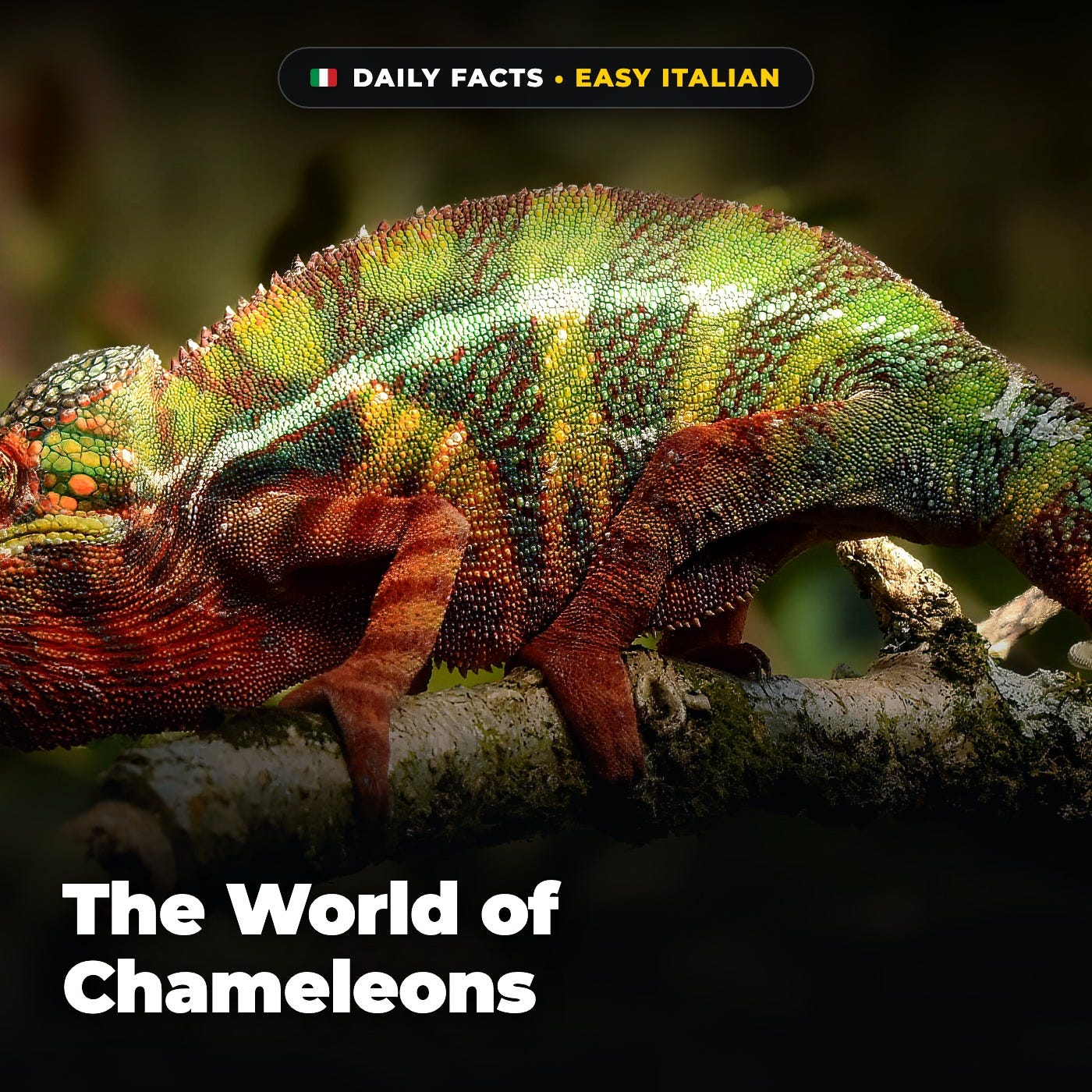
Chameleons are a distinctive and highly specialized clade of Old World lizards with 200 species described as of June 2015. The members of this family are best known for their distinct range of colours, being capable of colour-shifting camouflage. The large number of species in the family exhibit considerable variability in their capacity to change colour. For some, it is more of a shift of brightness ; for others, a plethora of colour-combinations can be seen.

The Humpback Whale in Easy Italian
16:23
CEFR A1–A2

The Humpback Whale in Easy Italian

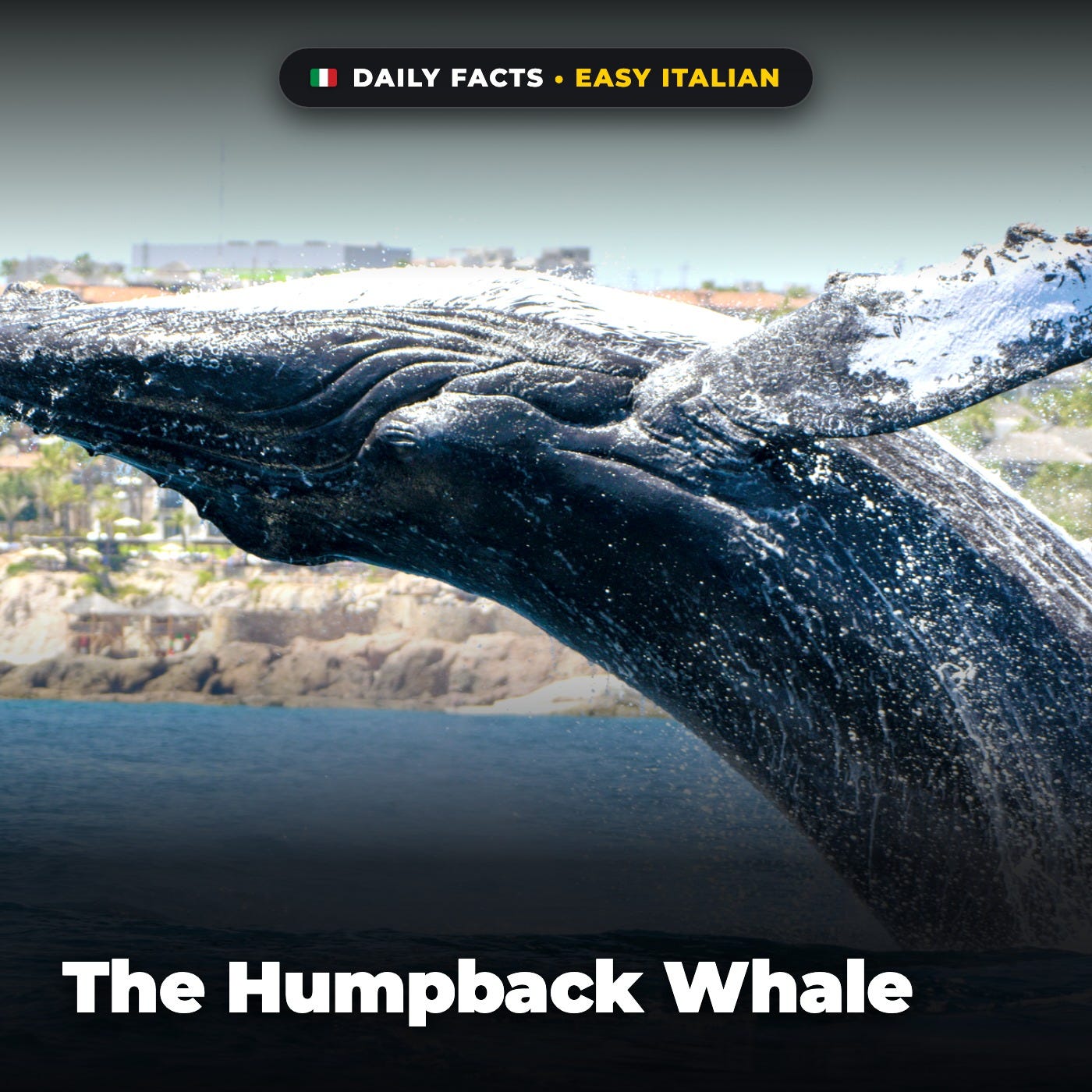
The humpback whale is a species of baleen whale. It is a rorqual and is the only species in the genus Megaptera. Adults range in length from 14–17 m (46–56 ft) and weigh up to 40 metric tons. The humpback has a distinctive body shape, with long pectoral fins and tubercles on its head.

The Green Sea Turtle in Easy Italian
16:01
CEFR A1–A2

The Green Sea Turtle in Easy Italian

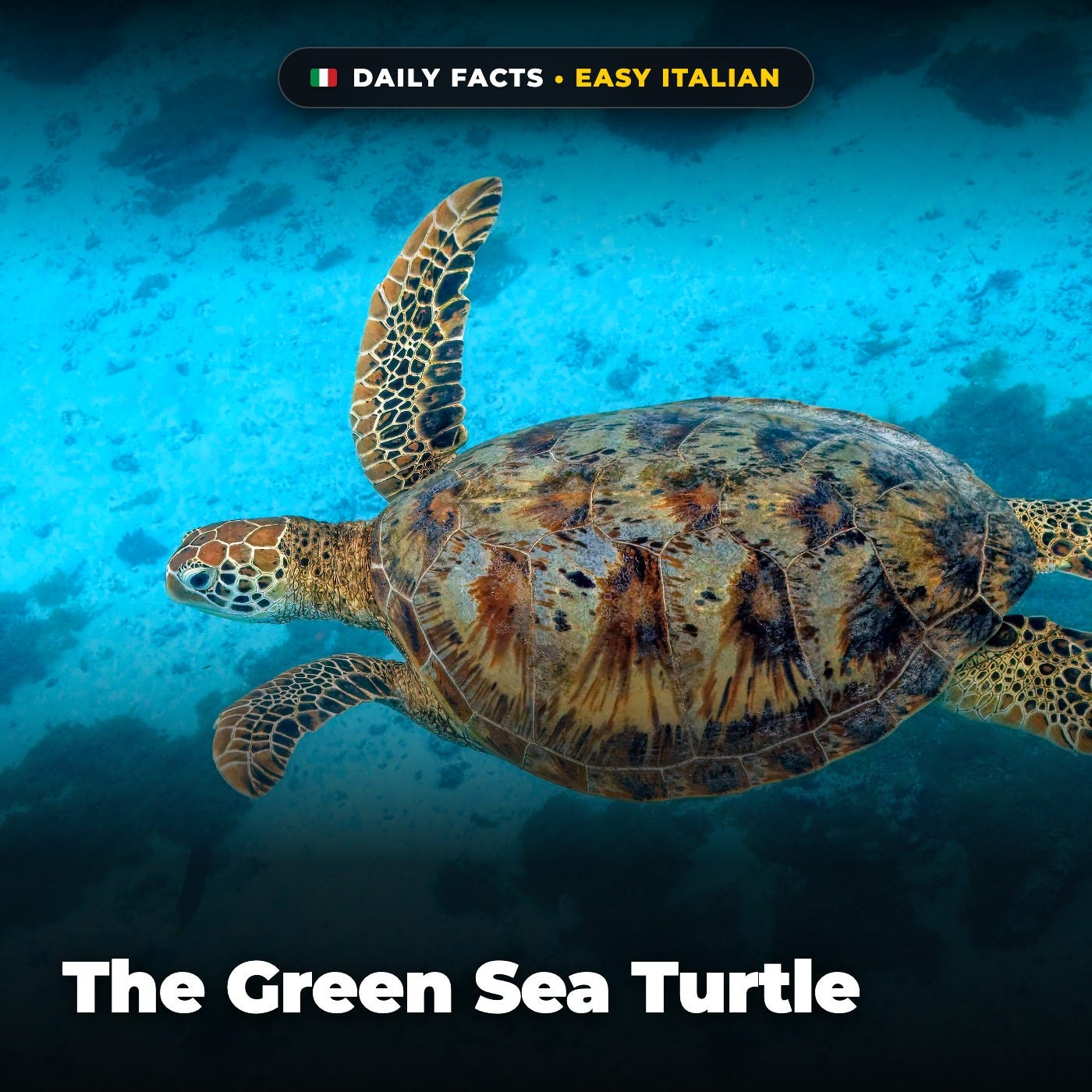
The green sea turtle, also known as the green turtle, black sea turtle, and Pacific green turtle, is a species of large sea turtle of the family Cheloniidae. It is the only species in the genus Chelonia. Its range extends throughout tropical and subtropical seas around the world, with two distinct populations in the Atlantic and Pacific Oceans, but it is also found in the Indian Ocean. The common name refers to the usually green fat found beneath its carapace, due to its diet strictly being seagrass, not to the color of its carapace, which is olive to black.