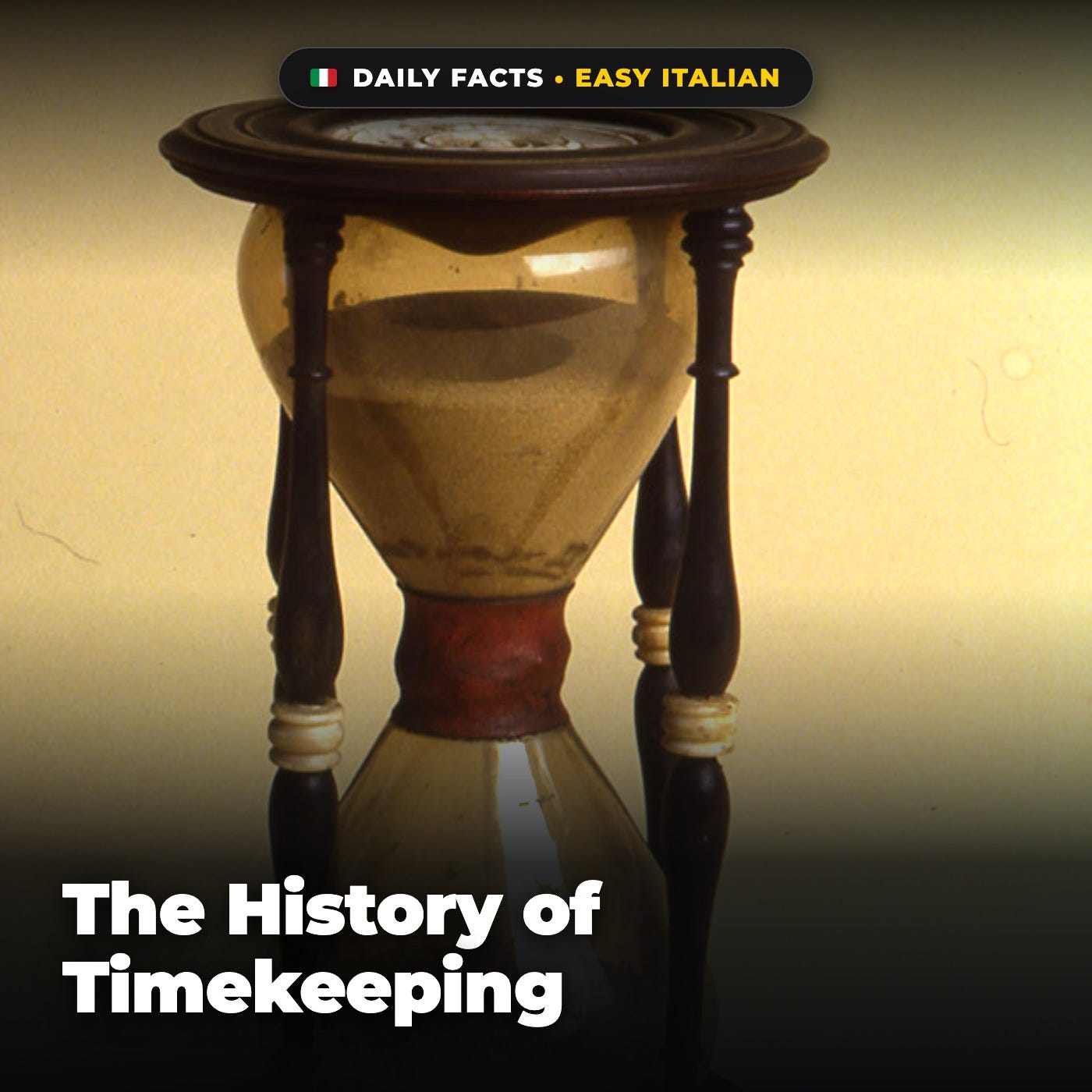
The History of Timekeeping in Easy Italian
Easy Italian · CEFR A1–A2 80% Slow Speed 10:13 Nov 9, 2026

The History of Timekeeping in Easy Italian

0:00 10:13

About This Episode

The history of timekeeping devices dates back to when ancient civilizations first observed astronomical bodies as they moved across the sky. Devices and methods for keeping time have gradually improved through a series of new inventions, starting with measuring time by continuous processes, such as the flow of liquid in water clocks, to mechanical clocks, and eventually repetitive, oscillatory processes, such as the swing of pendulums.

Oscillating timekeepers are used in modern timepieces. Sundials and water clocks were first used in ancient Egypt c.
Key Topics & Highlights

  • The history of timekeeping devices dates back to when ancient civilizations first observed astronomical bodies as they moved across the sky.
  • Devices and methods for keeping time have gradually improved through a series of new inventions, starting with measuring time by continuous processes, such as the flow of liquid in water clocks, to mechanical clocks, and eventually repetitive, oscillatory processes, such as the swing of pendulums.
  • Oscillating timekeepers are used in modern timepieces.
  • Sundials and water clocks were first used in ancient Egypt c.
Chapters & Timestamps

Click any chapter timestamp to jump directly to that section in the audio player.

Preview Italian Vocabulary

Click any preview word to hear pronunciation. Unlock all 20 core vocabulary words with episode context quotes inside the Substack Premium Study Companion.

More Daily Facts in Easy Italian Episodes

Browse All 59 Episodes →
The Construction of the Panama Canal in Easy Italian
15:28
CEFR A1–A2

The Construction of the Panama Canal in Easy Italian

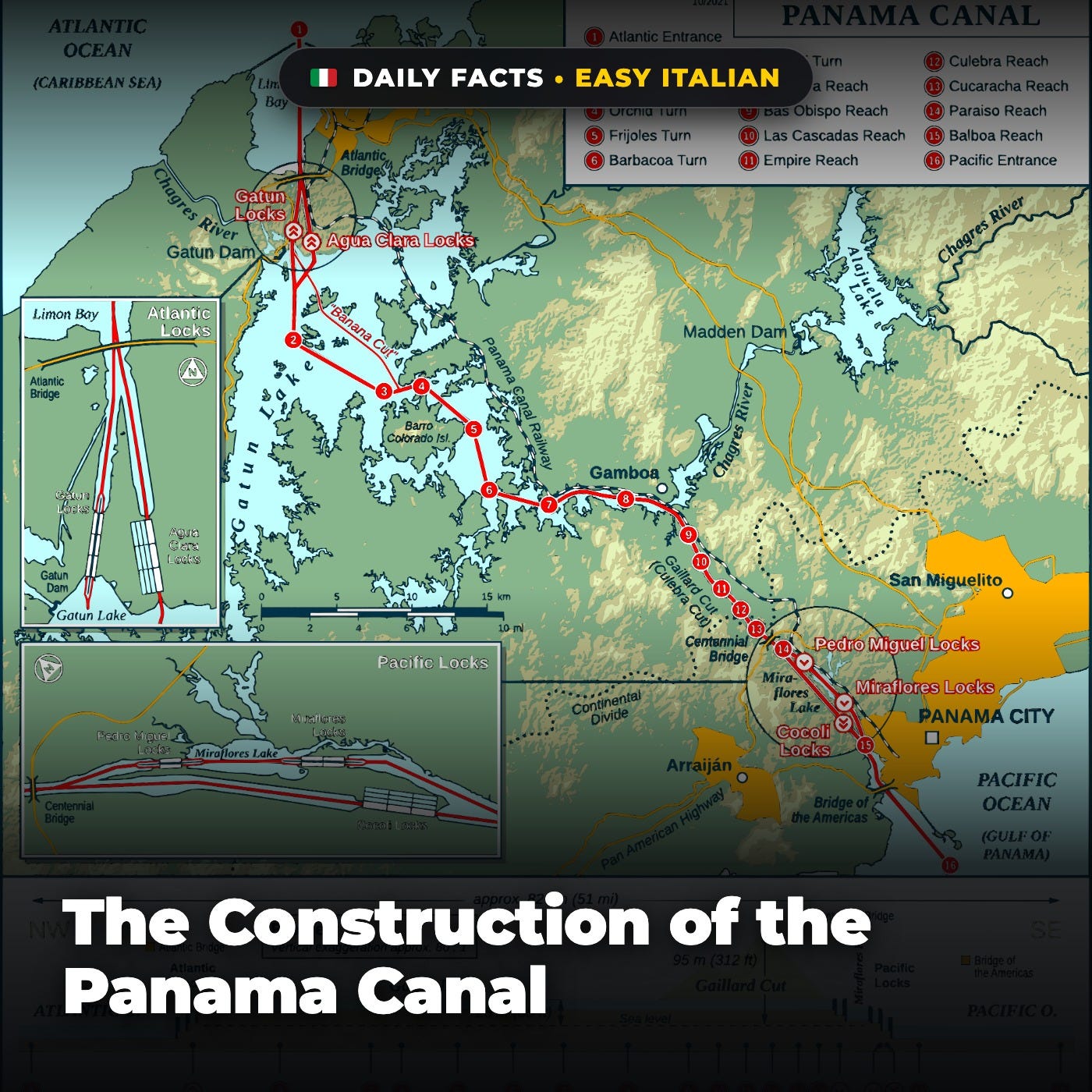
The Panama Canal is an artificial 82-kilometer (51-mile) waterway in Panama that connects the Caribbean Sea in the Atlantic Ocean with the Pacific Ocean. It cuts across the narrowest point of the Isthmus of Panama and is a conduit for maritime trade between the Atlantic Ocean and the Pacific Ocean. Locks at each end lift ships up to Gatun Lake, an artificial fresh water lake 26 meters (85 ft) above sea level, created by damming the Chagres River and Lake Alajuela to reduce the amount of excavation work required for the canal. Locks then lower the ships at the other end.

The Flight of Apollo 11 in Easy Italian
13:50
CEFR A1–A2

The Flight of Apollo 11 in Easy Italian

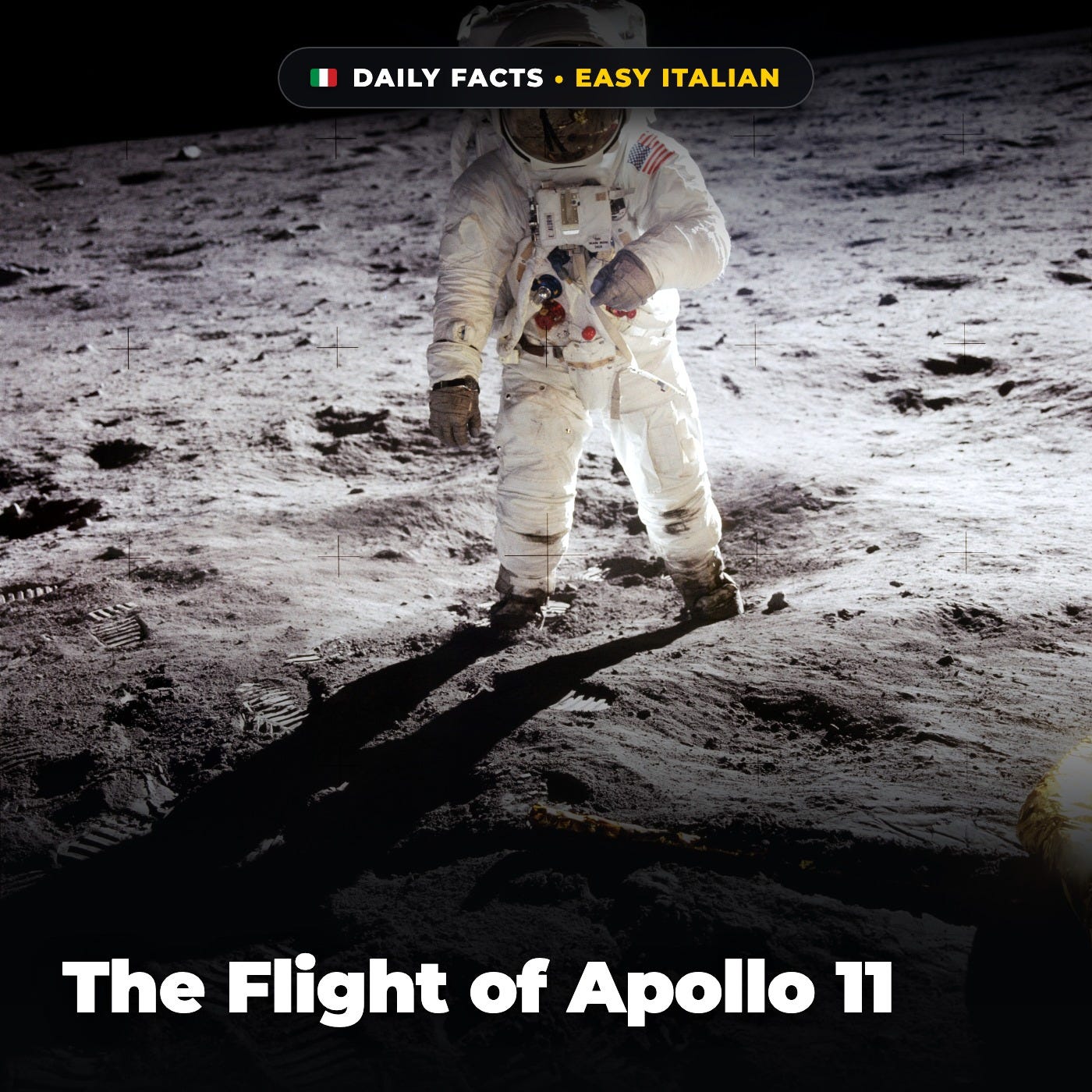
Apollo 11 was the American spaceflight that first landed humans on the Moon, and the fifth crewed mission of NASA's Apollo program. The mission was crewed by Commander Neil Armstrong, Command Module Pilot Michael Collins, and Lunar Module Pilot Edwin "Buzz" Aldrin, all of whom were on their second and final spaceflight. In this episode, we break down the most important facts and stories about The Flight of Apollo 11 using clear, beginner-friendly A1

The Wright Brothers in Easy Italian
17:44
CEFR A1–A2

The Wright Brothers in Easy Italian

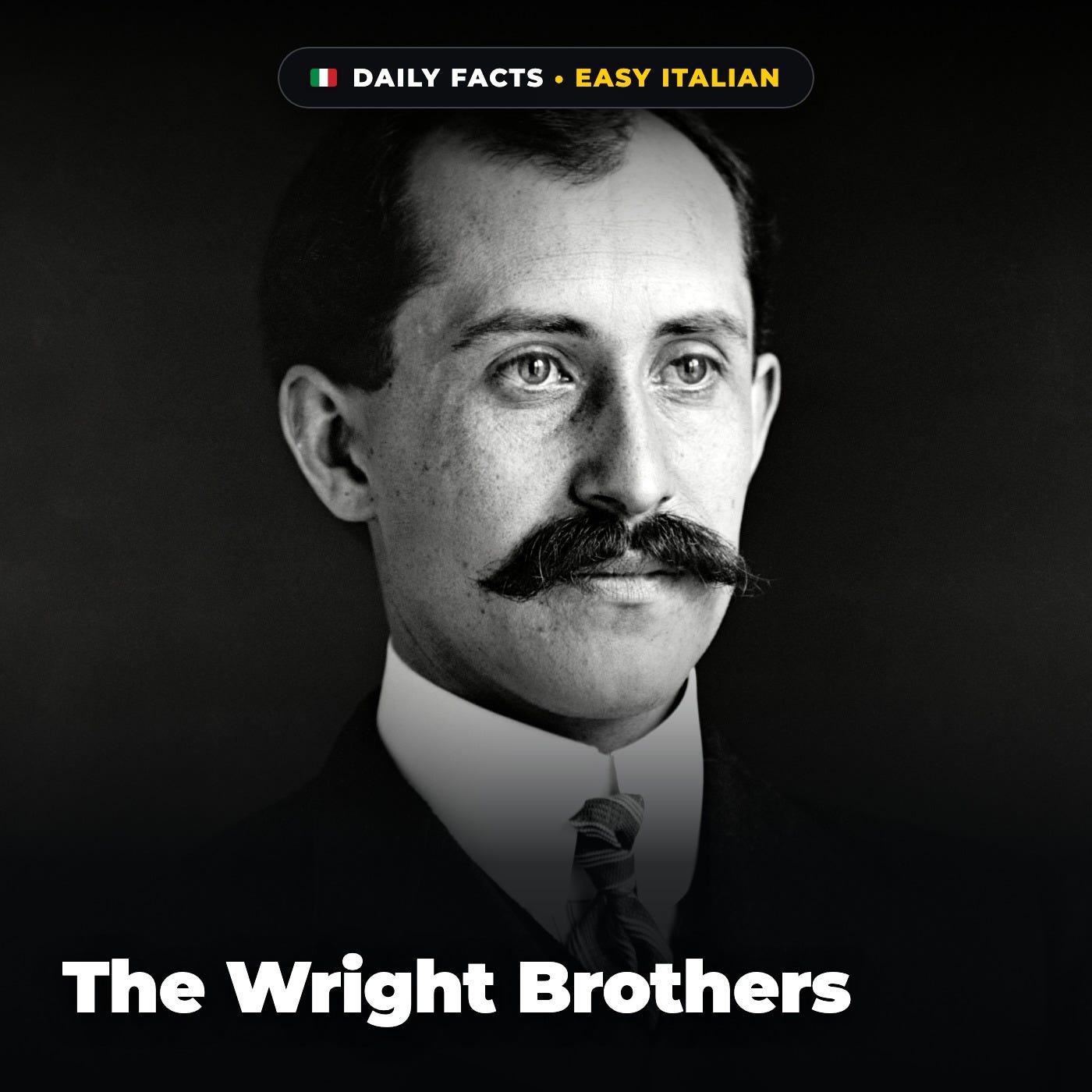
The Wright brothers, Orville Wright and Wilbur Wright, were American aviation pioneers who researched, invented, built, and flew the world's first successful airplane. They made the first controlled, sustained flight of an engine-powered, heavier-than-air aircraft with the Wright Flyer on December 17, 1903, four miles (6 km) south of Kitty Hawk, North Carolina, at what is now known as Kill Devil Hills. In 1904 the Wright brothers developed the Wright Flyer II, which made longer-duration flights including the first circle, followed in 1905 by the first truly practical fixed-wing aircraft, the Wright Flyer III.