
About This Episode
Get full access to Daily Facts in Easy German at dailyfactsineasygerman.substack.com/subscribe

Get full access to Daily Facts in Easy German at dailyfactsineasygerman.substack.com/subscribe
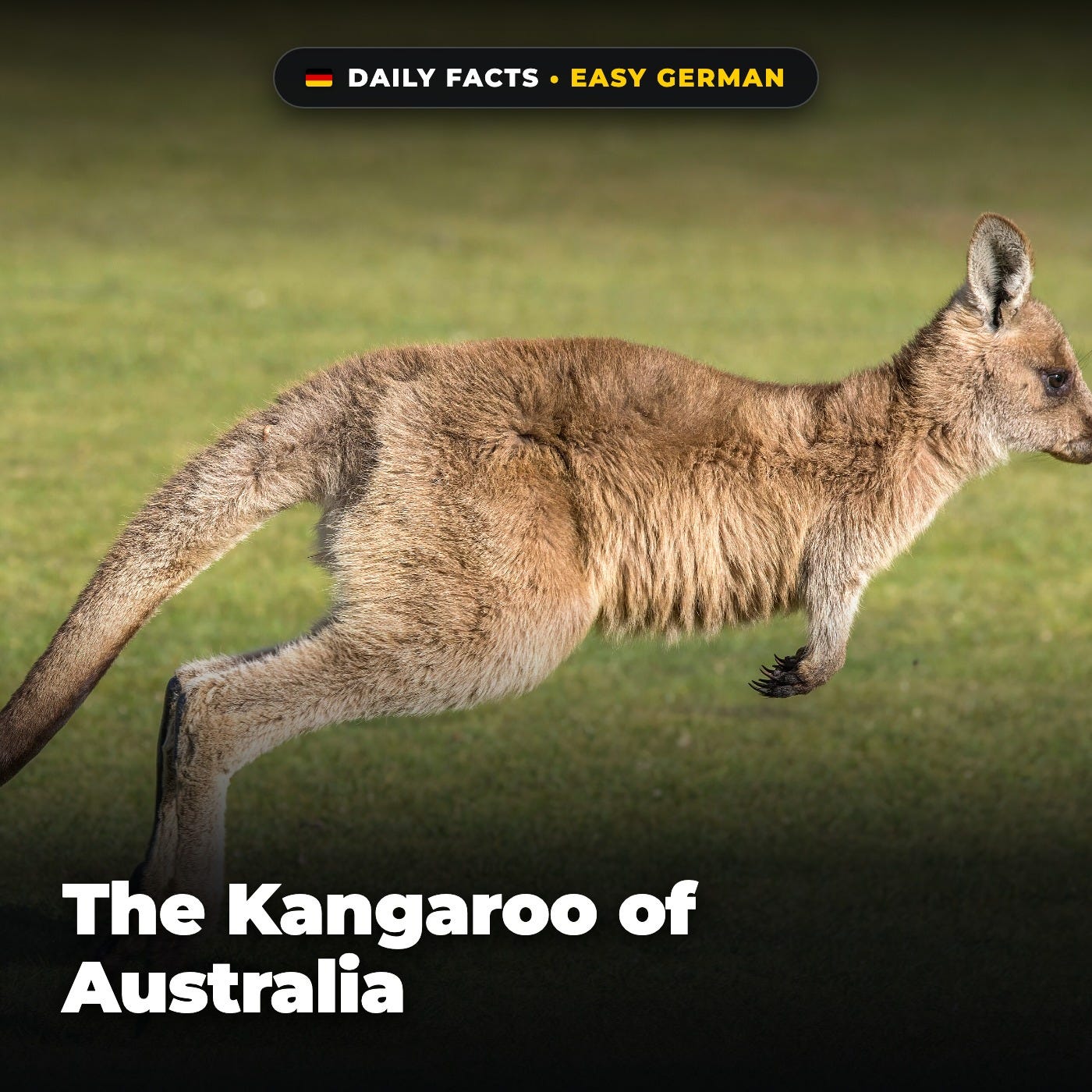
Kangaroos are marsupials from the subfamily Macropodinae. In common use, the term is used to describe the largest species from this family, the red kangaroo, as well as the antilopine kangaroo, eastern grey kangaroo, and western grey kangaroo. Kangaroos are indigenous to Australia and New Guinea. The Australian government estimated that 42.8 million kangaroos lived within the commercial harvest areas of Australia in 2019, down from 53.2 million in 2013.
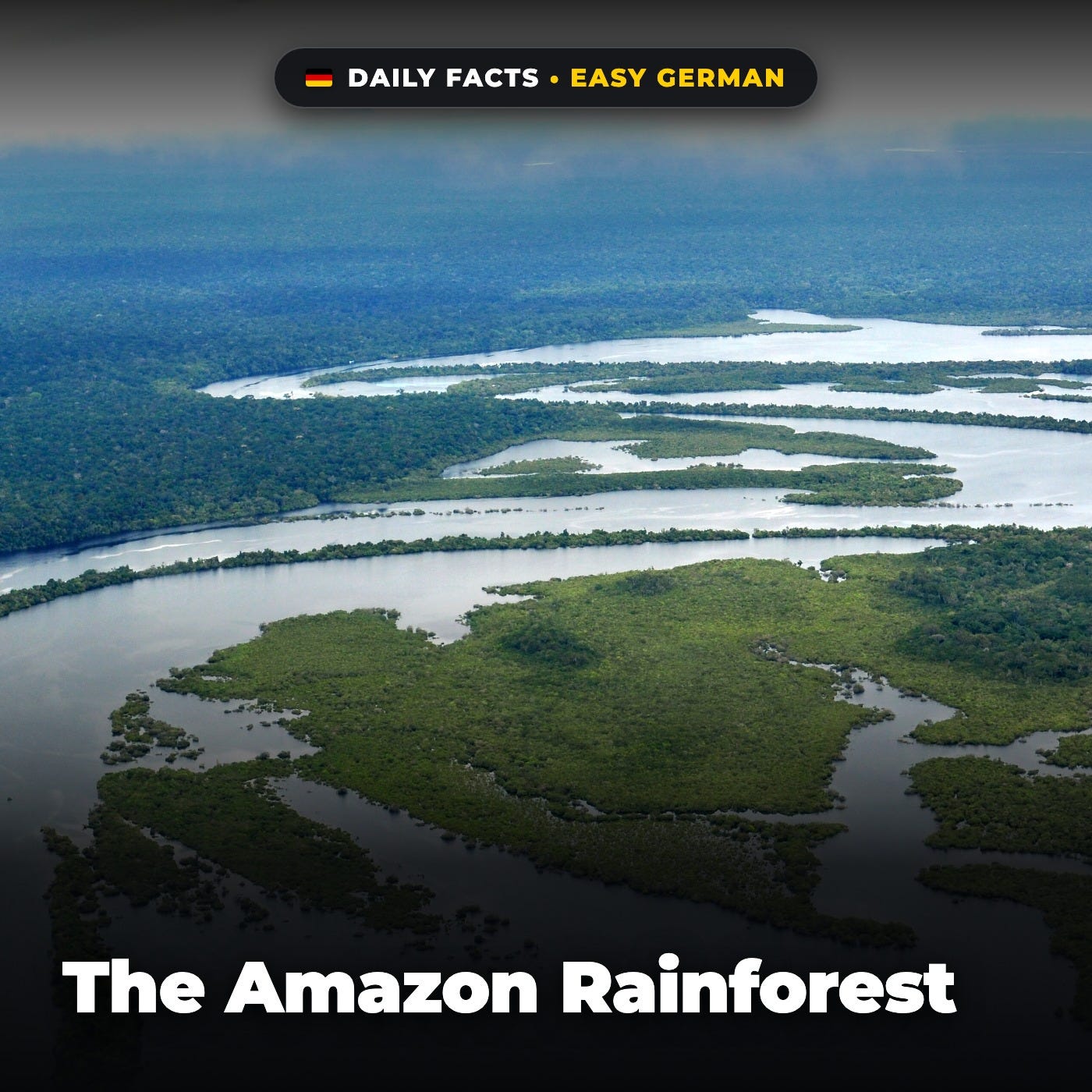
The Amazon rainforest, also called the Amazon jungle, Amazonia, or simply the Amazon, is a moist broadleaf tropical rainforest in the Amazon biome that covers most of the Amazon basin of South America. This basin encompasses 7 million km2 (2.7 million sq mi), of which 6 million km2 (2.3 million sq mi) are covered by the rainforest. This region includes territory belonging to nine nations and 3,344 indigenous territories.
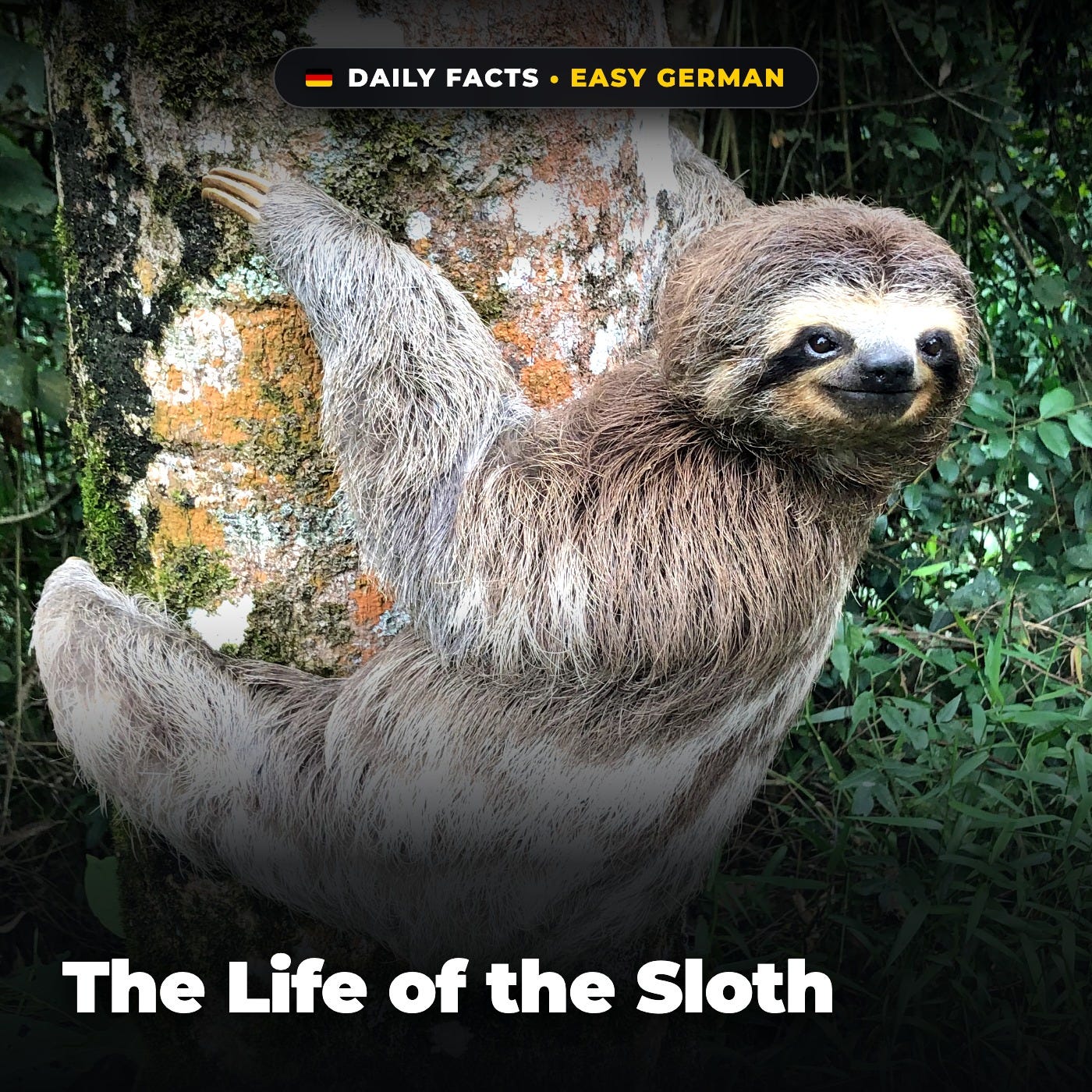
Sloths are a Neotropical group of xenarthran mammals constituting the suborder Folivora, including the extant arboreal tree sloths and extinct terrestrial ground sloths. Noted for their slowness of movement, tree sloths spend most of their lives hanging upside down in the trees of the tropical rainforests of South America and Central America. Sloths are considered to be most closely related to anteaters, together making up the xenarthran order Pilosa.