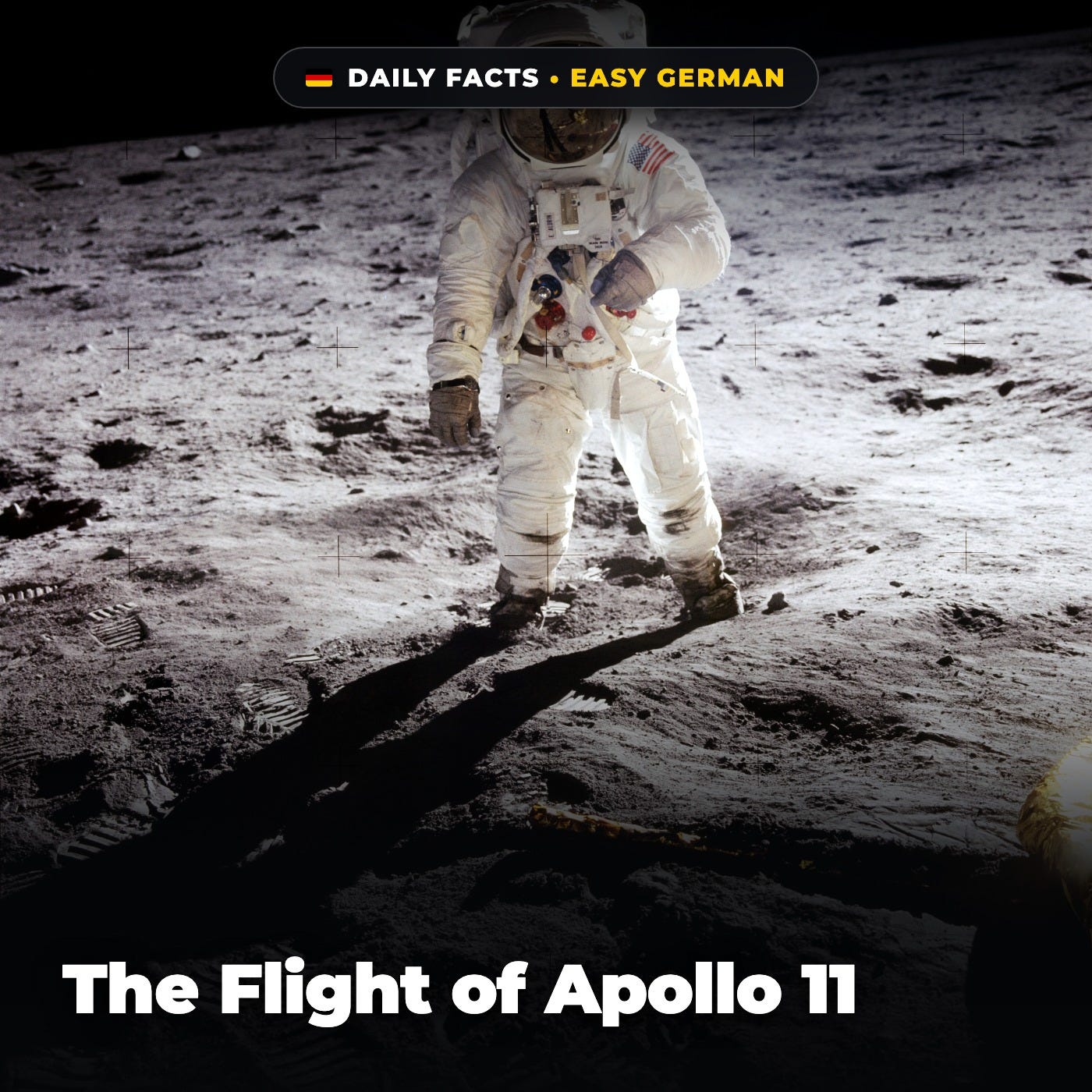
The Flight of Apollo 11 in Easy German
Easy German · CEFR A1–A2 80% Slow Speed 19:02 Sep 29, 2026

The Flight of Apollo 11 in Easy German

0:00 19:02

About This Episode

Relive the historic July 1969 Apollo 11 mission when humans first set foot on the Moon! Join Neil Armstrong, Buzz Aldrin, and Michael Collins on their daring voyage across 384,000 kilometers of space.

From the thunderous launch of the massive Saturn V rocket to the heart-stopping lunar landing with seconds of fuel remaining, experience humanity's greatest exploratory leap.
Key Topics & Highlights

  • Apollo 11 launched on July 16, 1969, powered by the giant 110-meter Saturn V rocket.
  • On July 20, 1969, Neil Armstrong and Buzz Aldrin landed the lunar module 'Eagle' on the Sea of Tranquility.
  • Neil Armstrong became the first human to walk on the Moon, uttering his immortal words.
  • The astronauts spent over two hours on the lunar surface, collecting 21.5 kg of Moon rocks.

Chapters & Timestamps

Click any chapter timestamp to jump directly to that section in the audio player.

Preview German Vocabulary

Click any preview word to hear pronunciation. Unlock all 20 core vocabulary words with episode context quotes inside the Substack Premium Study Companion.

More Daily Facts in Easy German Episodes

Browse All 61 Episodes →
The Construction of the Panama Canal in Easy German
22:26
CEFR A1–A2

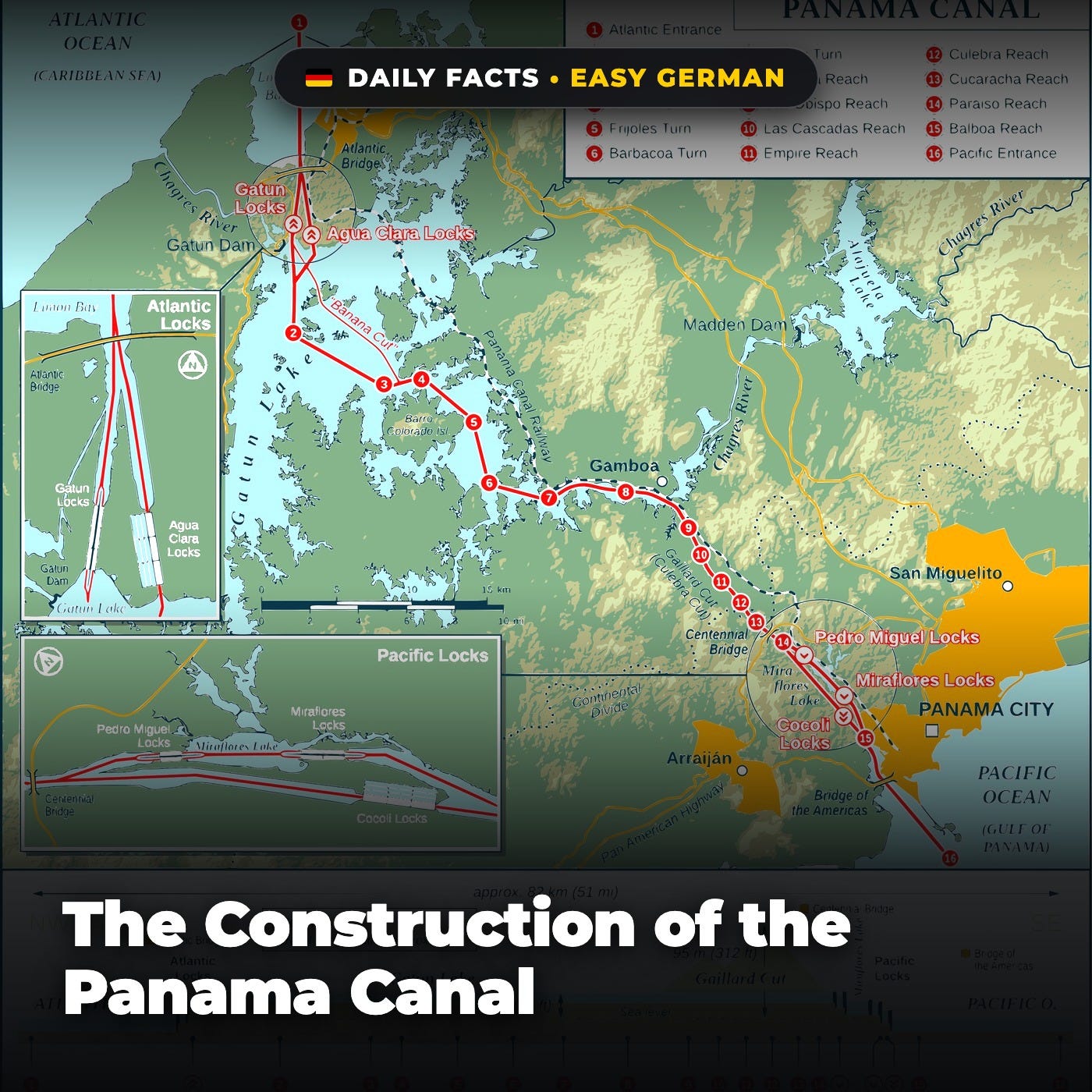
The Construction of the Panama Canal in Easy German

Dive deep into the colossal engineering struggle to build the Panama Canal. Carving a waterway through dense mountainous jungle and unstable volcanic rock required moving over 200 million cubic meters of earth. Explore how chief engineer John Stevens and army doctor William Gorgas defeated deadly mosquito epidemics, enabling the construction of the mammoth Gatun Dam and electric lock gates that still lift ocean giants today.

The Destruction of Pompeii in Easy German
13:27
CEFR A1–A2

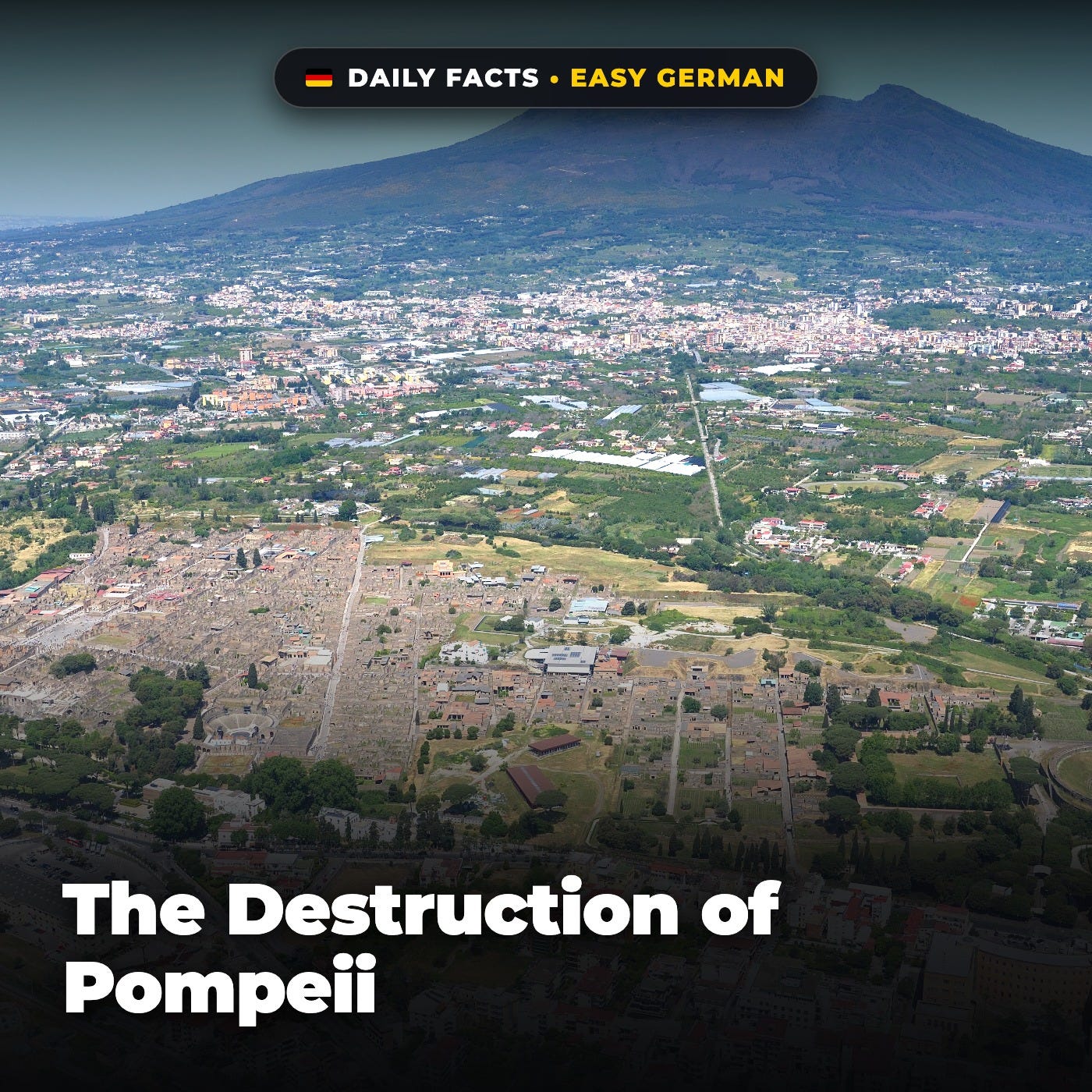
The Destruction of Pompeii in Easy German

In the year 79 AD, the bustling Roman city of Pompeii met a sudden and tragic end. Mount Vesuvius erupted violently, burying the entire region under a deep blanket of burning volcanic ash and stone. Because the city was covered so quickly, buildings, artworks, and everyday objects remained frozen in time for centuries. Today, the rediscovery of Pompeii provides an extraordinary window into daily life in the ancient Roman world.

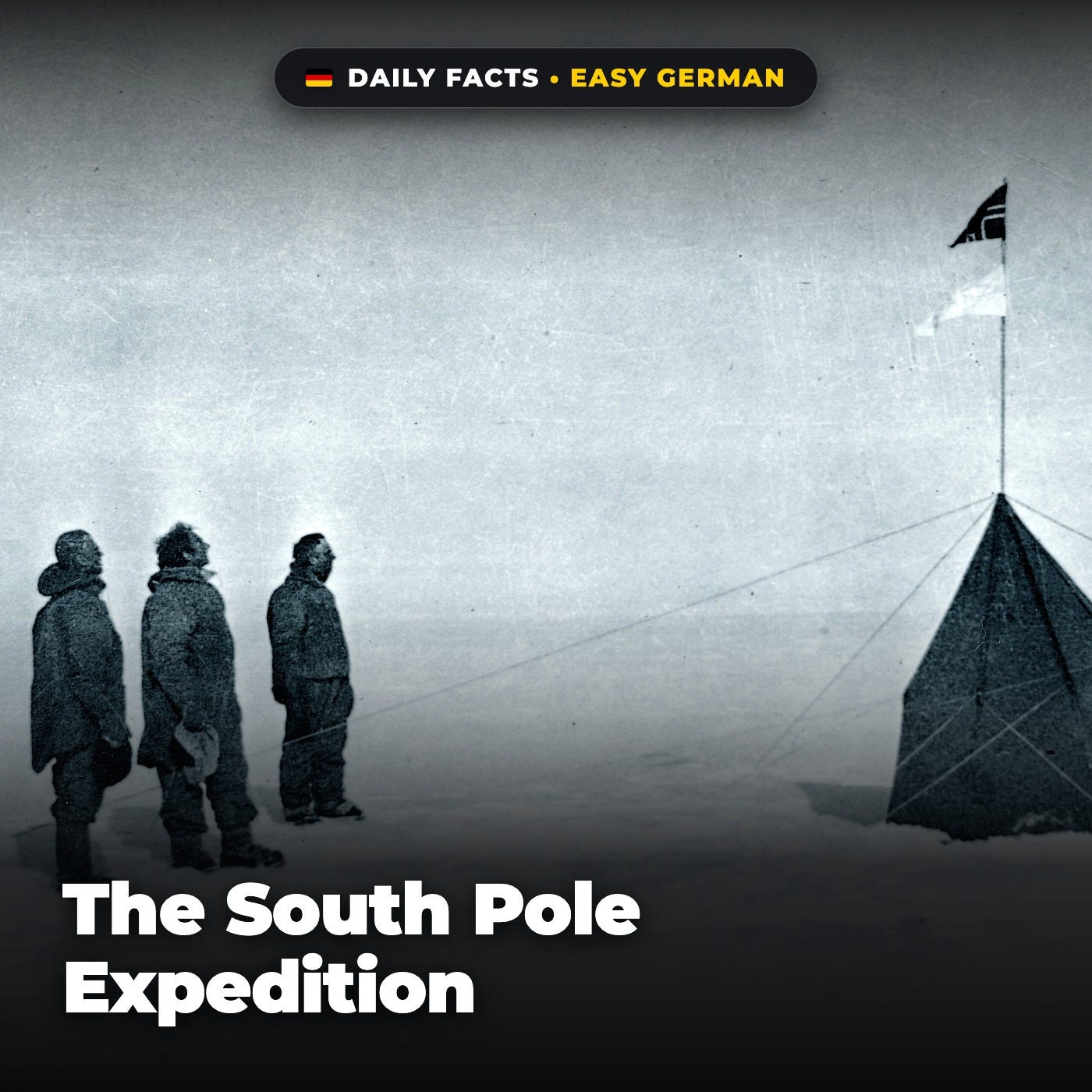
The South Pole Expedition in Easy German
11:48
CEFR A1–A2

The South Pole Expedition in Easy German

In late 1911, the frozen wilderness of Antarctica became the stage for one of history's greatest races. Norwegian explorer Roald Amundsen led a brave team into the unknown white desert to reach the bottom of the world. Relying on skilled sled dogs and smart planning, Amundsen successfully reached the South Pole weeks before his British rival. Today, their daring journey stands as an unforgettable tale of human endurance and polar exploration.