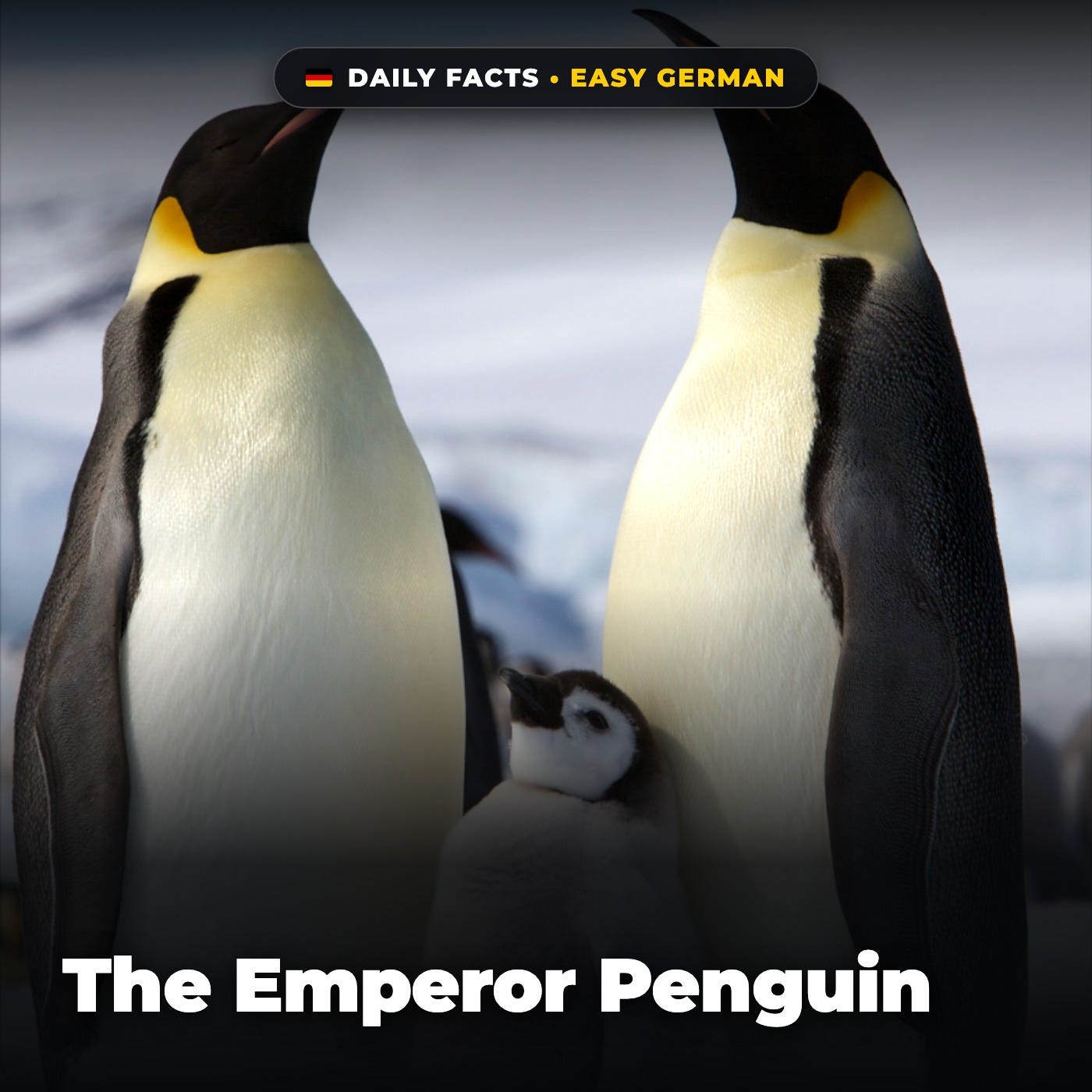
The Emperor Penguin in Easy German
Easy German · CEFR A1–A2 80% Slow Speed 24:01 Oct 10, 2026

The Emperor Penguin in Easy German

0:00 24:01

About This Episode

Brave the harshest environment on planet Earth alongside Emperor Penguins in the Antarctic winter. Standing against minus 50-degree blizzards and fierce polar winds, these incredible birds demonstrate supreme survival.

Learn how male penguins balance a single precious egg on their feet for two months without eating, huddling together in giant rotating circles to share body warmth while the mothers hunt at sea.
Key Topics & Highlights

  • Emperor Penguins are the largest penguin species, standing over 1 meter tall and weighing up to 40 kg.
  • They breed during the brutal Antarctic winter, enduring temperatures of -50°C and 200 km/h winds.
  • Male penguins incubate the egg for 65 consecutive days on their feet under a warm brood pouch without eating.
  • To survive the freezing cold, thousands of males form giant huddles, constantly rotating positions so everyone shares warmth.

Chapters & Timestamps

Click any chapter timestamp to jump directly to that section in the audio player.

Preview German Vocabulary

Click any preview word to hear pronunciation. Unlock all 20 core vocabulary words with episode context quotes inside the Substack Premium Study Companion.

More Daily Facts in Easy German Episodes

Browse All 61 Episodes →
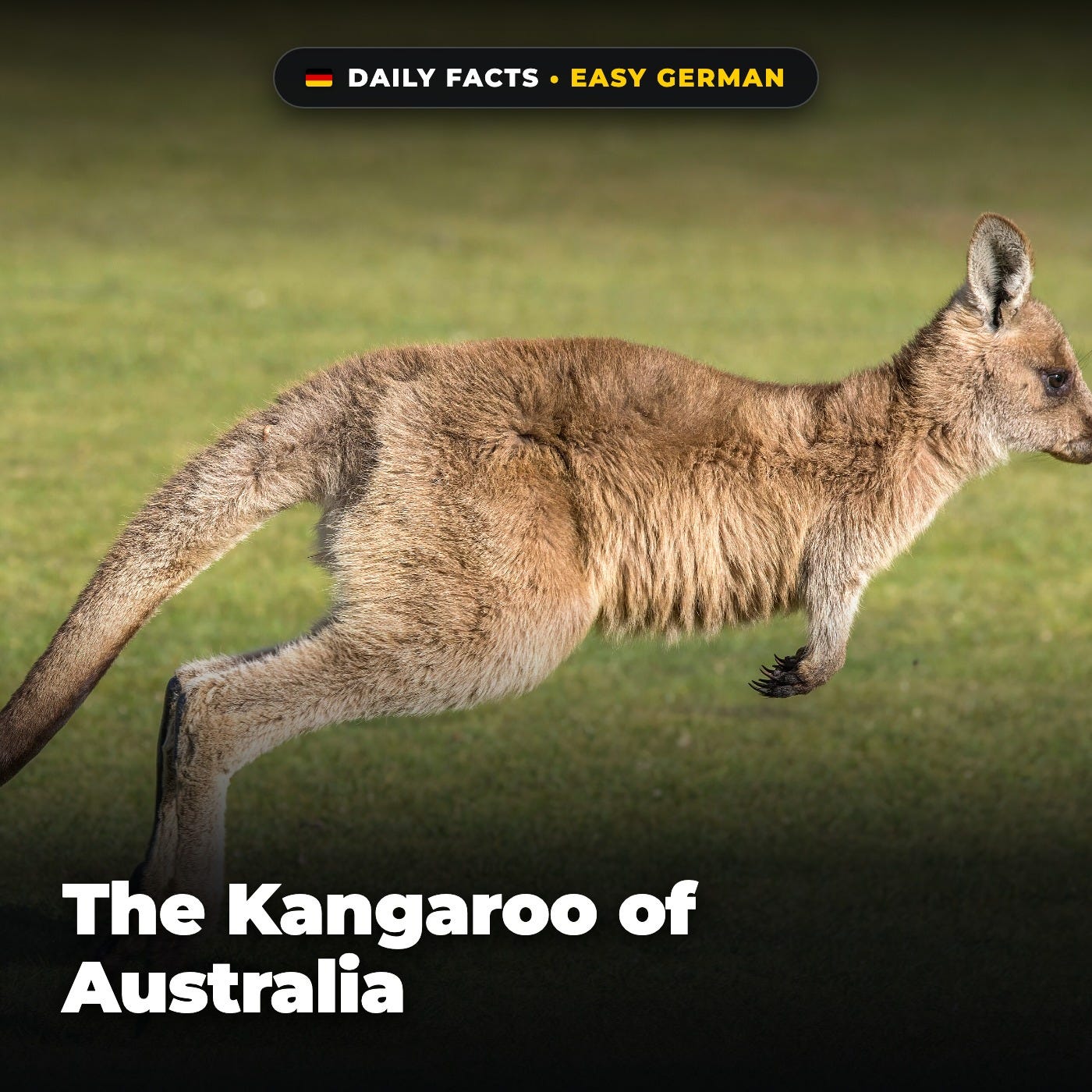
The Kangaroo of Australia in Easy German
17:51
CEFR A1–A2

The Kangaroo of Australia in Easy German

Kangaroos are marsupials from the subfamily Macropodinae. In common use, the term is used to describe the largest species from this family, the red kangaroo, as well as the antilopine kangaroo, eastern grey kangaroo, and western grey kangaroo. Kangaroos are indigenous to Australia and New Guinea. The Australian government estimated that 42.8 million kangaroos lived within the commercial harvest areas of Australia in 2019, down from 53.2 million in 2013.

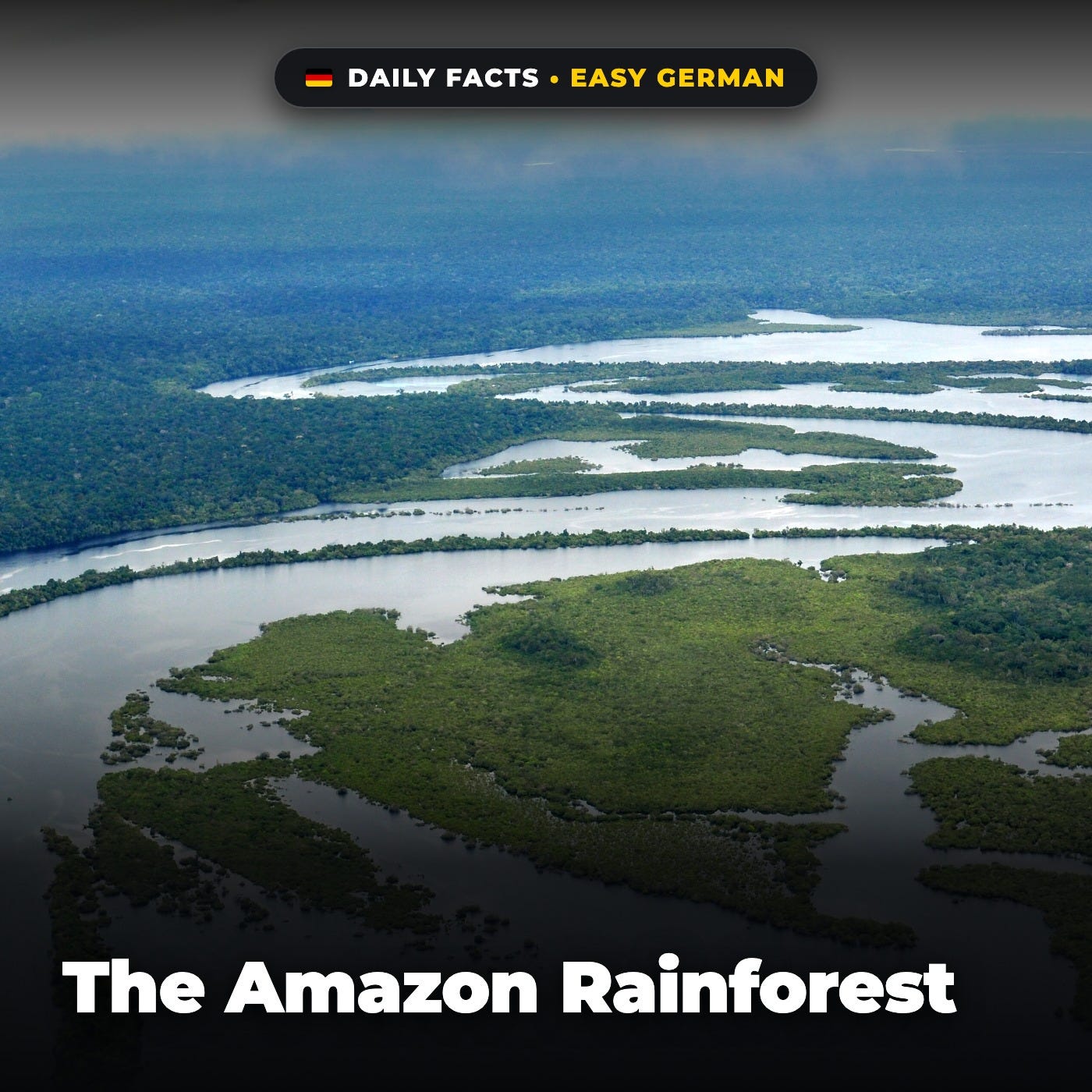
The Amazon Rainforest in Easy German
12:14
CEFR A1–A2

The Amazon Rainforest in Easy German

The Amazon rainforest, also called the Amazon jungle, Amazonia, or simply the Amazon, is a moist broadleaf tropical rainforest in the Amazon biome that covers most of the Amazon basin of South America. This basin encompasses 7 million km2 (2.7 million sq mi), of which 6 million km2 (2.3 million sq mi) are covered by the rainforest. This region includes territory belonging to nine nations and 3,344 indigenous territories.

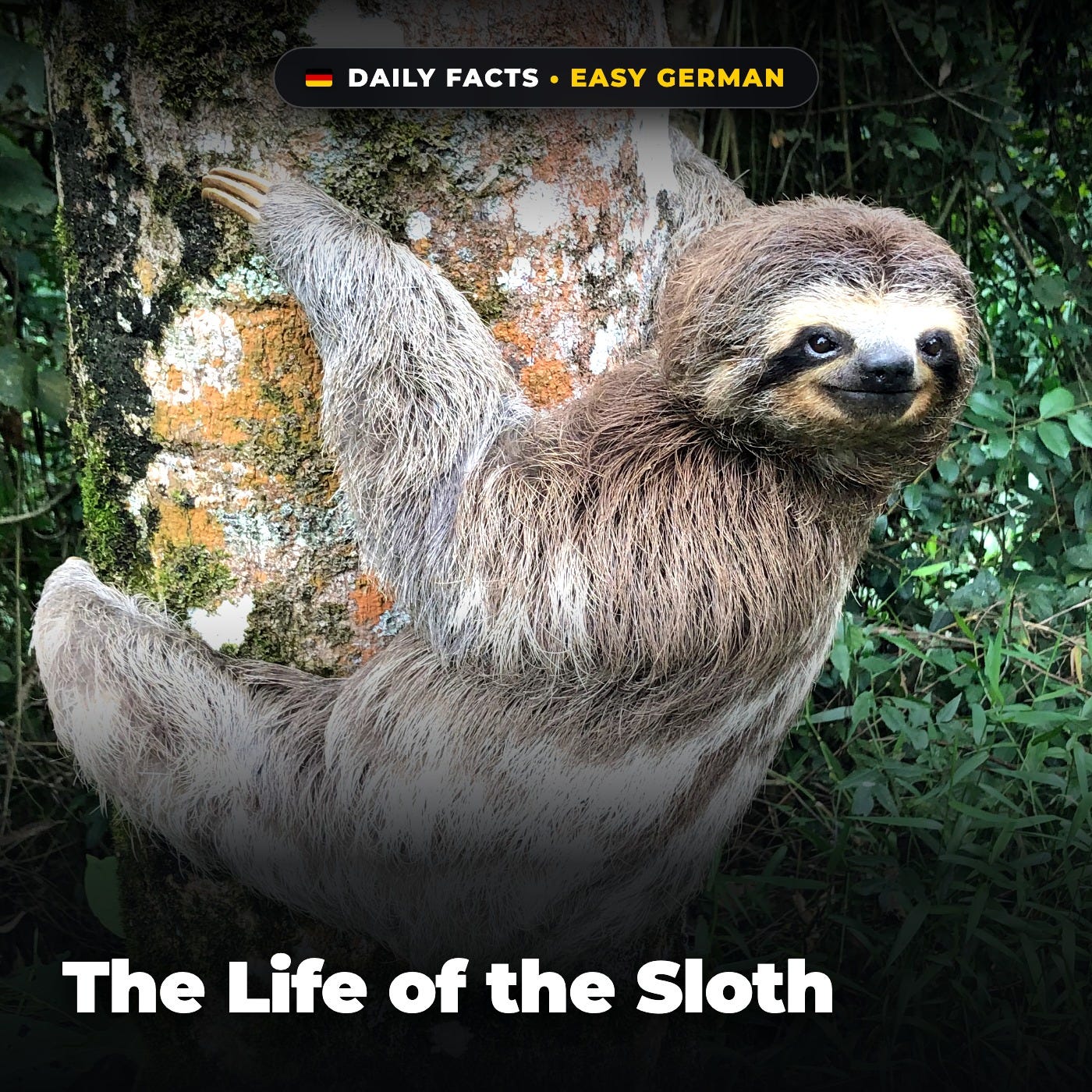
The Life of the Sloth in Easy German
17:26
CEFR A1–A2

The Life of the Sloth in Easy German

Sloths are a Neotropical group of xenarthran mammals constituting the suborder Folivora, including the extant arboreal tree sloths and extinct terrestrial ground sloths. Noted for their slowness of movement, tree sloths spend most of their lives hanging upside down in the trees of the tropical rainforests of South America and Central America. Sloths are considered to be most closely related to anteaters, together making up the xenarthran order Pilosa.