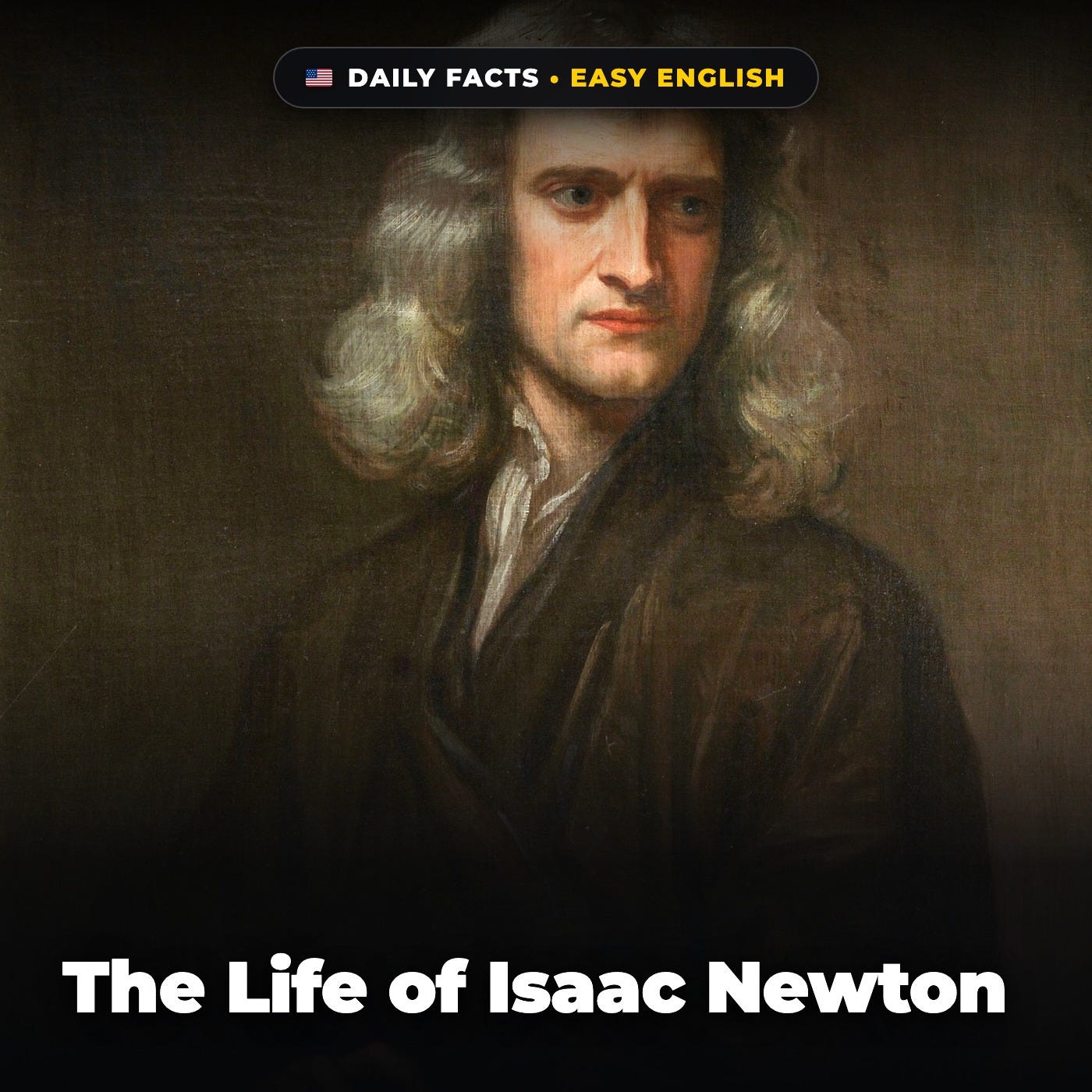
The Life of Isaac Newton in Easy English
Easy English · CEFR A1–A2 80% Slow Speed 25:20 Nov 7, 2026

The Life of Isaac Newton in Easy English

0:00 25:20

About This Episode

Sir Isaac Newton was an English polymath who was a mathematician, physicist, astronomer, alchemist, theologian, historian and inventor. He was a key figure in the Scientific Revolution and the Enlightenment that followed.

His book Philosophiæ Naturalis Principia Mathematica, first published in 1687, achieved the first great unification in physics and established classical mechanics. Newton also made seminal contributions to optics, and shares credit with the German mathematician Gottfried Wilhelm Leibniz for formulating infinitesimal calculus, although he developed calculus years before Leibniz.
Key Topics & Highlights

  • Sir Isaac Newton was an English polymath who was a mathematician, physicist, astronomer, alchemist, theologian, historian and inventor.
  • He was a key figure in the Scientific Revolution and the Enlightenment that followed.
  • His book Philosophiæ Naturalis Principia Mathematica, first published in 1687, achieved the first great unification in physics and established classical mechanics.
  • Newton also made seminal contributions to optics, and shares credit with the German mathematician Gottfried Wilhelm Leibniz for formulating infinitesimal calculus, although he developed calculus years before Leibniz.
Chapters & Timestamps

Click any chapter timestamp to jump directly to that section in the audio player.

Preview English Vocabulary

Click any preview word to hear pronunciation. Unlock all 20 core vocabulary words with episode context quotes inside the Substack Premium Study Companion.

More Daily Facts in Easy English Episodes

Browse All 100 Episodes →
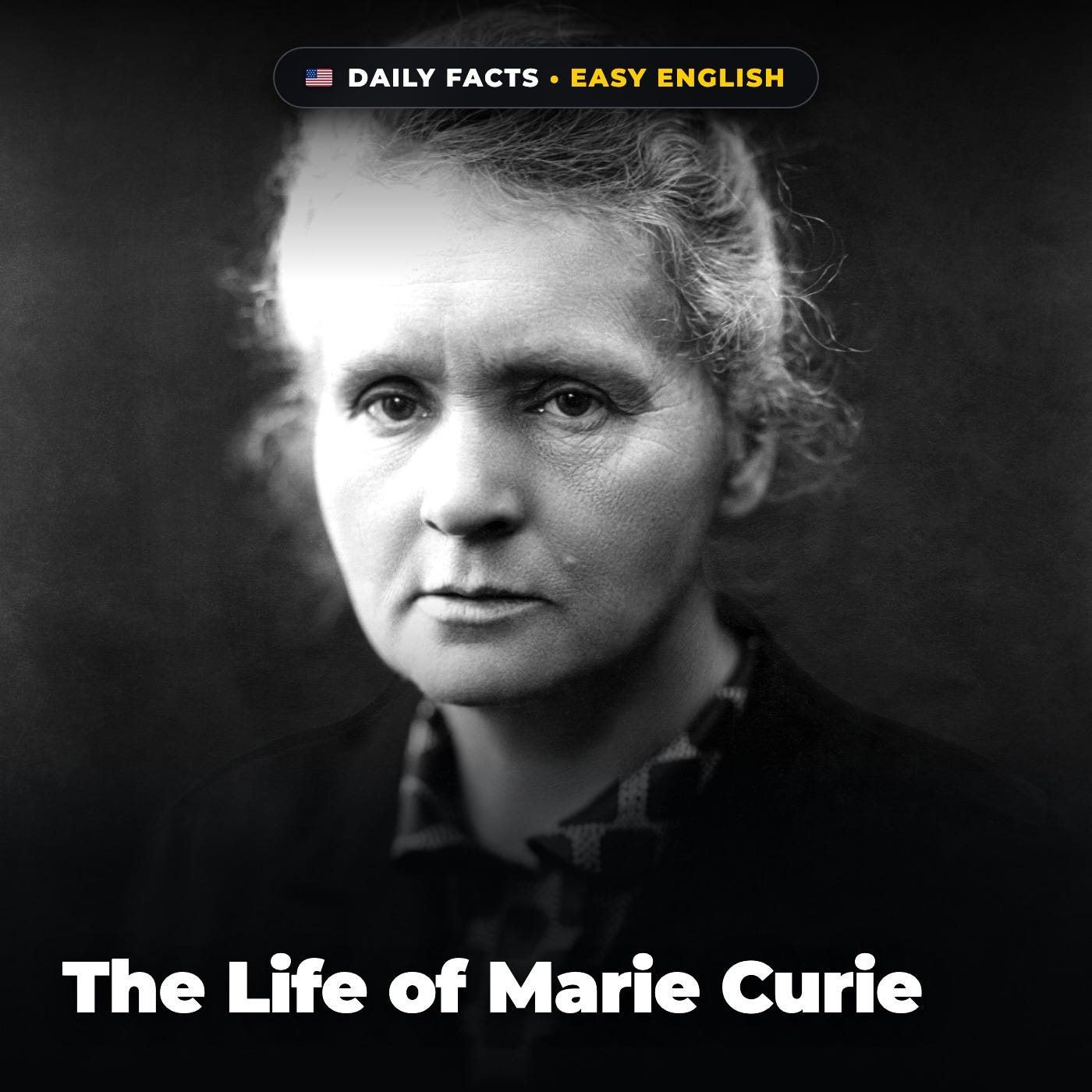
The Life of Marie Curie in Easy English
11:34
CEFR A1–A2

The Life of Marie Curie in Easy English

Maria Salomea Skłodowska Curie, better known as Marie Curie, was a Polish and naturalised-French physicist and chemist. She shared the 1903 Nobel Prize in Physics with her husband, Pierre Curie, "for their joint researches on the radioactivity phenomena discovered by Professor Henri Becquerel". She won the 1911 Nobel Prize in Chemistry "[for] the discovery of the elements radium and polonium, by the isolation of radium and the study of the nature and compounds of this remarkable element".

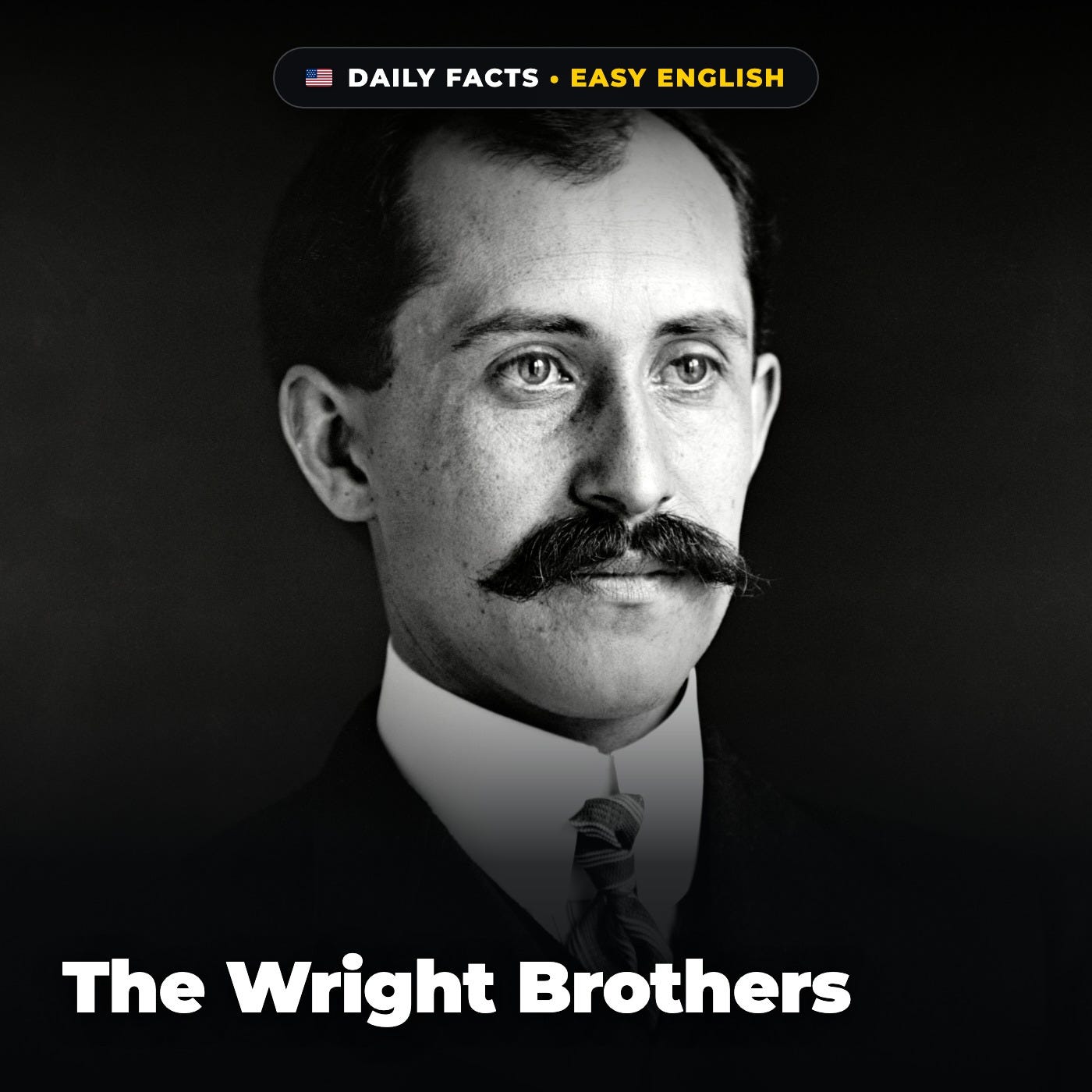
The Wright Brothers in Easy English
13:46
CEFR A1–A2

The Wright Brothers in Easy English

The Wright brothers, Orville Wright and Wilbur Wright, were American aviation pioneers who researched, invented, built, and flew the world's first successful airplane. They made the first controlled, sustained flight of an engine-powered, heavier-than-air aircraft with the Wright Flyer on December 17, 1903, four miles (6 km) south of Kitty Hawk, North Carolina, at what is now known as Kill Devil Hills. In 1904 the Wright brothers developed the Wright Flyer II, which made longer-duration flights including the first circle, followed in 1905 by the first truly practical fixed-wing aircraft, the Wright Flyer III.

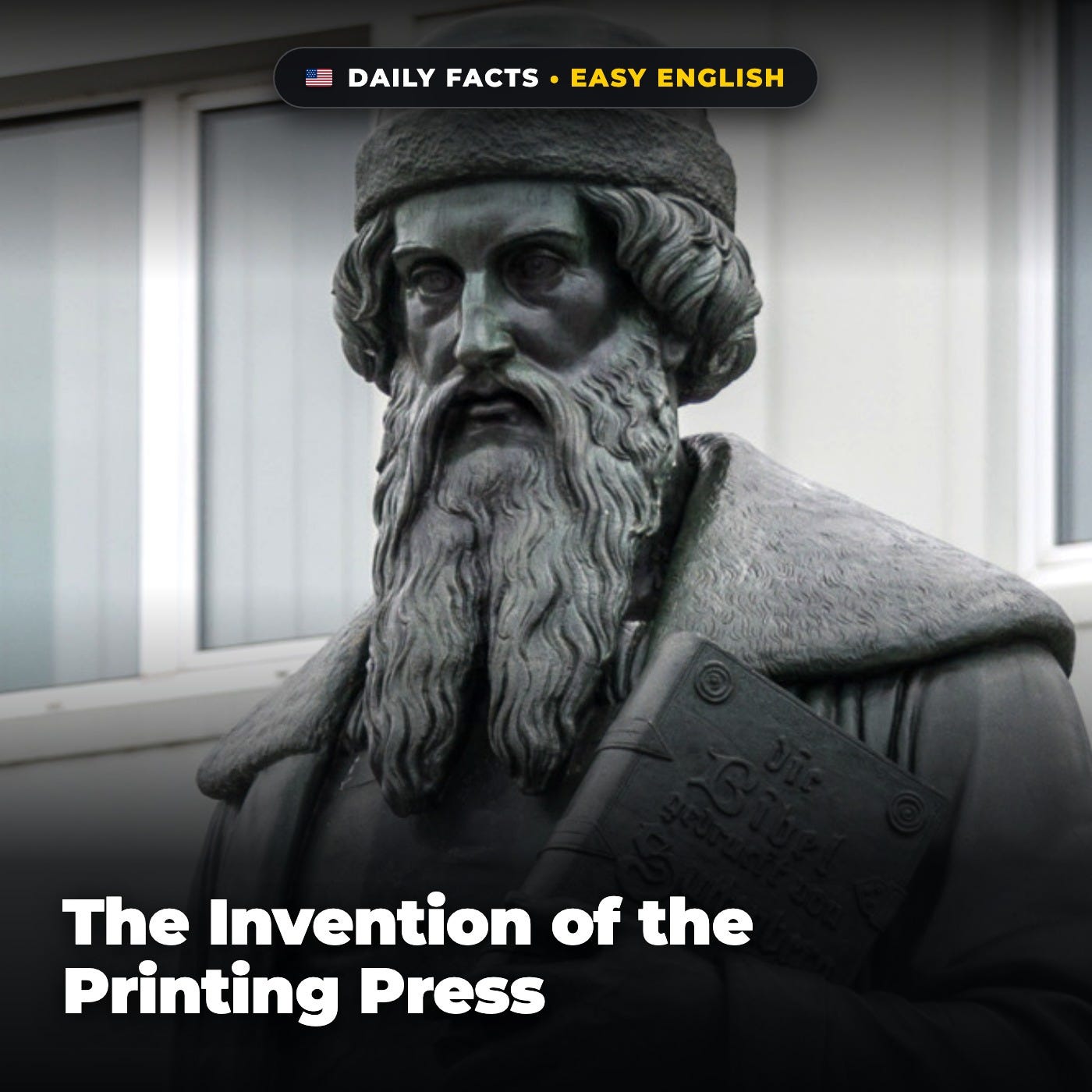
The Invention of the Printing Press in Easy English
10:52
CEFR A1–A2

The Invention of the Printing Press in Easy English

Johannes Gensfleisch zur Laden zum Gutenberg was a German inventor and craftsman who invented the movable-type printing press. Though movable type was already in use in East Asia, Gutenberg's invention of the printing press enabled a much faster rate of printing. The printing press later spread across the world, and led to an information revolution and the unprecedented mass-spread of literature throughout Europe. It had a profound impact on the development of the Renaissance, Reformation, and humanist movements.