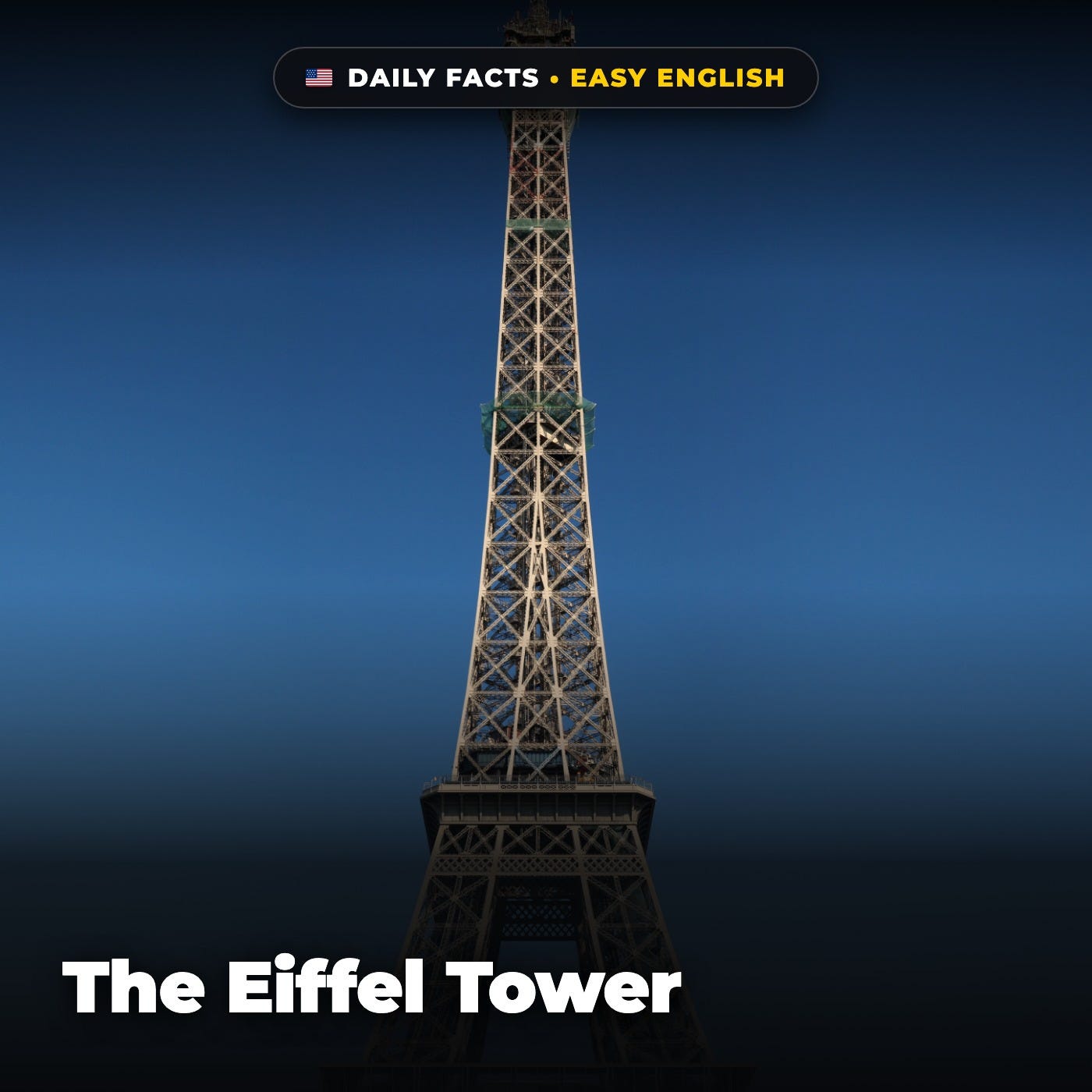
The Eiffel Tower in Easy English
Easy English · CEFR A1–A2 80% Slow Speed 21:48 Oct 16, 2026

The Eiffel Tower in Easy English

0:00 21:48

About This Episode

Rising high above the Paris skyline, the Eiffel Tower is one of the most recognizable landmarks in the entire world. Built between 1887 and 1889 by engineer Gustave Eiffel, this towering iron structure was originally created for the World's Fair.

Although many artists initially disliked its bold metal design, the tower soon won the hearts of locals and travelers alike. Today, millions of people visit each year to enjoy breathtaking views and celebrate French culture.
Key Topics & Highlights

  • The tower was constructed as the grand entrance arch for the 1889 World's Fair in Paris.
  • During summer heat, thermal expansion can cause the metal structure to grow by up to fifteen centimeters.
  • Originally intended to stand for only twenty years, it was saved because its height made it valuable as a radio antenna.
  • It takes approximately sixty tons of paint every seven years to protect the massive iron frame from rust.

Chapters & Timestamps

Click any chapter timestamp to jump directly to that section in the audio player.

Preview English Vocabulary

Click any preview word to hear pronunciation. Unlock all 20 core vocabulary words with episode context quotes inside the Substack Premium Study Companion.

More Daily Facts in Easy English Episodes

Browse All 100 Episodes →
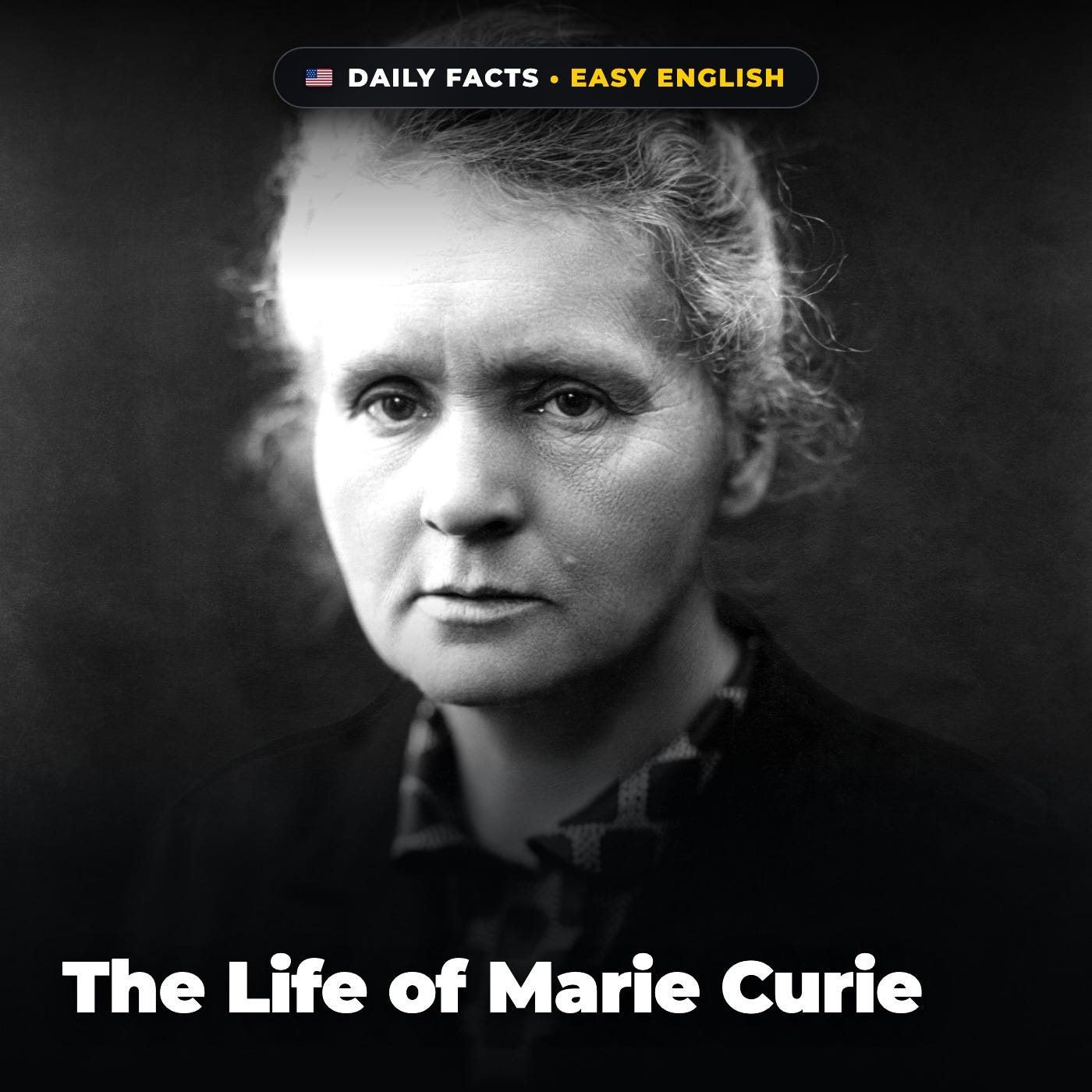
The Life of Marie Curie in Easy English
11:34
CEFR A1–A2

The Life of Marie Curie in Easy English

Maria Salomea Skłodowska Curie, better known as Marie Curie, was a Polish and naturalised-French physicist and chemist. She shared the 1903 Nobel Prize in Physics with her husband, Pierre Curie, "for their joint researches on the radioactivity phenomena discovered by Professor Henri Becquerel". She won the 1911 Nobel Prize in Chemistry "[for] the discovery of the elements radium and polonium, by the isolation of radium and the study of the nature and compounds of this remarkable element".

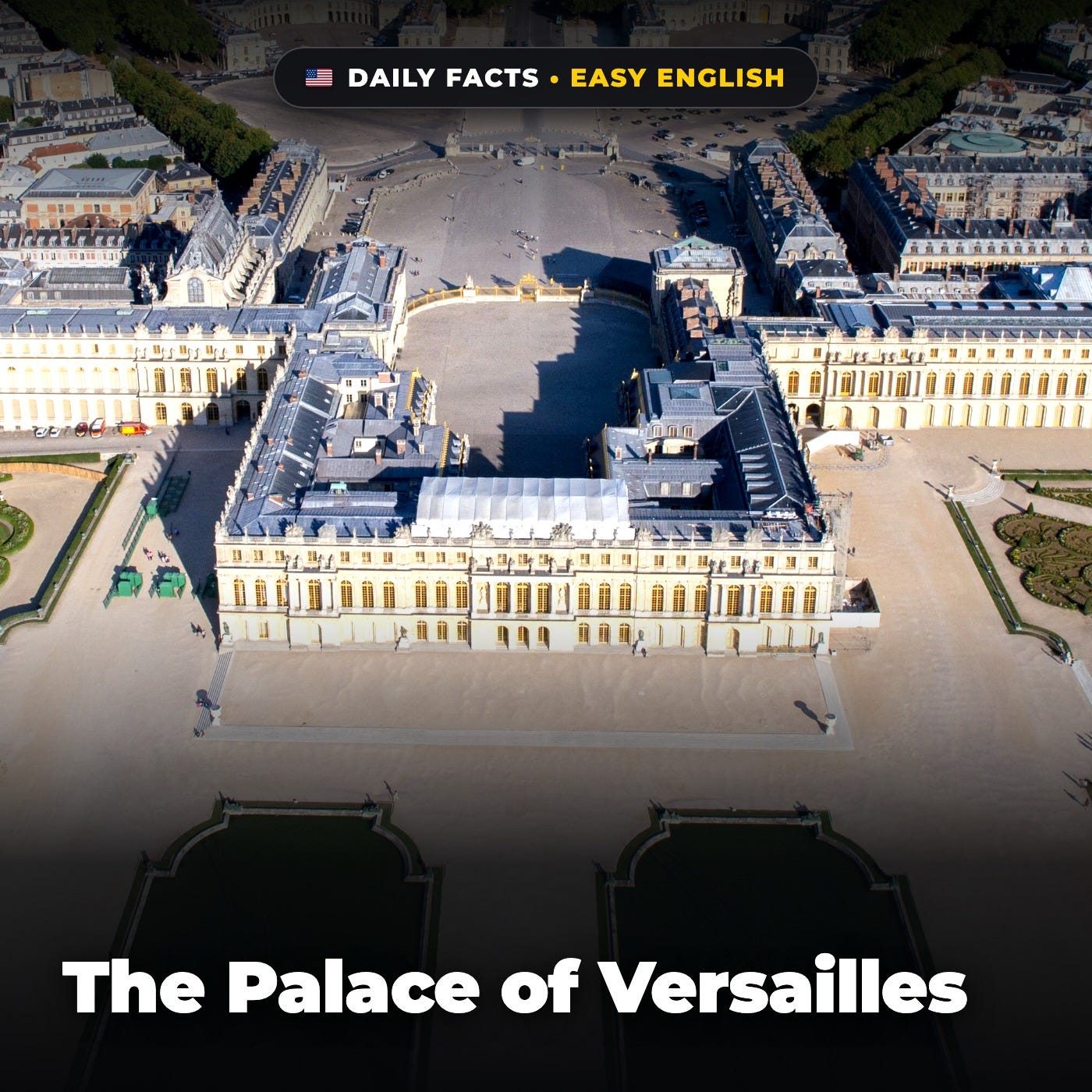
The Palace of Versailles in Easy English
25:31
CEFR A1–A2

The Palace of Versailles in Easy English

The Palace of Versailles is a château and historic monument in Versailles in the Yvelines department of France, southwest of Paris. It served as the principal residence of the French kings Louis XIV, Louis XV, and Louis XVI. In this episode, we break down the most important facts and stories about The Palace of Versailles using clear, beginner-friendly A1

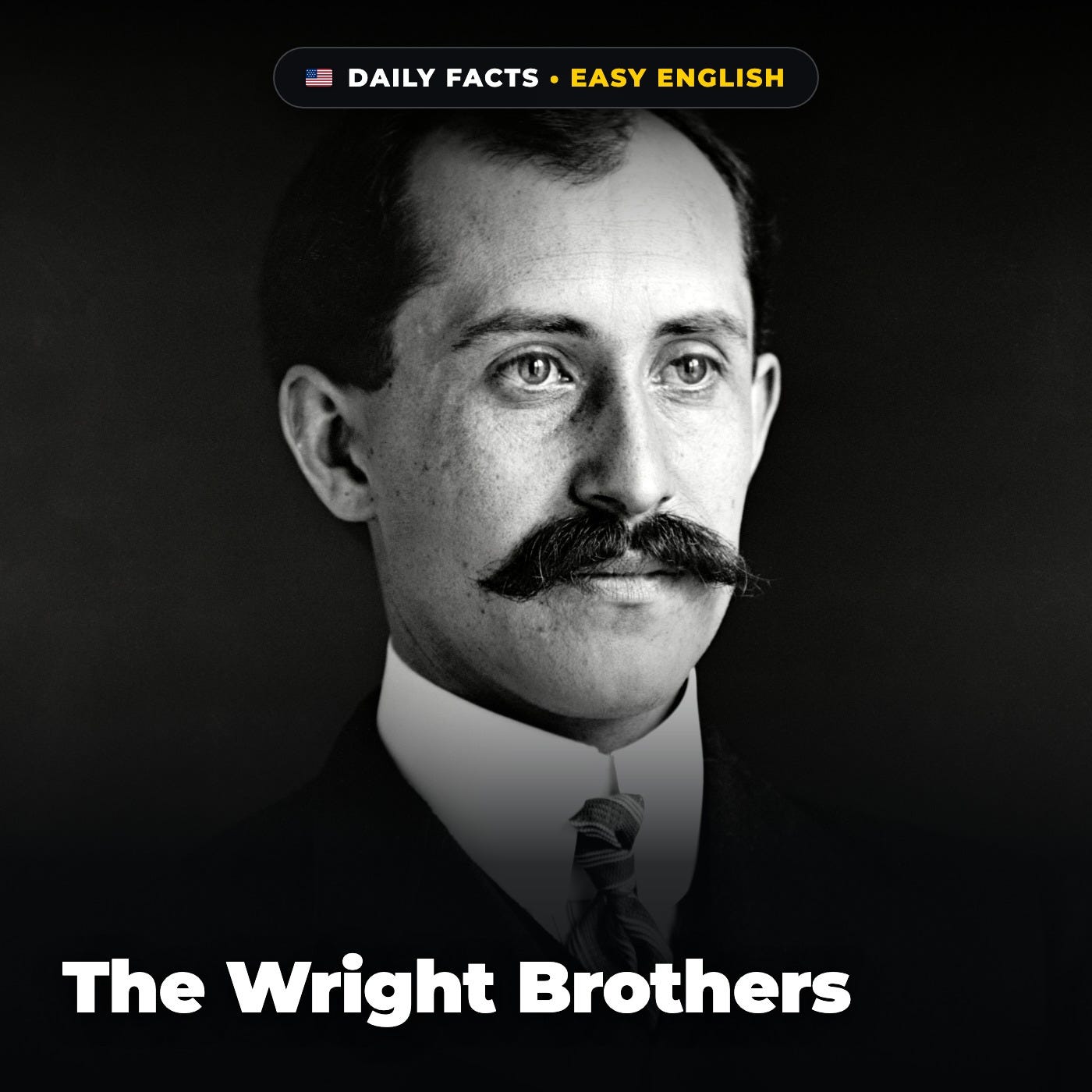
The Wright Brothers in Easy English
13:46
CEFR A1–A2

The Wright Brothers in Easy English

The Wright brothers, Orville Wright and Wilbur Wright, were American aviation pioneers who researched, invented, built, and flew the world's first successful airplane. They made the first controlled, sustained flight of an engine-powered, heavier-than-air aircraft with the Wright Flyer on December 17, 1903, four miles (6 km) south of Kitty Hawk, North Carolina, at what is now known as Kill Devil Hills. In 1904 the Wright brothers developed the Wright Flyer II, which made longer-duration flights including the first circle, followed in 1905 by the first truly practical fixed-wing aircraft, the Wright Flyer III.